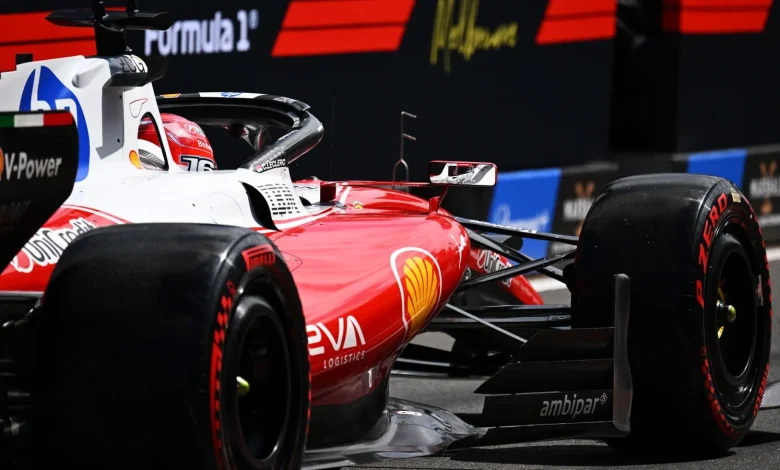
On the grid under the floodlights, ferrari mechanics huddle around a car as engines whisper into life: a different sort of tension from past seasons, a new five-second pre-start ticking down before the familiar five red lights. That preparation — and the ability to reach the optimal rev window when the lights go out — has become a decisive piece of the 2026 puzzle as the Australian Grand Prix opens the year.
Why race starts will be different in 2026
The technical reset that produced new 2026 power units has changed the choreography of departures. Without the previous electrical motor to keep the turbo spinning, drivers must rev higher and for longer on the grid so the turbocharger reaches full speed and avoids a delay known as turbo lag. The FIA confirmed it would trial a pre-start warning: all grid panels flash blue for five seconds after the formation lap, allowing drivers time to build revs before the conventional start-light sequence begins. The change aims to let engines deliver instant, lag-free power the moment the lights go out — but it also injects a new layer of timing, discipline and unpredictability into the first corner dash.
Ferrari: practice starts, smaller turbos and a possible edge
Testing offered a glimpse of how those small technical differences can translate into big on-track moments. Ferrari noticeably aced practice starts during Bahrain testing, finding the blend of revs and clutch release the new rules demand. Charles Leclerc, driver for Ferrari, described the opening in Bahrain as chaotic but also suggested that when cars are in the optimal window “there’s not that much between the cars. ” He added, “It’s kind of easy for us to reach that optimal window for the start. I believe it’s harder for others to reach that optimum window, so it might be more tricky for them. But if they do everything perfect, I don’t expect them to struggle at all. “
Another practical detail in testing that may help some teams is turbo sizing. Ferrari’s configuration in practice featured a smaller turbo that takes less time to spin up, a characteristic Leclerc highlighted as making it easier to get into the ideal rev band at lights out. That mechanical nuance — tiny on paper, critical in the opening seconds — could hand teams who mastered it an immediate advantage into Turn One.
What teams, drivers and the FIA are doing in response
Qualifying left Mercedes on the front row with George Russell and Kimi Antonelli, positioning those cars to control the race from the start if the opening moments go to plan. Yet the new starting procedure levels in-season familiarity against fresh technical demands: teams must teach drivers new timing, pit crews must be ready for altered stop strategies tied to early-race position shifts, and engineers must balance engine maps to suit both launch and later race phases.
The FIA’s small but consequential procedural tweak — the five-second pre-start flash — is the formal response to the turbo-driven challenge. Teams have used pre-season testing to iterate clutch calibration, rev targets and reaction protocols. Drivers who can hold the precise rev band for the pre-start window and execute flawless clutch releases stand to gain places immediately; drivers out of that window risk being swallowed by the field in the first corner melee. As Leclerc put it bluntly in testing discussion: “The start is going to be exciting. They could be five abreast into Turn One. “
For fans and teams alike, the new starts offer both promise and uncertainty. The Melbourne opener will test whether practice translate into race-day getaways, whether smaller turbos and disciplined rev management make the difference, and how quickly teams adapt to a start procedure designed to mitigate turbo lag but that also reshapes the drama of lap one.
Back on the grid, the pit crews finish their checks and the blue panels begin to flash. The same scene feels changed: every engine note, every held rev and every microsecond of clutch release will now carry extra narrative weight. Whether ferrari’s practice edge becomes a race-winning advantage will be one of the first and most telling stories to emerge from the 2026 season.