Exclusive: The truth behind Carolyn Bessette’s ‘tension’ with Caroline Kennedy during JFK Jr. wedding

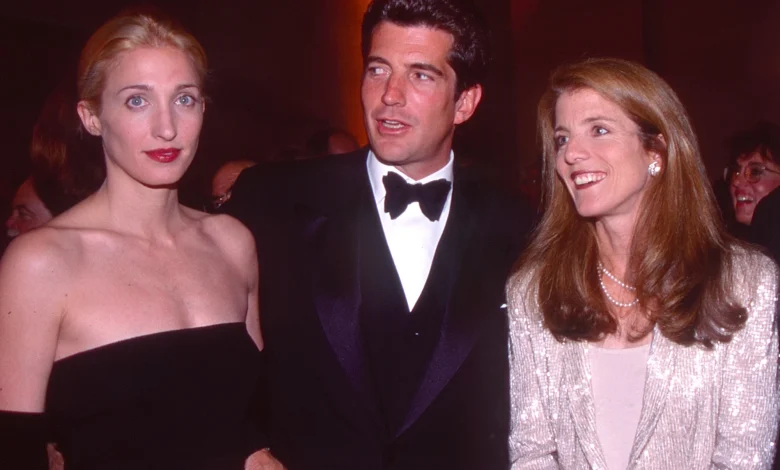
On a windswept, remote island off the coast of Georgia, an intimate ceremony of 40 guests gathered to watch john f. kennedy jr. and carolyn bessette exchange vows. The bride’s closest circle — her mother Ann Messina Freeman, sisters Lisa and Lauren Bessette, friends Jessica Weinstein and Jules Birnbaum, and designer Narciso Rodriguez, who made her dress — stood nearby. It was a small, sharply curated moment that many who were there remember as calm and celebratory rather than combustible.
Carolyn Bessette and the wedding day: what witnesses recall
Sasha Chermayeff, a childhood friend of John F. Kennedy Jr., has addressed long-swirling rumors that the wedding day was marred by friction between the bride and the groom’s sister. “People knew that there was some tensions between them as the two couples, ” Chermayeff said, adding that while those undercurrents existed more broadly, “it wasn’t really apparent at the wedding. ” She emphasized that the 40 guests were “on their best behavior” and “just happy” for the bride and groom. “At that point, there wasn’t a feeling of tension at all. It was just not there, ” she doubled down.
Chermayeff recalled that Caroline served as matron of honor in name while many of the bridesmaid duties were handled by Bessette’s mother and sisters, and that Caroline spent much of the wedding weekend looking after her three little children, Rose, Tatiana, and Jack. The record of who stood with the bride and who tended to the household details paints a picture of an intimate family affair rather than a public confrontation, even as questions about private tensions have lingered.
How the FX and Hulu series frames the relationship and what audiences have made of it
The limited series presenting the courtship, marriage and deaths of John F. Kennedy Jr. and Carolyn Bessette has prompted renewed scrutiny of private moments, dramatizing exchanges between characters to explore possible rifts. In one scene the dramatization shows an icy interaction after John invites a Calvin Klein publicist to a family birthday dinner. In another episode, a sit-down dinner becomes heated when the two couples argue over wedding plans and Caroline is shown saying she “hasn’t been included in any decisions. ” The drama also stages a private fight in which a version of Carolyn tells her sister, “I don’t know what else to do to make her feel important. I can’t go into my wedding, my marriage, with her resenting me. “
That creative framing has reached a large audience: the limited series has recorded 25 million hours of viewing across streaming partners so far, a record streaming number for an FX limited series. Viewing climbed week to week, with the most recent episode drawing 51 percent more viewing time than the premiere, and social conversation ballooned, with some 21 million posts on TikTok using the show’s hashtag in the past month. The series has been noted for meticulous period recreation and has drawn both praise and scorn from within the Kennedy family, as well as mixed reactions from people who knew the couple.
Memory, dramatization and the responses now
The gulf between recollection and dramatized narrative is the central tension at play. Witnesses present at the wedding emphasize civility and joy on the day itself, while the drama places private anxieties and barbed dialogue center stage to probe relationships. Sasha Chermayeff’s public denial of visible wedding-day friction is one response that aims to correct the public record; the creative team behind the series — including creator and executive producer Connor Hines and executive producer Ryan Murphy, with Max Winkler directing and executive producing the first episode — have chosen a dramatized route that has resonated with viewers and provoked debate.
The back-and-forth is itself a kind of public remedy: friends and family are speaking to clarify memories, the show’s creators are releasing episodes that invite scrutiny, and audiences are weighing what feels true. That dynamic has led to renewed attention to small, specific details of the wedding — who stood at the altar, who cared for children, who wore which dress — and to a broader conversation about how private grief and intimacy are portrayed on screen.
Back on that island, the scene remains legible: a handful of people on a shoreline, dresses and suits, a designer’s gown, a small guest list and the hush of a tightly guarded celebration. The drama now circulating on screens has magnified quiet moments into narrative drama, but for those who were there the day retained its original shape: an intimate wedding in which those present say the tension that fuels so much public storytelling simply wasn’t visible.