Mel Gibson & Robert Downey Jr.’s 23-Year-Old Forgotten Detective Mystery: The Singing Detective Revisited

mel gibson and Robert Downey Jr. reunited on a film that has sat largely unnoticed despite its audacity: The Singing Detective. A bizarre blend of detective story, jukebox musical and psychological drama, the film features hallucinatory song-and-dance sequences, a stacked supporting cast, and production choices that flattened its commercial prospects. The result is a film that many viewers never encountered, even as elements of the project invite fresh reassessment.
How a risky genre blend and casting choices created an oddity
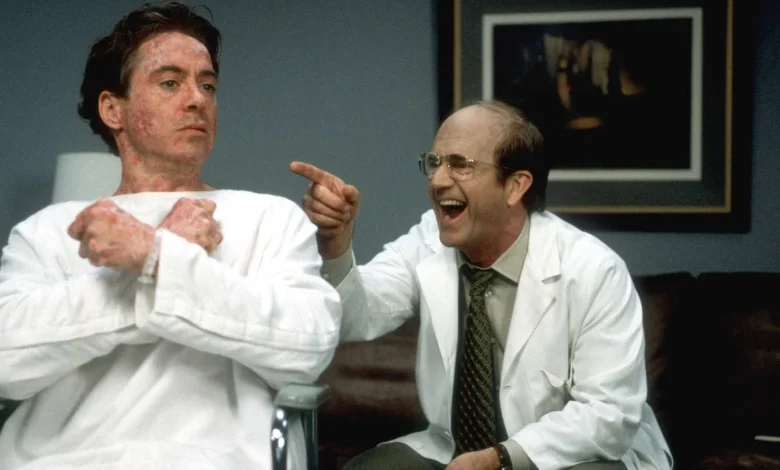
The Singing Detective adapts material from a 1986 series, with Dennis Potter penning the screenplay for the film version. The picture centers on Dan Dark, played by Robert Downey Jr., an author and protagonist in a hospital setting battling severe skin disease and mental fragmentation. Downey’s performance relied on heavy makeup to simulate debilitating psoriasis and psoriatic arthritis, while mel gibson appears as Dr. Gibbon, the psychiatrist charged with probing the author’s collapsing sense of reality.
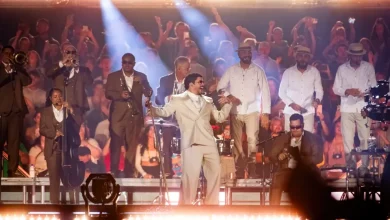
As the narrative unfolds, novel, memory and hallucination intertwine: Downey’s Dan Dark hallucinates hospital staff in elaborate musical numbers, performing standards such as “Mr. Sandman” and “At the Hop. ” The film deliberately collapses borders between the detective fiction Dan writes, his childhood trauma, and present medical crisis. That structural hybridity—part mystery, part jukebox musical, part psychological study—made the movie difficult to package for mainstream audiences.
Mel Gibson’s on-screen approach and the ensemble cast
The film places mel gibson in an unfamiliar professional posture: not as an action star but as a medical interlocutor to Downey’s unraveling narrator. Gibson adopts a balding hairstyle for the part, joining a large supporting cast that includes Katie Holmes, Robin Wright, Jeremy Northam, Jon Polito, Alfre Woodard, Adrien Brody, and Carla Gugino. Director Keith Gordon assembled that ensemble and later went on to direct television episodes of Homeland, Fargo, and Dexter, underscoring a throughline from bold cinematic experimentation to risk-taking television work.
The choice to foreground musical fantasy sequences alongside dense psychological material amplified the film’s shock value but created a marketing challenge. Performances were singled out even amid mixed reactions: the critical consensus praised a “delightful performance from Robert Downey Jr.,” a recognition that highlights how bold acting choices were a central asset even as broader reception faltered.
Distribution, critics and the mechanics of obscurity
Distribution decisions materially shaped the picture’s fate. The Singing Detective opened on just 49 screens, a narrow theatrical footprint that constrained box office potential from the outset. The film’s worldwide gross totaled $435, 625, a figure that reflects both limited exposure and poor commercial traction. Critical and audience response was tepid overall: the movie holds a 40% rating on a major review aggregator, which aligns with the impression that the film never found a receptive mass audience.
Given those mechanics—an unconventional genre mix, striking but challenging performances, and a constrained release strategy—the film’s obscurity was less a mystery than an outcome of predictable forces interacting. The production offered originality and a bracing willingness to unsettle viewers, but that very originality likely reduced its marketability in theaters.
Legacy, reassessment and what the film still offers
In retrospect, The Singing Detective sits as an artifact of creative risk that failed to translate into commercial success. The movie’s architecture—Dennis Potter’s adaptation of his own 1986 series and Keith Gordon’s direction—suggests an intent to push tonal and narrative boundaries rather than to cultivate mainstream appeal. This orientation explains both the presence of a strong ensemble and the film’s polarizing reception.
For scholars of film and viewers drawn to idiosyncratic experiments, the film remains instructive: it shows how star power, exemplified by mel gibson and Robert Downey Jr., cannot by itself guarantee broad reach when the material resists easy categorization. It also demonstrates how limited distribution can truncate a project’s lifecycle, consigning potentially influential works to obscurity.
Will modern viewers reframe The Singing Detective as a hidden gem, or will it remain a curio from two major actors’ filmographies? As platforms and critical tastes continue to evolve, the question of whether mel gibson’s atypical turn and the film’s daring hybridity will find a new audience is open-ended and worth watching.