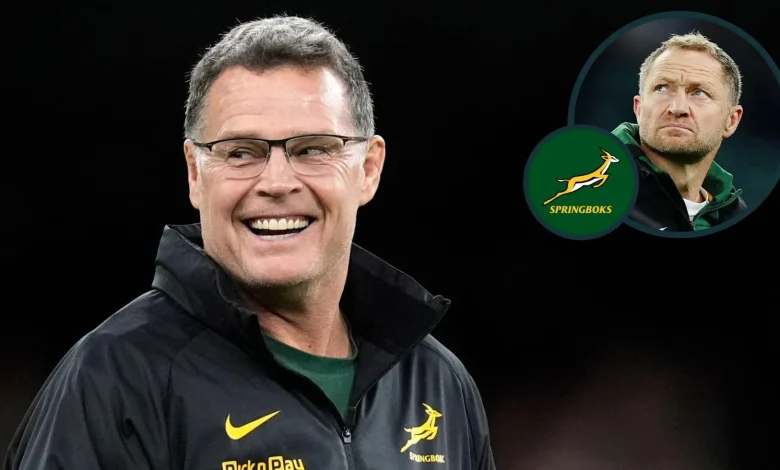
The decision by the All Blacks to appoint Dave Rennie has rippled beyond New Zealand and reframed a major personnel tussle ahead of the rugby world cup cycle: South Africa’s effort to retain Tony Brown. What appears at first glance to be a routine coaching shuffle now reads as a deliberate effort by SA Rugby to secure continuity in the Springbok backroom through successive World Cups.
What is not being told about the coaching reshuffle?
Verified facts: Rassie Erasmus, Springboks head coach, has said he and SA Rugby are working to extend Tony Brown’s contract. Tony Brown, a former All Blacks fly-half, is committed to the Springboks with a contract that expires at the 2027 Rugby World Cup. Scott Robertson was dismissed from the All Blacks head coach role. Dave Rennie has been confirmed as the new All Blacks head coach. Jamie Joseph missed out on the All Blacks job.
Analysis: Public attention has focused on the All Blacks’ hiring decision and its implications for New Zealand rugby. Less visible is how that hiring alters the bargaining dynamics around assistant coaches with transnational ties. Erasmus’s comments — framed as a mix of strategic intent and humour — disclose an active campaign by SA Rugby to forestall Brown’s return to New Zealand coaching circles. That campaign gains leverage the moment a likely New Zealand suitor is no longer in the frame.
How the Rugby World Cup timelines shape contracts
Verified facts: Tony Brown’s contract is set to expire at the 2027 Rugby World Cup. Rassie Erasmus extended his own contract through to the 2031 Rugby World Cup in the United States of America, and SA Rugby has confirmed that an announcement on negotiations with other members of the Springbok coaching team will be made in due course.
Evidence & documentation: Erasmus outlined both a desire to retain his current backroom staff and an active negotiation posture. The named members of the Springbok coaching group referenced in connection with retention efforts are Tony Brown, Jerry Flannery, Felix Jones, Daan Human, Mzwandile Stick, Deon Davids, and Duane Vermeulen. Erasmus made a direct, jocular reference to removing Brown’s passport in conversation with former Springboks hooker Hanyani Shimange and said, “We are working on Tony. ” Brown has stated he will honour his commitment to South Africa until after the 2027 Rugby World Cup and noted there is no exit clause in his contract allowing departure.
Analysis: Timelines matter. Erasmus’s personal contract through 2031 and Brown’s through 2027 create staggered anchors for continuity. SA Rugby’s public positioning — extending Erasmus and signaling upcoming announcements on the rest of the staff — points to a strategy of locking in institutional knowledge across at least two World Cup cycles. The removal of Jamie Joseph as a possible All Blacks appointee lowers the probability of Brown being drawn back to New Zealand at this moment, strengthening SA Rugby’s hand.
Who benefits, who is exposed, and what should change?
Verified facts: Erasmus has emphasized a desire to retain the existing backroom team; Brown has expressed a commitment to see his current contract through to its end. Erasmus made the retention drive explicit and tied it to the outcome of the All Blacks appointment process.
Analysis: Beneficiaries of this configuration are clear: SA Rugby and Rassie Erasmus gain continuity and the prospect of an intact coaching unit through the 2027 World Cup and into the longer-term plan that Erasmus has committed to. Tony Brown’s position moves from potentially fluid to contractually anchored, whether by design or circumstance. The coaching market and national teams that might otherwise recruit him are weakened strategically by the timing of these contracts and appointments.
Accountability and next steps: Verified facts provide a narrow remit for public scrutiny — contracts exist, statements have been made, and negotiation announcements are pending from SA Rugby. To ensure transparent governance of national team appointments and to allow fair competition in the coaching market, SA Rugby should publish an institutional timeline for contract negotiations with named members of the coaching group and clarify whether exit clauses or buy-outs are available. Independent oversight from governing bodies would help distinguish routine contract management from strategic anti-competitive retention.
Final observation: The ripple effects of the All Blacks’ decision to hire Dave Rennie extend beyond national pride. They have already altered the calculus around the 2027 Rugby World Cup, tightened SA Rugby’s hand over Tony Brown, and raised questions about how international coaching talent is contracted and retained. The public record — Erasmus’s stated intent, Brown’s contractual commitment, and SA Rugby’s pending announcements — now frames the accountability choices that should follow.