Carlos Sainz and a Stalled Williams: A red-flag morning at Albert Park and the Aussie AI promise

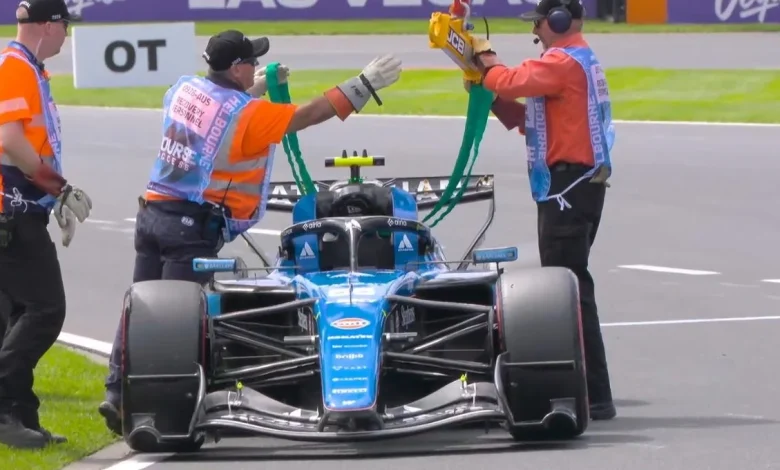
At Albert Park the Williams of carlos sainz ground to a halt at the pit entry early in the third practice session, triggering the first red flag of the F1 season and costing teams valuable running time.
What happened to Carlos Sainz in FP3 at Albert Park?
The Spanish driver lost drive in his FW48 and became stuck, blocking the way back to the garages less than 15 minutes into FP3 in Melbourne. A virtual safety car was declared with the pit entry closed before the situation was upgraded to a red flag, a sequence that ultimately removed around eight minutes of on-track running for the field. The session had already been delayed earlier by 20 minutes for barrier repairs at Turn 5 after a collision between two PREMA drivers in the F3 sprint that led to that race being abandoned.
Why did the FP3 session suffer multiple interruptions and who did it affect?
The stoppage compounded wider setbacks for Williams: the FW48 is thought to be significantly overweight, and the team missed a private shakedown in Barcelona prior to testing in Bahrain. That combination leaves the 31-year-old further on the backfoot at the campaign curtain raiser. When the session eventually resumed, Kimi Antonelli put his Mercedes at the top of the timing board, ahead of the Ferrari of Lewis Hamilton, but for some drivers the lost running will be difficult to recover.
The Aussie AI turbocharging F1: Could improved forecasting ease scheduling pain?
Beyond mechanical and logistical problems, Formula 1 is also wrestling with how best to manage sessions when external conditions intervene. The FIA has agreed a partnership with weather intelligence company Tomorrow. io, which uses a satellite-backed and AI-driven model to produce faster, more localised forecasts. Tomorrow. io’s co-founder Itai Zlotnik described the transformation in atmospheric science: “AI puts it on steroids, ” he said. He added that AI allows for much faster development cycles and can quickly improve models for complex effects.
Chris Bentley, the FIA’s head of information systems strategy, framed the practical benefit for race control and teams: “They [Tomorrow. io] give us information before a session, during a session and update us constantly. We need to know changing conditions, and if there’s anything that will affect or delay running. That will allow us to schedule, reschedule and change things. ” Those capabilities have been positioned as central to how race control will run grand prix weekends, with new weather portals planned for pitwalls this season and formal use in declarations such as Heat Hazards and Rain Hazards.
While the stoppage that left carlos sainz stranded was mechanical rather than meteorological, the broader push to bring more precise, AI-driven forecasting into F1 reflects a desire to reduce uncertainty when weather threatens running. Teams should gain more accurate, detailed and reliable information for preparation, and race control should have better data to decide whether to hold, delay or resume sessions.
For a team already contending with weight issues and missed preparatory sessions, every minute on track matters. The Albert Park incident shows how quickly a single failure can compound the early-season pressure on a driver and outfit trying to find pace and reliability. As the paddock adjusts to both engineering shortfalls and new operational tools, the balance between mechanical readiness and smarter scheduling will shape the opening rounds of the campaign.
Back at the pit entry where the Williams stopped, marshals cleared the car and running continued, but the image of a stalled FW48 blocking the way to the garages lingered. Teams shuffled their plans, timing screens updated and the season moved on — while the FIA and its partners press to make future scheduling decisions less fraught and more data-driven.