Victoria Mboko: Teen Canadian’s doubles surge at Indian Wells and what it reveals about a changing tour

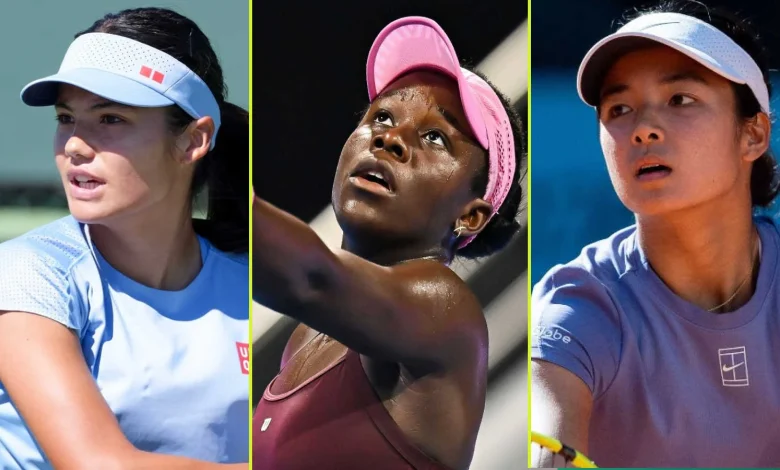
On a sunlit hard court in California, Victoria Mboko stands with a towel over her shoulders between points, the buzz of the Indian Wells crowd rising and falling like the tide. Victoria Mboko, the 19-year-old Canadian who has been more active on the doubles circuit than some of the singles stars, is lined up in the WTA 1000 main draw alongside Mirra Andreeva — a pairing that has drawn attention not for headline fame but for the raw promise it represents.
Why one match matters: the quiet momentum behind the doubles entries
The Indian Wells Open has assembled a crowded and varied women’s doubles field in California, where singles names are stepping into the paired format. Emma Raducanu has accepted a wildcard to partner with Elena-Gabriela Ruse, while the youthful Mboko-Andreeva team will face seasoned fourth seeds Elise Mertens and Zhang Shuai in the first round. The entries underline how top singles players and rising talents are using doubles to sharpen skills, build partnerships and chase draw opportunities within a WTA 1000 setting.
For Raducanu, the doubles entry is one element among changes: she has a high singles standing on the WTA Rankings and a far lower doubles ranking, with sparse doubles appearances. Her recent doubles history includes a July 2025 semi-final in Washington DC alongside Elena Rybakina and prior pairings at Queen’s Club and in 2022. Those intermittent forays contrast with Mboko’s more regular doubles schedule; she played in the Qatar Open with Coco Gauff and has partnered with Iva Jovic and Bianca Andreescu at major events, building a doubles résumé that has brought her to Indian Wells.
Victoria Mboko and the teenage doubles surge
Victoria Mboko arrives at Indian Wells with a doubles ranking listed in the low 300s and a string of recent partnerships that read like a roadmap of contemporary development: a first-round appearance in Qatar with Coco Gauff, a pairing with Iva Jovic at the Australian Open, and a 2025 Pan Pacific Open team-up with Bianca Andreescu. At Indian Wells, Mboko will team with Mirra Andreeva, who holds top-10 status in singles and a higher doubles placing; Andreeva’s two doubles titles and Olympic silver in 2024 add competitive heft to the young duo.
The draw sets up immediate tests — the Mboko-Andreeva team meets a seasoned seeded duo — but it also offers a structural payoff: if they and the other all-teen combinations prevail, the tournament schedules a potential second-round clash that would pit rising stars directly against each other. That prospect speaks to a tour dynamic where experience and established pairings meet emergent collaborations formed by teenagers and recent converts to doubles play.
Voices from the tour and what they signal for players
Coach Mark Petchey, who has reunited with Emma Raducanu and spoke publicly about their renewed working relationship on a well-known podcast, framed part of the moment as a search for stability and focus within a busy schedule: “We have always stayed in touch. I felt like last year we got to a stage where this kind of work, the media work, was overwhelming, and trying to do the right things, I didn’t want anything to fall through the cracks. She found herself in a situation once again where she didn’t really have somebody she could lean into. I didn’t want anything to fall through the cracks. ” His comments place the doubles entries and new partnerships in the context of players managing form, support and momentum across singles and doubles commitments.
Alex Eala has also signaled ambition on the doubles court, saying she “would love” a rematch with a role model she has faced previously — a remark that echoes the mix of mentorship and rivalry playing out among younger players who share courts and draws.
What is being done is practical: established players are taking wildcards and forming new teams, and younger players like Victoria Mboko are using doubles to broaden experience, facing seeded opponents that test their readiness. The tournament’s seeding — with reigning Olympic champions seeded atop the draw and other established pairs holding high positions — creates a structured ladder for newcomers to climb or learn from.
Back on the sunlit court where the day began, Victoria Mboko tightens her laces before the warm-up, a young player whose schedule of doubles partners has taught adaptability and whose draw places her opposite proven opponents. Whether she and Mirra Andreeva can upset the seeds or use the match to sharpen their games, the scene feels less like an endpoint than a waypoint — a moment in which growth, opportunity and the pressure of a WTA 1000 collide, and in which Victoria Mboko’s next steps will be watched as part of a wider shift on the tour.