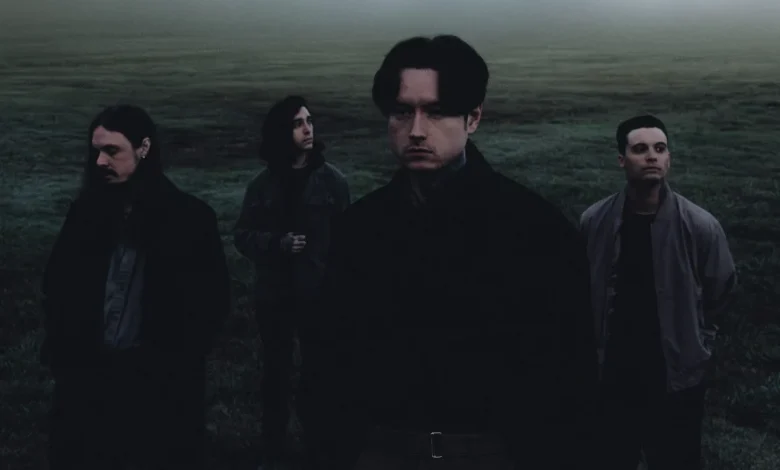
Under a slate sky on Queen Street East, a line forms outside 183 Gallery where bad omens will be sold from midday until early evening — a small commerce pulse that precedes a larger spectacle inside Scotiabank Arena. The pop-up, offering limited-edition and exclusive merch, opens from 12 p. m. to 6 p. m. ahead of the band’s Do You Feel Love Tour stop tomorrow night.
Bad Omens pop-up brings limited merch to 183 Gallery
The storefront at 183 Queen Street East becomes a temporary outpost for fans: an afternoon shopping window that funnels anticipation toward the evening show. Organizers have positioned the pop-up as a place to pick up exclusive items that will not be widely available elsewhere. For concertgoers, the pop-up is timed to intersect with arrival and pre-show routines; the band’s tour and the gallery location create a short-lived marketplace tied directly to the live event.
Merch has become an increasingly visible part of the live-music economy. The pop-up’s presence ahead of the Scotiabank Arena performance reframes what a concert day can look like: not only a performance, but also a curated retail experience in a city block. Fans are encouraged to plan an afternoon around the shop, and the limited window — noon to 6 p. m. — makes the offering feel urgent and collectible.
Why pop-up merch matters for fans and the live ecosystem
For individual fans, the draw is tangible: exclusive items and limited runs create a sense of ownership and memory tied to a specific night. For the band and its team, a pop-up is a concentrated revenue and branding opportunity during a tour. The pop-up strategy also signals how touring acts are experimenting with physical retail as part of the show package; a gallery storefront becomes an extension of the concert itself.
The pop-up ahead of the Scotiabank Arena date shows how merchandise and live performance interlock. It turns a neighborhood storefront into a clearinghouse for memorabilia and a place where personal narratives around the tour are formed — conversations, purchases, and photographs that live on after the lights go down.
Behind the arena screens: 4Wall and Brompton Technology
At the other end of the day, inside large venues and on global tours, visual engineering firms are managing the screens and content that define the concert experience. 4Wall is one company named for its role in major arena productions, relying on Brompton Technology’s Tessera processing in its LED workflows. “We rely on Brompton’s Tessera SX40 LED video processor as one of the key tools in our arsenal, whether it’s for a concert experience, shooting a television show in an LED volume, or other forms of entertainment, ” says Wayne Romanowski, VP of LED Services at 4Wall.
Romanowski highlights technical capabilities that matter at scale: “The ability to support up to 9m pixels in full 4K at 60 Hz with 12-bit colour depth made the SX40 essential for the content we displayed on screen. ” Those features enable the kind of high-resolution visuals now common on large tours and broadcast events alike.
4Wall’s recent portfolio spans major concert touring and high-profile live events, and their pipeline includes work supporting a busy slate of tours. The company anticipates supporting a run of 2026 tours, with Bad Omens’ Do You Feel Love European tour listed among the projects that will rely on LED-driven workflows. In this ecosystem, technical vendors and their manufacturers are part of the production chain that turns merchandise buzz into an immersive evening.
Webster Moyle, technical sales manager (Western US), frames that relationship from the supplier side: “That 4Wall continues to rely on Brompton processing for the high-profile projects it works on is extremely gratifying and a testament to the usability and reliability of our products. ” The quote underscores how equipment choices shape what audiences ultimately see and remember.
On a practical level, the pop-up at 183 Gallery and the Tessera-driven LED rigs inside arenas represent two halves of a concert day: one intimate and retail, the other technical and theatrical. Both are essential to how modern touring is financed, produced, and experienced.
Back on Queen Street, as the last shopper folds a T-shirt and steps into the evening cold, the pop-up’s lights dim and attention shifts inward to the arena. The merch bag becomes a talisman for the night, and the images onstage — processed, calibrated and delivered by teams of technicians — will give those possessions context. The day’s small transaction and the night’s big production are stitched together, leaving fans carrying both a physical souvenir and the memory of a show shaped by choices made far beyond the gallery doors.