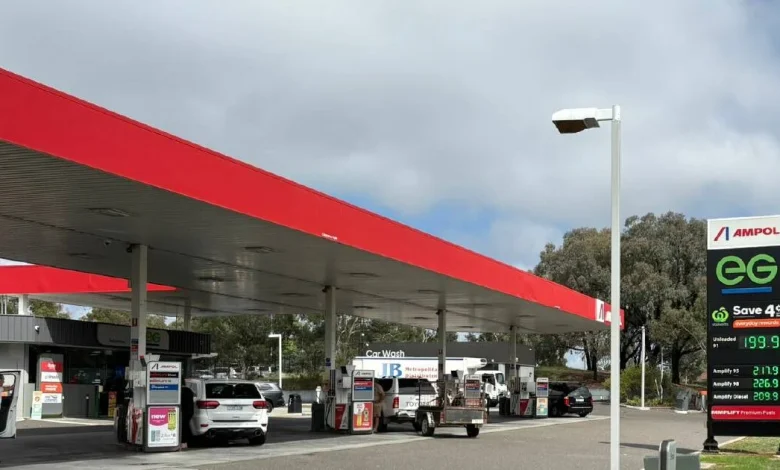
fuel prices in Canberra have risen sharply this week, with the average for unleaded climbing from $1. 81 before recent strikes to $1. 88 by March 5 and some forecourts touching $1. 99 per litre.
What If fuel prices keep rising across the capital?
Over the past week the capital saw a near eight cent rise in the price of petrol. NRMA data show the average for a litre of unleaded was $1. 81 before the attack that involved Israel and the US on Iran; by March 5 the average had risen to $1. 88. Real-time tracking app PetrolSpy recorded Unleaded 91 averaging around $1. 90, and by the morning of March 5 some stations had reached $1. 99 per litre.
The increase is already biting household budgets. One local resident said the rise will push up grocery costs and is forcing changes in travel for medical appointments. For drivers who rely on daily fares, the arithmetic is pressing: an example cited in the capital showed weekly fuel costs of about $150 against weekly earnings of roughly $1, 000 for a driver who may now be reconsidering the viability of that work.
Price dispersion across the region remains wide. The lowest recorded price in the capital on March 5 was $1. 64 per litre at one service station, while a wholesale club site sold unleaded 91 for $1. 78 as queues formed in the afternoon. In one suburb there were brief reports of shortages of 91 petrol on March 4, with supplies restored and prices ranging between $1. 92 and $1. 99 the following day.
What Happens When Fuel Supply Shocks Hit?
Wholesale costs are part of the immediate move. The wholesale price of oil rose by about 10 cents per litre immediately after the bombing of Iran, lifting pump prices in the short term. The governor of the central bank, Michele Bullock, cautioned that “things can change quickly” and warned that a supply shock could add to inflation pressures; she noted the closure of the Strait of Hormuz as an example of a disruption that would constrain flows of crude that normally transit that waterway.
Three constrained outcomes are visible from the current facts:
- Best case: Supply routes and wholesale markets calm, lower-priced outlets remain available and weekly averages drift back toward the lower price points recorded in the capital.
- Most likely: Elevated wholesale costs sustain higher pump prices across the region, with periodically wide local variation and pressure on household budgets and gig-economy drivers.
- Most challenging: Extended disruption to shipping lanes amplifies wholesale jumps beyond recent moves, pushing average prices well above current peaks and creating intermittent shortages.
Who Wins and Who Loses?
Winners in the short run are limited to outlets able to source cheaper wholesale supply or offer membership pricing; one wholesale club and a suburban site were the day’s lowest-price options. Those with large-scale purchasing power can sustain lower pump prices temporarily.
Losers include everyday commuters, people on fixed incomes who have adjusted transport and shopping habits, and drivers who depend on fare-based income. One resident described abandoning taxis for medical trips to control costs; another driver said rising fuel costs threatened the economics of their work.
Policymakers and economists are watching for broader inflation spillovers. If a supply shock persists, the immediate effect on petrol prices could feed through to retail prices for goods transported by road, intensifying cost-of-living pressures already being felt at the pump.
What readers should anticipate and do
Expect continued price volatility while the conflict and related shipping risks remain unresolved. Monitor local price trackers, consider lower-cost outlets where available, and factor rising travel costs into household budgets. For those whose livelihoods depend on driving, reassess margins now and plan alternatives if weekly fuel expenditures rise further.
The current episode makes clear that short-term geopolitical events can translate quickly into higher domestic pump prices and broader inflation pressures, with direct effects on households and drivers of all kinds. Take practical steps to manage exposure and watch developments that influence wholesale markets and fuel