The field pivots now toward crossfit open 26. 2 after a dramatic opening weekend in which Mirjam von Rohr and Bjarni Leifs emerged as the official winners of Workout 26. 1. Von Rohr’s 9: 50 mark — the only sub-10-minute time among female and male entrants — and Leifs’ 10: 59 for the men rewrote early expectations. With two workouts remaining to be revealed in the coming weeks, the next test will refine who can convert strong single-workout results into overall Open positioning.
Background & context: How 26. 1 reshapes the early leaderboard
Workout 26. 1, revealed on Feb. 26 (ET), was the first of three workouts scheduled for this CrossFit season. The announcement included a demonstration featuring elite athletes, and the Open’s format remains the same: registered competitors complete each announced workout and submit scores. The top three finishers in 26. 1 will receive prize money, with the final payouts tied to total Open registrations; preliminary indications show Mirjam von Rohr and Bjarni Leifs will each take home more than $5, 200 USD based on current counts.
The official top-three results for Workout 26. 1 are straightforward. Women: Mirjam von Rohr first, Lucy Campbell second, Keira McManus third. Men: Bjarni Leifs first, Rökkvi Guðnason second, Colten Mertens third. Von Rohr’s 9: 50 time stood out not only because it was the fastest but because it was the only time under 10 minutes. She also stepped up one box jump during the workout — the 16th box jump after a round of 40 wall balls on the descent — and was not assessed a penalty for that action. Even allowing for a minor 5–10 second penalty, von Rohr’s margin would have remained decisive; Lucy Campbell’s official time sat 44 seconds back.
Deep analysis: Performance signals ahead of Crossfit Open 26. 2
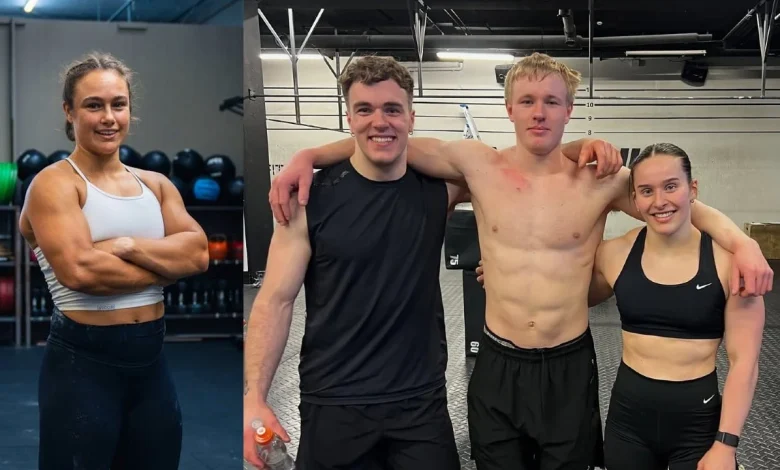
The immediate takeaways from 26. 1 are both tactical and psychological. On the tactical side, von Rohr’s sub-10 performance and Leifs’ sub-11 finish set clear early benchmarks that other competitors must target or exceed. Leifs completed the workout at CrossFit Reykjavík alongside Rökkvi Guðnason — the runner-up on the men’s leaderboard — and next to Bergrós Björnsdóttir, who finished fifth on the women’s leaderboard. That trio of top-five global finishers performing the workout together offers a compact sample of elite pacing and transition efficiency that others can study.
Psychologically, a dominant opening performance compresses margin for error. Because remaining workouts will be revealed over the next two weeks, athletes and coaches must balance recovery, programming adjustments, and risk management. The structure that produced von Rohr’s and Leifs’ winning times in 26. 1 will not repeat verbatim in future workouts, but the leaderboard pressure and the presence of prize money tied to Open registrations create clear incentives to prioritize both speed and clean execution in subsequent attempts.
Expert perspectives and regional impact
Mirjam von Rohr, 26. 1 winner (CrossFit Open), delivered the only sub-10 performance and demonstrated how a single decisive run can reshape early narratives. Bjarni Leifs, men’s winner who completed his attempt at CrossFit Reykjavík, illustrated the geographic spread of elite preparation when top athletes train and compete together in local affiliates. Rökkvi Guðnason, who finished second in the men’s leaderboard, and Bergrós Björnsdóttir, fifth on the women’s leaderboard, both underscore how clustered top-level talent in specific gyms can influence pacing and outcomes when workouts are completed side by side.
The demonstration matchup that accompanied the 26. 1 announcement also framed expectations. Colten Mertens won that initial demonstration among four invited athletes, highlighting how exhibition runs can preview movement standards and pacing strategies that the wider field will encounter. Regional reverberations are already visible: workouts completed in affiliate settings, like CrossFit Reykjavík, served as focal points for elite clustering, and that dynamic will likely shape how athletes approach crossfit open 26. 2 in both small-box and large-gym environments.
With two workouts yet to be disclosed, the leaderboard remains fluid. The Open’s prize structure — top three for each workout with amounts linked to registration totals — means both individual glory and financial incentives are at stake as the season progresses.
As attention shifts to crossfit open 26. 2, will the athletes who dominated 26. 1 translate single-workout supremacy into sustained Open success, or will the next reveal upend early expectations?