In the latest escalation, beyrouth has seen mass panic after an unprecedented call to evacuate the southern suburbs of the capital, a move that crystallizes a new inflection point in a widening regional war.
What is the current picture in Beyrouth?
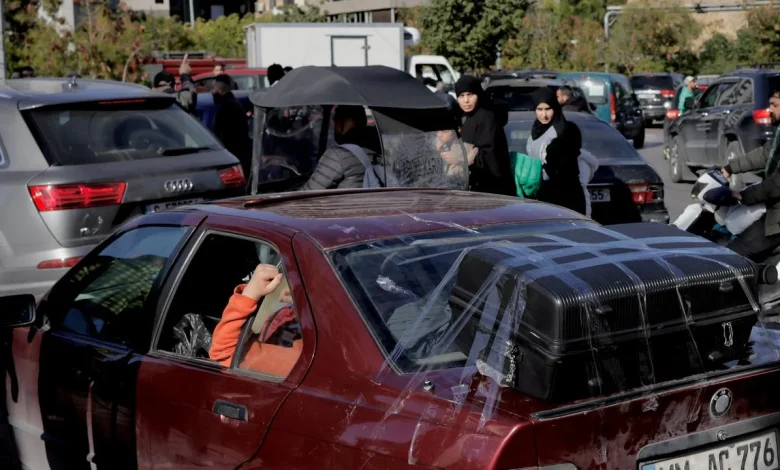
An Arabic‑language military evacuation order directed residents of the southern suburbs to leave immediately, offering routes to the north and east. That directive prompted massive traffic jams as people sought to flee, while gunfire rang out in the air to warn and mobilize the population in the area known as the Dahiyé, a Hezbollah stronghold home to hundreds of thousands of people.
Israeli authorities reported detecting a new salvo of missiles originating from Iran and said air defenses were engaging threats as sirens sounded in multiple Israeli population centers. Iranian foreign minister Abbas Araghtchi denied Tehran’s responsibility for recent drone raids in Azerbaijan and attributed those strikes to Israel. Israeli finance minister Bezalel Smotrich warned that the Dahiyé would “resemble” a city heavily damaged in another theater of the conflict, framing the evacuation within a rhetoric of punitive escalation.
At the diplomatic level, the ministers of foreign affairs of the European Union together with counterparts from the Gulf Cooperation Council described Iranian attacks as unjustifiable and called for them to stop, stressing that security in the Gulf underpins global economic stability. European foreign policy chief Kaja Kallas said Tehran appeared intent on exporting the war across multiple countries.
What forces are driving the exodus from beyrouth?
Four interlocking drivers are reshaping the immediate situation:
- Military pressure and technological reach: missile and drone salvos, and the detection and interception of those weapons, have made populated areas nodes of immediate risk.
- Non‑state actors and urban geography: the Dahiyé’s status as a Hezbollah bastion concentrates both population and political military significance, increasing the stakes of any strike or counterstrike.
- Political signaling and escalation dynamics: public warnings from senior Israeli officials and high‑profile denunciations by regional and international diplomatic figures have raised the prospect of deliberate targeting and wider retaliation cycles.
- Behavioral responses and humanitarian strain: large‑scale flight from neighborhoods, the use of warning gunfire and gridlocked evacuation routes are producing rapid displacement and acute logistical pressure on local authorities.
What Happens Next?
Three plausible scenarios frame what follows, with clear implications for civilians, regional stability and international actors.
- Best case: Evacuations proceed in an orderly way, diplomatic pressure from EU and Gulf ministers helps produce a local pause, and the most densely populated neighborhoods avoid sustained strikes. Disruption is serious but contained.
- Most likely: Continued exchanges of strikes and interceptions keep pressure on urban areas, producing repeated displacement waves and infrastructure damage. Humanitarian needs rise while regional actors cycle through warnings and counter‑warnings without immediate de‑escalation.
- Most challenging: Sustained offensive operations in and around the southern suburbs lead to heavy urban destruction and mass displacement comparable to other recent high‑intensity urban campaigns, widening the conflict’s humanitarian footprint and complicating international responses.
Who stands to gain or lose is stark. Tactical advantage may accrue briefly to armed actors able to project force, while governments that can marshal international diplomatic support may blunt escalation politically. The clear losers are civilians in dense urban districts, who face displacement, casualties and infrastructure loss; regional trade and energy stability also risk collateral damage, a point emphasized by EU and Gulf foreign ministers.
Practical steps for observers and local decision‑makers are constrained by on‑the‑ground realities: prioritize clear, safe evacuation corridors; coordinate humanitarian relief where displacement occurs; and press diplomatic channels that the EU and Gulf states have already engaged to reduce spillover. Above all, prepare for persistence of high tension and population movement while recognizing the limits of forecasts tied to fast‑moving military and political decisions in the region.
The immediate test for authorities and residents is whether orderly protection and humanitarian access can outpace force projection and political escalation in beyrouth