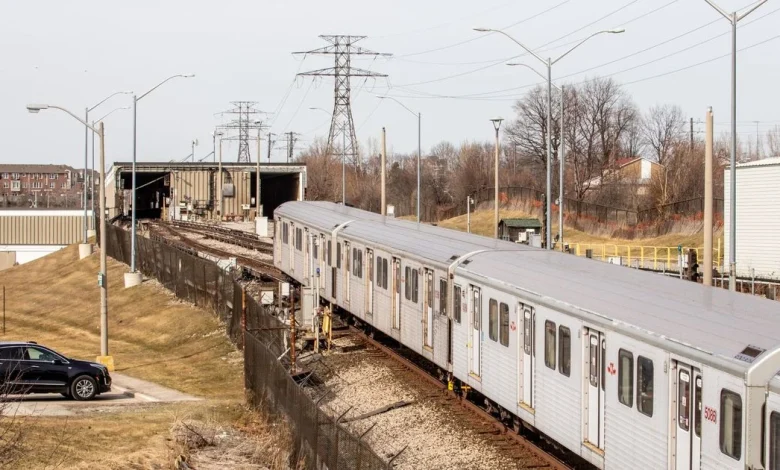
ttc subway service on the east end of Line 2 will be halted for an entire weekend, creating a splice of shuttle buses, closed stations and familiar commuter headaches. The disruption — framed as necessary track work — covers roughly five kilometres between Victoria Park and Kennedy stations and intersects with a string of recent service interruptions that have left Scarborough riders repeatedly adapting to altered routes.
Background & Context
The transit agency has announced a weekend shutdown of Line 2 between Victoria Park and Kennedy from 11 p. m. ET on Friday, March 6, to Sunday, March 8, 2026. The closure affects the stretch spanning Victoria Park, Warden and Kennedy stations; shuttle buses will replace subway service for the duration. During the work, Warden Station will be closed to commuters, while Victoria Park and Kennedy stations will remain open for fares and connections to surface routes. Regular subway service is planned to resume Monday, March 9, at approximately 6 a. m. ET.
Ttc weekend shutdown: details and immediate logistics
The planned interruption is described as part of ongoing track work. Riders who normally travel the east end of Line 2 should expect buses to cover the five-kilometre segment and to use Victoria Park or Kennedy stations for transfers or fare purchases. This closure follows a pattern of recent disruptions: residents have experienced the abrupt closure of Line 3 Scarborough RT, construction of a replacement busway, disruption tied to the Scarborough Subway Extension and waits associated with the now-open Eglinton Crosstown LRT. For many in the affected area, a multi-day outage is no longer an anomaly but an operational rhythm.
Expert perspective and commuter ripple effects
Operational messages from the transit authority have been used during recent incidents to guide riders. For a separate event on February 27, 2026, the agency posted that there was no service between Keele and St. George stations after an injury on the tracks; shuttle buses ran while crews dealt with the incident, and regular service resumed later that evening. The agency also noted that regional rail options were available at select stations for the cost of a local fare during that disruption.
Those operational precedents illustrate how the weekend shutdown will be managed: replacement buses, selective station access and explicit messaging about where riders can connect to surface or regional routes. The immediate impacts are logistical — constrained station access, longer door-to-door commute times and reliance on surface transit capacity — but they also compound cumulative inconvenience for commuters already adjusting to multiple projects and closures in Scarborough.
Statistically specific capacity or ridership figures are not part of the published closure brief, leaving the scale of added bus demand and transfer volumes unspecified. The announced timeline and station restrictions, however, create clear decision points for commuters: where to enter or exit the system, when to use substitute surface routes, and when to plan around a longer travel window.
Past short-term incidents underline operational approaches the transit agency uses during unplanned interruptions: service advisories posted in the afternoon, deployment of shuttle buses, and guidance that regional rail can be used at certain stations in lieu of subway service. Those responses are likely to be mirrored in the weekend strategy for the five-kilometre shutdown.
For residents of the affected corridor, the shutdown is layered onto a sequence of projects and service changes that have repeatedly altered daily travel patterns. That cumulative effect — repeated closures, construction zones and phased openings — shapes commuter expectations and tolerance for weekend work that displaces rail service.
Uncertainties remain limited to details not published in the agency’s announcement: precise shuttle bus frequencies, on-the-ground crowding projections and contingency adjustments if the work timeline shifts. Those operational specifics will determine how smoothly the transition between subway and buses runs for the affected stations.
As the weekend approaches, commuters should factor the announced closure window into their travel planning, use Victoria Park or Kennedy for station access if needed, and expect shuttle buses to span the five-kilometre gap while Warden remains closed to the public.
Will this weekend’s disruption prompt a different approach to scheduling and communications for future work in the same corridor, or will multi-day outages remain the standard for completing track projects in the area?