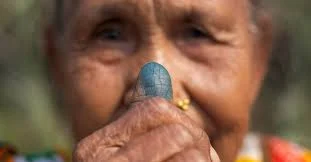
On 5 March Nepalis go to the polls in the Nepal Election, a contest framed by last year’s youth-led anti-corruption protests and the promise of a rapid transfer of power. In a remote Mustang village where only four people were registered to vote, 20 officials were deployed to deliver ballot materials and ensure security — a single snapshot of the logistical strain that will shape how, and how fast, results arrive.
How quickly will results be known in the Nepal Election?
The election commission has promised to release results for the 165 directly elected seats within 24 hours from when counting starts, while the proportional representation tally could take a further two to three days. Ram Prasad Bhandari, chief election commissioner at the election commission, says he is committed to finish counting by 9 March. That timeline would mark a significant acceleration: the last election in 2022 took nearly two weeks to deliver results.
What makes counting and collection so difficult?
More than 80% of the country is mountainous, and many polling stations sit in terrain that requires ballot boxes to be carried by hand or airlifted. Planes and helicopters are not allowed into some remote areas after dark, which often means collection can begin only the next morning. Bad weather can delay the process further. Counting itself is done by hand; every political party dispatches representatives to counting centres to inspect open ballots before they are counted. Those representatives have sometimes disputed results or the validity of votes, which in the past has led to recounts and further delays.
Who are the people and institutions bearing the burden on election day?
The Himalayan republic has been administered by an interim government under former chief justice Sushila Karki, which promised to hold fresh elections and hand over power within six months. In Mustang district a turnout picture is stark: four registered voters in one village, while 35 eligible voters from the same village live elsewhere and could not return because of heavy snowfall. Officials were sent in disproportionate numbers — 20 deployed to that tiny village — to deliver materials, supervise voting and ensure security. Across the country nearly 19 million people are registered to vote, including almost a million first-time voters, all aiming to elect 275 members of parliament.
Voices on the ground and the specialist perspective
Leaders and administrators have framed the exercise as both urgent and delicate. “We will hold fresh elections and hand over power within six months, ” said Sushila Karki, former chief justice and head of the interim government, echoing the compact that brought the interim administration to power. From the election commission, Ram Prasad Bhandari emphasized the operational deadline: “I am committed to finish counting by 9 March, ” he said, underscoring the commission’s push to compress what has historically been a slow process.
The institutional picture is clear: the election commission has set ambitious targets; the interim government has pledged a limited window for transition; and on the ground, election officers, party agents and a dispersed electorate confront weather, altitude and transport constraints. Counting by hand and party scrutiny of ballots remain central features of the process, and where disputes arise they can lengthen the wait for final tallies.
What is being done to manage the challenges?
Authorities are concentrating resources on collection and security in remote areas, using a mix of ground transport and airlifts where permitted, and deploying officials in numbers that often outstrip local populations to ensure the vote can proceed. The election commission’s deadline for the 165 directly elected seats aims to shorten uncertainty, while the staggered completion of proportional representation counts acknowledges the added complexity of that system. Political parties’ presence at counting centres is intended to preserve transparency, even if it risks contestation and recounts.
Back in the Mustang village, the small cluster of voters and the large contingent of officials encapsulate the wider dilemma: how to deliver a nationwide, credible election across terrain that tests any timetable. As polling concludes and ballot boxes begin their journeys to counting centres, the promise to finish by 9 March will be the benchmark. If it is met, it will be a logistical feat; if not, the delays will be explained in maps of altitude, weather and the long hand of manual counting.
When the last ballot is counted and the nation learns who will occupy the 275 parliamentary seats, the scene in that village — four names on a register, 20 officials on duty, 35 absent voters tied to snow and migration — will remain a small, revealing human ledger of what it took to hold this Nepal Election.