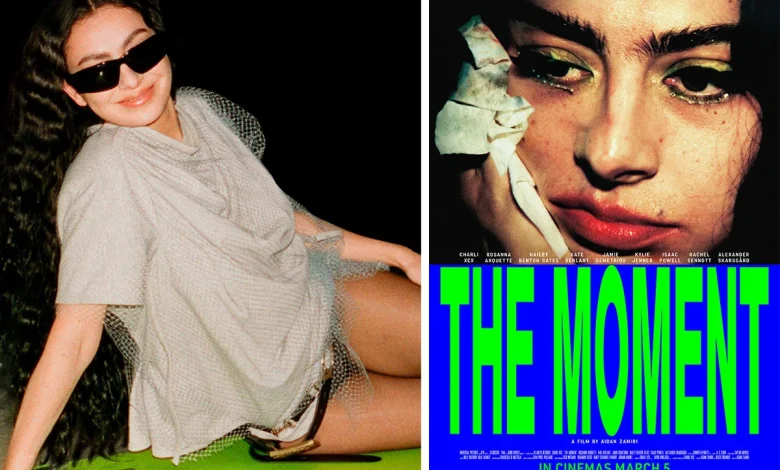
Under the theater lights, the premiere buzz made one thing clear: the moment the film opens is meant to land like a shove. The Moment arrives framed as an intimate, provocative portrait of pop stardom and a high-concept send-up of the music documentary; the film “offers an intimate look inside the high-stakes world of pop stardom, ” and that image unfolded at the screening.
What is The Moment saying about fame?
In blunt strokes and comic set pieces, The Moment stages a rising artist preparing for an arena tour debut and exposes the cost of ambition. The cast—led by Charli XCX and including Rosanna Arquette, Kate Berlant, Jamie Demetriou, Kylie Jenner, Rachel Sennott and Alexander Skarsgard—moves between glittering ascent and quieter, fraught moments of doubt. On the surface there are sold-out shows and flashing lights; beneath the surface, the film sketches scrutiny, emotional toll and the fear of being forgotten. The production is built on an original idea from Charli XCX and is presented as a mockumentary by A24, a framing that lets satire and tenderness share the same frame.
How does the film mix satire, commerce and shock?
The Moment pushes its satire toward a specific target: the entanglement of art and commerce. In the film, a fictional deal between an artist’s American-based label and a bank called Howard Sterling produces a slime-green credit card tied to tour promotions. An Instagram post derails that promotion, fans sign up to get free tour tickets, defaults multiply and the plot tips toward full-scale financial meltdown. One on-screen exchange captures the film’s edge when Charli asks the bank’s executives whether the credit card’s young, queer target memo “have to prove” they’re gay to qualify — a line that lands as both dark joke and social provocation.
Outside the plot, reactions have ranged from seeing the film as a deep commentary on debt and celebrity to calling it a deliberately unsubtle middle finger to the music documentary genre. The artwork’s mixture of comedy and horror has prompted some critics to label it a capitalist critique; one strand of commentary uses a blunt phrase to describe that argument, calling it “a capitalist hellhole. ” That interpretation sits beside other readings that focus on the human cost of being in the public eye.
Promotion around the release included an offer of 25 double passes to see The Moment in cinemas around Australia from March 5, a move that mirrors the film’s own preoccupation with access, marketing and audience demand.
The film also threaded into awards-season conversation. A recent awards show shake-up has been said to have shifted the Oscar race; that conversation ran in parallel with discussions about performances and speeches, and commentators singled out an acceptance speech described as a “10/10 moment, ” while other coverage turned to the question of which performers might be ripe for major awards attention and whether certain actors deserve Academy recognition.
Kylie Jenner’s appearance in the cast has been called a surprising acting debut, adding another human story to the film’s public life: a celebrity known for other arenas stepping into a textured, scripted project. Separately, the film’s publicity has prompted chatter about interpersonal dynamics in pop culture, including an online spar over Charli and another high-profile artist that some said the film appeared to address directly.
The Moment lands as both experiment and proposition: a mockumentary that folds satire into a portrait of anxiety and industry pressure, and a public event that engaged audiences not only on screen but in promotion and conversation off it. At the premiere, faces in the crowd registered amusement, unease and recognition—an attentive audience watching a story about people whose lives are always on display.
Back in the dark of the theater where the story began, the final frames leave the cast and the characters unresolved but shaken into sharper focus. The Moment asks what we owe performers and what fame extracts in return; it leaves viewers with a question as the lights come up — whether the film’s provocation will prompt change, conversation, or simply more spectacle.