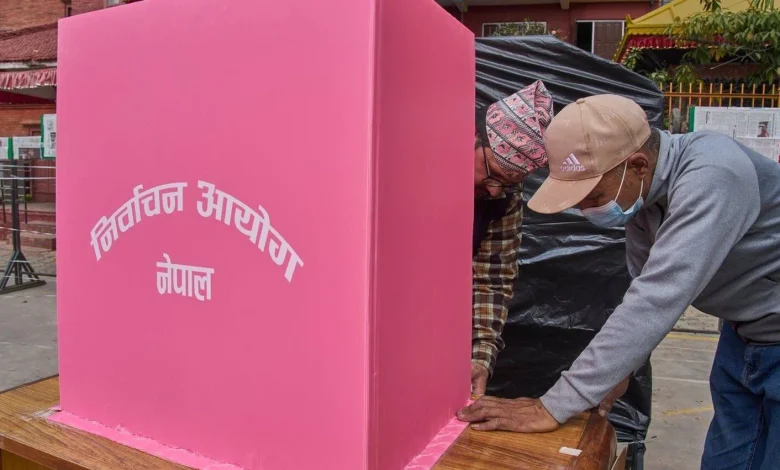
The national vote opened amid extraordinary movement and restrictions across the country as voters responded to last year’s youth-led protests that ousted the government. In nepal, nearly 19 million people are eligible to vote in a contest that pits a newly formed, youth-backed party against long-standing political forces, while about 800, 000 residents of the Kathmandu Valley have returned to home constituencies to cast ballots.
Nepal at the Polls: The immediate context
Polling stations were set up and security forces patrolled streets as the nation entered its first parliamentary election since the unrest. Authorities banned vehicles from main thoroughfares and prohibited political rallies and public gatherings on election day; all forms of campaigning were barred during voting. Counting of votes will begin later in the day, with results expected over the weekend. The ballot will directly elect 165 members to the lower chamber, with 110 additional seats allocated through proportional representation to complete a 275-member House of Representatives.
Background and stakes: Why this matters now
The election arrives after a violent, youth-led uprising that began with a social media ban and escalated into mass protests demanding accountability, leaving dozens dead and hundreds injured when security forces confronted demonstrators. The revolt reshaped the political landscape: an insurgent party founded in 2022 has emerged as a major player and its prime ministerial candidate, a former rapper who served as mayor of the capital, rode public anger at traditional parties to prominence. Voter frustration over corruption and governance failures frames the contest, and nearly a million first-time voters add an unpredictable element to turnout dynamics.
Deep analysis: Five fault lines beneath the ballot
First, voter geography. Nepal’s law requires citizens to vote in their registered constituency, prompting large-scale movement back to hometowns. Some 800, 000 people left the Kathmandu Valley to return to vote, creating congestion on highways and intense local pressure on results in rural seats.
Second, generational change. Almost a third of the 3, 400 candidates are under 40, and youth mobilization that toppled the prior government has translated into sizable crowds for the insurgent party on the campaign trail. That party’s appeal among younger voters centers on promises to tackle corruption and improve services like health and education for the poor.
Third, institutional balance. With 165 members elected first-past-the-post and 110 seats filled by proportional lists, party organization and vote distribution will be decisive. Parties with disciplined lists can offset losses in direct races, complicating post-election coalition math.
Fourth, security and legitimacy. The deployment of security forces and restrictions on public assembly reflect a state intent to preserve order; at the same time, the memory of deadly clashes during the protests increases scrutiny on election-day conduct and the legitimacy of any outcome perceived as skewed.
Fifth, campaign credibility. Traditional parties retain loyal bases while the insurgent force challenges their record. The new party’s candidate emphasizes policy shifts toward health and education, but critics point to limited governing experience and controversial actions while serving as mayor.
Expert perspectives
Balendra Shah, prime ministerial candidate and former mayor of Kathmandu, highlighted health and education for poor Nepalis as a central focus during his campaign and has emerged as a leading figure in the movement that ousted the prior administration.
Gagan Thapa, leader of the Nepali Congress party, has pledged to tackle corruption and strengthen government accountability, framing his party’s bid as a restoration of institutional norms.
Khadga Prasad Oli, former Prime Minister of Nepal and head of the Communist Party of Nepal (Unified Marxist–Leninist), has advocated policy continuity and political stability as his party’s central offer to voters.
Regional and global implications
The next administration will inherit pressing domestic challenges: delivering the reforms demanded by protesters, confronting entrenched corruption and stabilizing governance. The composition of the new parliament will also shape how nepal manages relations with neighboring powers and external partners, given the strategic position of the country and the need for diplomatic balance. International observers and regional capitals will watch the formation of any government for signs of continuity, reform or instability.
Conclusion
With counting under way and results anticipated over the coming days, the election will test whether the surge that reshaped politics during the protests translates into durable power and governance change. How will nepal’s new political map reconcile youth-driven demands with the practical necessities of running a 275-seat parliament and a country still healing from last year’s clashes?