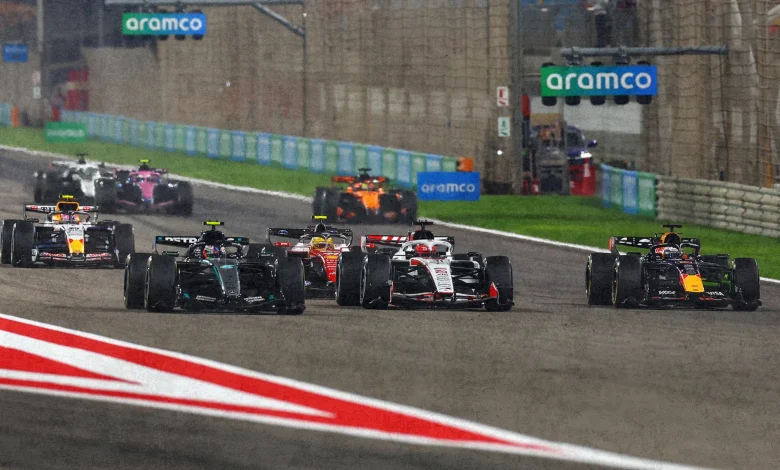
The 2026 rule set has remade formula 1 in a single winter: engines split roughly 50/50 between electric and combustion power, radical active aero replaces DRS, and energy management now dictates much of on-track behaviour. This package promises sustainability and spectacle but introduces layers of technical control that drivers and teams say are making the sport harder to read.
How will Formula 1 cars manage energy differently on track?
Verified facts: The power-unit architecture has been rebalanced to pursue a near 50/50 split between electric drive and the internal combustion engine. The motor generator unit – kinetic (MGU-K) deployment has been increased to 350 kW from 120 kW, while internal combustion output is limited toward roughly 400 kW from previous levels above 550 kW through fuel-flow and compression constraints. Battery charge remains capped at 4 megajoules, so a full battery can be depleted up to three times faster than before. Per-lap electrical harvesting allowances have risen to between 8 MJ and 9 MJ at some circuits, up from 2 MJ under earlier regulations. These changes are accompanied by an explicit move to fully sustainable fuels.
Analysis: Those technical details create a new energy economy on every lap. Higher instantaneous electric power and much greater harvest-per-lap mean teams must balance bursts of electric deployment against aggressive harvesting zones. Drivers are already flagging how energy management will influence qualifying and race craft; the combination of a smaller usable battery at any instant and a far greater recovery budget reshapes both overtaking windows and lap-to-lap strategy.
What does the aerodynamic and overtaking revolution mean for racing?
Verified facts: Active aero has replaced the drag-reduction system. Both front and rear wings can adjust angles on the straights to lower drag and increase downforce in corners. The discrete DRS mechanism no longer exists; in its place an overtake mode gives a burst of extra electric energy when a driver is within one second of the car ahead at a detection point. Teams have already trialled novel hardware within this framework, including a rotating rear-wing concept used briefly in testing.
Analysis: Active aero plus electric overtake mode shifts the locus of passing from pure aerodynamic wake exploitation to coordinated aerodynamic and energy-use actions. While the aim is clearer racing with cleaner air sensitivity, teams and drivers will need to master a layered choreography: aero position, battery state, harvesting zones and overtake activation. The resulting races may offer different kinds of wheel-to-wheel action, but the prerequisites for extracting that action — software control, energy prediction and precise aero mapping — are more technically demanding than the old DRS era.
Who looks ready for the new era and who is exposed?
Verified facts: Early testing has produced a tentative pecking order with McLaren, Mercedes, Red Bull and Ferrari grouped as the likely top quartet. Alpine, Haas and Racing Bulls are being mentioned in discussion for midfield leadership. Aston Martin suffered a difficult pre-season: the team logged 128 laps in the second Bahrain test and recorded only six untimed laps on a final day due to a battery-related issue, while another team logged 432 laps in the same session. One rookie, Arvid Lindblad, put heavy mileage on track in testing and recorded the highest daily lap count on a final day of running for his team.
Voices from the paddock underline the scale of adaptation. Lewis Hamilton, seven-time world champion, described the new rules as “ridiculously complex” during preseason tests in Bahrain. Christian Horner, former Red Bull team principal, warned the new cars risk becoming “Frankenstein” creations. Max Verstappen, four-time world champion, compared the cars to “Formula E on steroids” because of the demands of energy management. Alpine Managing Director Steve Nielsen expressed confidence that his team had taken a step forward, while Team Representative Pedro de la Rosa at Aston Martin called pre-season testing “extremely tough” and said the team were not setting targets as they sought to understand the package.
Critical analysis and accountability: The 2026 regulations were designed to accelerate sustainability and technical innovation. The trade-off is an emphasis on engineered energy systems and active controls that can decide on-track outcomes as much as traditional mechanical grip and driver skill. That raises three accountability questions for the sport’s governance and team leadership: clarify how sporting rules will handle energy-related disputes; publish baseline telemetry standards so competitors and the public understand when overtake mode is invoked; and require transparent post-session summaries of battery and harvesting parameters so performance differences are attributable to design or operation rather than opaque software strategies.
These reforms will determine whether the 2026 season delivers the promised green transformation without sacrificing the clarity of racing that draws fans. If the sport is to retain trust while it reinvents itself, teams and regulators must make technical choices—about energy budgets, aero actuation windows and telemetry transparency—that are auditable and explained. Only then can engineers’ advantages be debated on engineering grounds rather than left as inscrutable determiners of position. The stakes are high for the spectacle and for the credibility of formula 1 as it embarks on this new era.