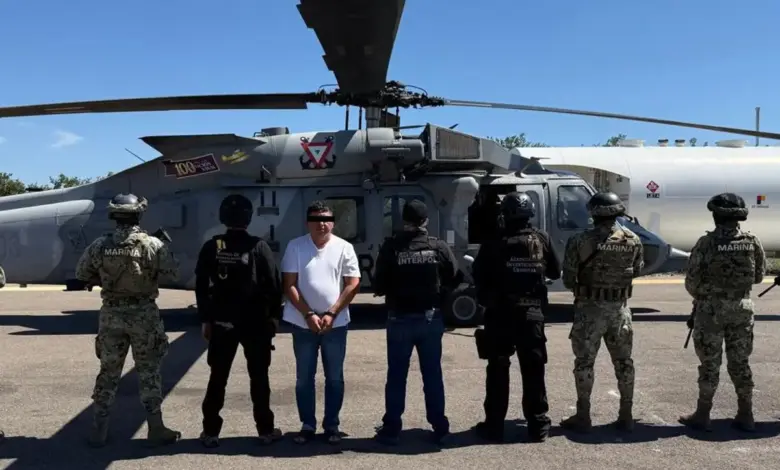
Audias Flores Silva marks a turning point because the detention in Nayarit places a high-value CJNG figure at the center of a wider security and extradition fight. The arrest, announced by Mexico’s Secretary of Security and Citizen Protection, Omar García Harfuch, adds immediate pressure to a criminal organization already under sustained scrutiny from Mexican and U. S. authorities.
What Happens When a succession figure is removed?
The core question is not only who was detained, but what the arrest signals about the current pressure on the CJNG. Audias Flores Silva, also known as El Jardinero, was identified as a member of the cartel and described as a possible successor to El Mencho. That framing matters because it suggests this was not a routine arrest, but the removal of a figure tied to organizational continuity.
Authorities said the operation was planned, developed, and executed by the Navy’s Special Forces. The same account states that the arrest took place in Nayarit and that Flores Silva has an arrest warrant in Mexico, while also being wanted by U. S. authorities for extradition purposes. The combination of domestic detention and cross-border interest makes the case more than a local security headline.
What If the operation is a sign of tighter coordination?
The available facts point to a coordinated effort among Mexican institutions, with intelligence work and information exchange with U. S. agencies playing a role in locating the target. That matters because it suggests a level of operational cooperation that can change the tempo of enforcement against organized crime.
One institutional detail stands out: the operation was described as surgical, with no shots fired, no deaths, no injuries, and no collateral damage. In a landscape where high-risk operations can quickly escalate, that outcome strengthens the government’s message that it can act decisively without triggering wider violence in the immediate area.
The operation also fits a broader pattern of pressure on the CJNG. The Office of Foreign Assets Control at the U. S. Treasury has described the CJNG as a violent trafficking organization responsible for a significant share of fentanyl and other drugs trafficked to the United States. In that context, the detention of a figure linked to the Pacific coast corridor, including Nayarit, has implications beyond one state.
What Changes in the balance of risk and control?
Based on the information available, the arrest could affect four groups differently:
| Stakeholder | Likely effect |
|---|---|
| Mexican security institutions | Boost to enforcement credibility and operational confidence |
| U. S. authorities | Stronger basis for extradition pressure and joint intelligence work |
| CJNG networks | Potential disruption in succession planning and territorial coordination |
| Communities in Nayarit and nearby areas | Short-term relief if the operation helps reduce armed presence |
At the same time, uncertainty remains. The arrest of one figure does not automatically resolve the broader structure around the CJNG, and the context does not support any claim that the network has been dismantled. What it does show is that a priority target was located, isolated, and detained after a prolonged tracking effort.
The report also notes that another figure, César Alejandro N, alias El Güero Conta, was detained in Jalisco in a separate action tied to Flores Silva. That detail suggests the security effort is not isolated to one individual, but part of a wider campaign against linked operators.
What Happens Next for Audias Flores Silva?
Three scenarios now frame the near term. In the best case, the arrest strengthens institutional momentum, the extradition process advances, and follow-on operations avoid new violence. In the most likely case, authorities continue information-driven actions while the CJNG absorbs the shock and tries to preserve its local structures. In the most challenging case, the detention triggers internal repositioning or retaliatory pressure in affected corridors, though the current context does not indicate that outcome has already begun.
For readers, the key takeaway is simple: this is a security event with national and cross-border significance, not just a single arrest. It reflects the intersection of intelligence, maritime forces, and extradition pressure at a moment when organized crime remains a central challenge. Audias Flores Silva