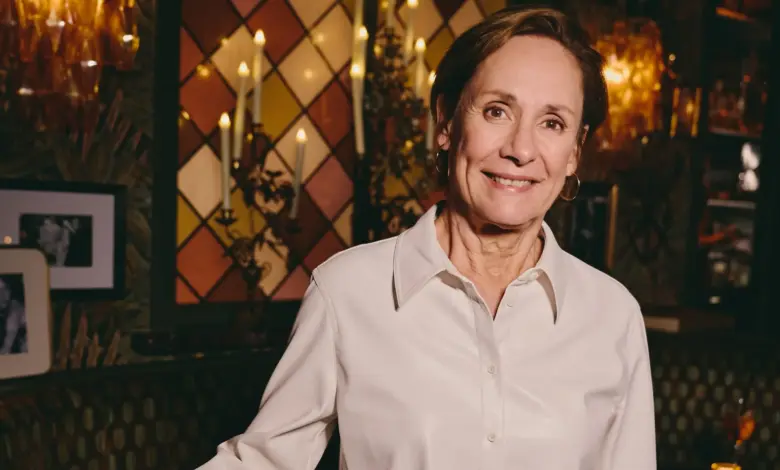
Laurie Metcalf is now at the center of a Broadway conversation that reaches beyond one revival or one producer. Her decision to keep working with Scott Rudin has become a visible test of how the theater world weighs rehabilitation, loyalty, and the consequences of a public return after a retreat from the spotlight.
What If this partnership becomes the template?
The immediate context is clear: Metcalf is starring in Arthur Miller’s Death of a Salesman on Broadway, while Rudin is back producing after a multi-year pause. The pairing matters because it is not an isolated reunion. It follows Little Bear Ridge Road, another Broadway project tied to the same producer, making Metcalf one of the most prominent performers linked to his return.
That is why the debate has moved from a single casting choice to a larger industry signal. Metcalf defended the collaboration by saying Rudin apologized, reflected on what he said, and was in the process of rehabilitation. She also said she found it hypocritical that some people wanted to work with him but did not want to be the first. Those comments place the question squarely in the present: what happens when a major artist chooses to validate a comeback before the broader field has settled its judgment?
What Happens When Broadway Recalculates Risk?
Rudin’s path back is tied to a very public rupture. His retreat followed allegations of abusive workplace behavior that were detailed in a 2021 investigation, including claims from former staffers about thrown objects, verbal abuse, and an assistant’s hand being injured in an incident involving a computer monitor. He later described therapy and took responsibility for much of his actions in a March 2025 interview, saying he wanted to return to making work and accepted that some people would remain angry.
Metcalf’s presence gives that return practical force. She was already part of Rudin’s earlier creative orbit, including work that helped shape her profile on Broadway and in film. Now, the issue is not only whether Rudin can re-enter the business, but whether major artists and institutions are willing to be part of that reset.
Steppenwolf Theatre Company sharpened the stakes. laurie metcalf co-founded the Chicago company, and the group originally commissioned Little Bear Ridge Road. When Rudin offered to bring the production to Broadway, Steppenwolf declined to work with him because it did not feel aligned with its values and mission. That decision shows how institutional identity can pull in a different direction from individual creative alliances.
| Force | Current signal | Likely effect |
|---|---|---|
| Rehabilitation narrative | Rudin has publicly framed his return around therapy and responsibility | Some artists may accept a second chance |
| Institutional values | Steppenwolf declined to attach its name to the Broadway transfer | Organizations may draw firmer boundaries |
| Star power | Metcalf remains central to both productions | High-profile talent can normalize contested partnerships |
What If the cultural split widens?
Three scenarios stand out from the current evidence.
Best case: The Broadway community treats Rudin’s return as conditional, demanding clearer standards while still allowing collaboration when artists believe rehabilitation is genuine. In that version, Metcalf’s stance becomes one part of a wider, more deliberate conversation about accountability.
Most likely: The split remains unresolved. Some artists keep working with Rudin, others refuse, and institutions make case-by-case decisions. The result is not consensus but continued tension, with each new production reopening the same moral and professional questions.
Most challenging: The controversy hardens into a permanent reputational divide, where every project attached to Rudin becomes a proxy battle over workplace conduct, forgiveness, and the authority of institutions to set boundaries. In that scenario, the art is never separated from the dispute surrounding it.
What If the stakes are bigger than one production?
The main winners in the short term are the productions themselves, which benefit from attention, prestige, and Metcalf’s standing as a leading stage actor. Rudin also benefits if the comeback continues to hold, because prominent collaborators make the return feel real rather than symbolic.
The likely losers are institutions that want flexibility without appearing inconsistent. Steppenwolf’s position shows the pressure on organizations to defend their values in public, even when a production has artistic and commercial appeal. Also affected are artists deciding whether collaboration now carries a reputational cost that extends far beyond one show.
Audience members may be the least visible stakeholders, but they shape the outcome through attention and response. If the public accepts the rehabilitation argument, the comeback becomes easier. If not, each production remains shadowed by the same question.
What Should Readers Watch Next?
Watch for whether this remains a Broadway-specific dispute or becomes a broader rule-setting moment for the theater industry. The key indicators are simple: which institutions attach themselves to Rudin, which performers follow Metcalf’s lead, and whether the language of rehabilitation continues to outweigh the memory of harm. For now, the most honest forecast is that the debate will not resolve quickly, because the facts that made it urgent have not disappeared. That is why laurie metcalf matters here: her choices are helping define where Broadway draws the line, and how long that line can remain contested.