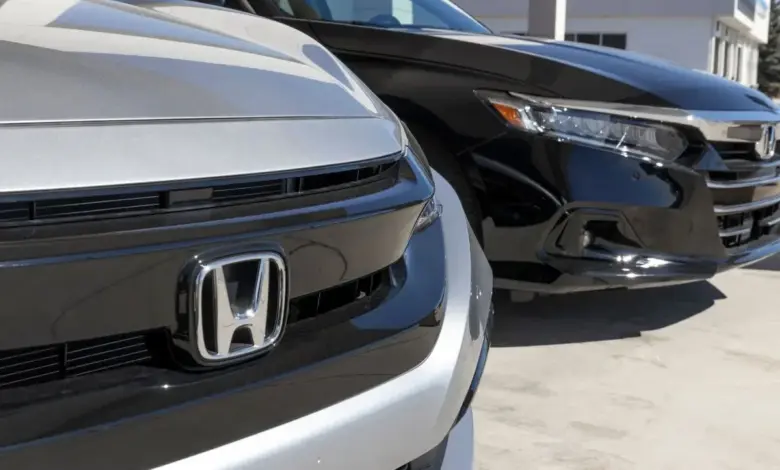
honda recalls are often framed as routine safety maintenance, but this case points to something more troubling: underbody impacts that might seem minor can trigger inadvertent side curtain airbag deployment in affected Odyssey minivans. American Honda has recalled approximately 440, 000 model year 2018–2022 Odyssey minivans because the SRS ECU deployment thresholds for second- and third-row side curtain airbags are too sensitive. Potholes, speed bumps, and road debris can set off the system. Honda has logged 130 warranty claims and 25 injury reports tied to the issue.
What is the real risk inside these Honda recalls?
Verified fact: the defect is tied to the SRS ECU, and the concern is not a cosmetic fault or an isolated warning light. The recall affects a large pool of 2018–2022 Odyssey minivans, and the described trigger is unusually ordinary road contact. That matters because collision repair shops may see vehicles after an underbody hit without any obvious sign that the restraint system has become vulnerable. In that setting, honda recalls stop being a distant manufacturer notice and become a direct repair-floor issue.
Verified fact: American Honda says dealers will reprogram or replace the SRS ECU at no cost. The issue is therefore not being treated as a customer-pay repair, and it is not being left to guesswork at the shop level. The recall language places the burden on the manufacturer and dealer network to correct the sensitivity problem.
Why should collision shops pay attention to a minivan recall?
Verified fact: shops performing post-collision SRS work or underbody repairs on affected Odysseys should be aware of the recall because inadvertent deployment is possible after underbody impacts. That warning changes the repair posture. A vehicle that appears to have suffered only road-surface damage could still carry a restraint-system risk once teardown begins.
Analysis: the key hidden issue is timing. A driver may not connect a pothole strike, a speed bump, or road debris with a later airbag event. But the system described here is sensitive enough that ordinary driving conditions can become the trigger. For repairers, that creates a documentation and safety challenge: the vehicle may arrive for unrelated service or collision work, yet the recall makes the airbag system part of the intake conversation from the start.
Verified fact: Honda has already recorded 130 warranty claims and 25 injury reports tied to the condition. Those numbers do not explain every case, but they show the defect has already moved beyond theory. In a recall context, claim and injury totals are the clearest sign that the problem has manifested in the field.
What else in the same repair cycle adds to the pressure?
Verified fact: Hyundai Motor Group has issued parallel recalls covering 94, 760 Genesis vehicles and 141, 032 Kia Carnival minivans over a shared defect involving crossover fuel pipe fasteners that were under-torqued during assembly and can loosen over time. The stated result is a fuel leak and engine compartment fire risk. The Genesis recall covers 2021–2025 G80 and GV80, 2022–2026 GV70, and 2023–2025 G90 models. The Kia recall covers 2022–2026 Carnivals.
Analysis: the significance is not that these recalls are identical, but that they place collision shops on alert for different hidden hazards at intake. A fuel odor during teardown on a Genesis or Kia Carnival has to be treated as a serious clue, not a nuisance. In the same week, one manufacturer is dealing with airbag sensitivity after underbody impact, while another is dealing with a fastener issue that can become a fire risk. Together, they show how much safety work now depends on careful inspection before repairs begin.
Verified fact: dealers will retighten or replace the crossover pipe at no cost, and owner notifications are scheduled for early June.
What does this mean for accountability and repair transparency?
Verified fact: the Honda recall is broad, the reported injury count is non-trivial, and the defect is tied to a common driving environment rather than an extreme event. That combination is why the issue deserves more than a standard recall notice. It also explains why the repair industry is being told to look at intake conditions, teardown findings, and post-collision SRS work more carefully.
Analysis: the public should expect clear notice, fast dealer action, and consistent repair guidance. For affected Odyssey owners, the central concern is not whether the recall exists, but whether the vehicle has already experienced the kind of underbody impact that can expose the defect. For shops, the central concern is whether a vehicle that seems minor on arrival may carry a restraint-system hazard underneath. In that sense, honda recalls are not just about replacement parts; they are about whether everyday road damage can be allowed to masquerade as routine wear.
Accountability conclusion: The evidence points to a simple demand: clearer intake checks, prompt dealer correction, and more transparent communication to owners whose vehicles may be exposed to inadvertent airbag deployment after underbody impacts. Until that happens, honda recalls will remain a reminder that some of the most serious safety failures begin with conditions drivers barely notice.