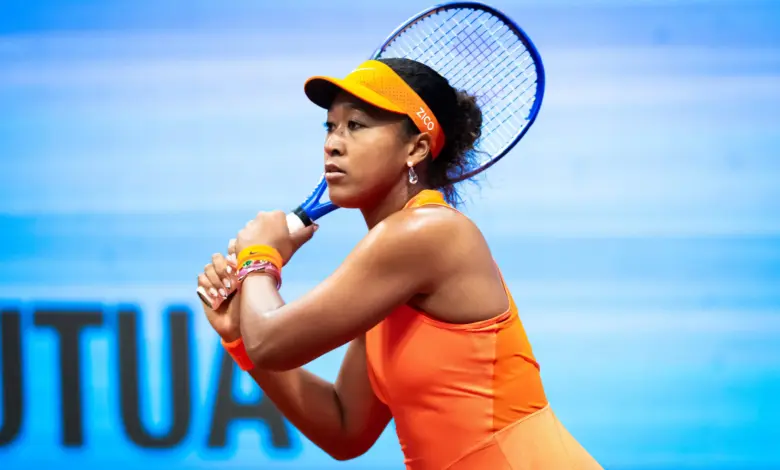
naomi osaka arrives at a decisive inflection point in Madrid, where a straight-set win has set up a Round of 16 meeting with Aryna Sabalenka and a chance to reset the balance of a rivalry that is tied at 1-1. The timing matters because both players are in strong form, both won their previous matches comfortably, and the winner moves into the quarterfinals with momentum that could shape the rest of the event.
What Happens When Two Form Players Meet on Clay?
Sabalenka and Osaka will face each other away from hard courts for the first time in the Mutua Madrid Open. Sabalenka reached the fourth round with a 6-1, 6-4 win over Jaqueline Cristian, while Osaka advanced 6-1, 6-3 against Anhelina Kalinina. The setup is straightforward: Sabalenka is chasing a fifth Madrid quarterfinal and a 15th straight match win, while Osaka is aiming for her first Madrid quarterfinal since 2019.
Their last meeting came earlier this year at Indian Wells, where Sabalenka won in straight sets to pull level in the head-to-head. That makes this match more than a routine Round of 16 contest. It is also a test of whether Osaka can translate a clean clay-court win into a deeper run, and whether Sabalenka can keep extending a season that has already produced a 25-1 record and a 14-match winning streak before this stage.
What Does the Current Form Tell Us?
Both players have handled Madrid conditions efficiently so far, but in different ways. Sabalenka’s win over Cristian showed control after an early lead, even as she had to save four break points in the second set before closing out the last three games. Osaka’s match against Kalinina was more uneven late on, as she built a 6-1, 4-1 lead and then had to survive a long final game before finishing on her fourth match point.
| Player | Madrid position | Recent signal | Key pressure point |
|---|---|---|---|
| Sabalenka | Into Round of 16 | 14 straight wins before this stage | Maintaining level under brief resistance |
| Osaka | Into Round of 16 | Two straight-set wins in Madrid | Converting strong starts into a deeper run |
| Match stakes | Quarterfinal place | Head-to-head tie at 1-1 | First clay meeting between them |
What Forces Could Decide Naomi Osaka Against Sabalenka?
The first force is surface transition. The match is their first clay-court meeting, which changes the rhythm of rallies and the value of first-strike tennis. The second force is pressure tolerance. Sabalenka has shown the ability to absorb a late push and finish matches in straight sets, while Osaka had to work through a tight ending against Kalinina. The third force is tournament context: Sabalenka is defending a strong Madrid record, while Osaka is still trying to break back into the deeper rounds here.
There is also a psychological layer, but it should be kept modest. Sabalenka has said their meetings have always produced a great battle and a high level of tennis, and that view fits the narrow margin between them. Still, the numbers visible in Madrid matter more than narrative. Sabalenka has won 25 of 26 matches this year, while Osaka has shown enough sharpness to stay in contention when the score tightened.
What If the Match Turns in Different Directions?
Three paths stand out.
- Best case: Osaka carries her early aggression through the second set, keeps points short enough to avoid long defensive exchanges, and reaches her first Madrid quarterfinal since 2019.
- Most likely: Sabalenka’s current level and recent winning streak prove decisive in the biggest moments, but Osaka pushes her hard enough to keep the score competitive.
- Most challenging: If Osaka’s level dips after an early surge, Sabalenka’s consistency and recent match rhythm could produce a controlled straight-sets win.
The most important point is that none of these outcomes would be surprising. The matchup is narrow enough to reward execution more than reputation.
Who Wins, and Who Loses, If the Pattern Holds?
If Sabalenka wins, she strengthens a season already defined by consistency and adds another Madrid quarterfinal to a record that has made this tournament one of her most reliable stages. If Osaka wins, the result would mark a clear signal that her Madrid run is more than a one-off advance and could open a stronger clay-court trajectory.
The loser will not leave Madrid with a damaging collapse on the record, but the context differs. For Sabalenka, defeat would interrupt one of the sport’s most dominant stretches this season. For Osaka, it would mean another missed chance to turn an encouraging draw into a breakthrough at this event.
What Should Readers Watch Next?
Watch the first six games, because they will tell the story quickly. If Sabalenka absorbs Osaka’s first wave of attack and extends rallies on her terms, she will likely hold the advantage. If Osaka keeps the match on serve and forces Sabalenka into repeated second-serve pressure, the contest becomes far less predictable. Either way, the Madrid setting now magnifies every small swing, and naomi osaka enters it with a real opening to change the shape of this rivalry.