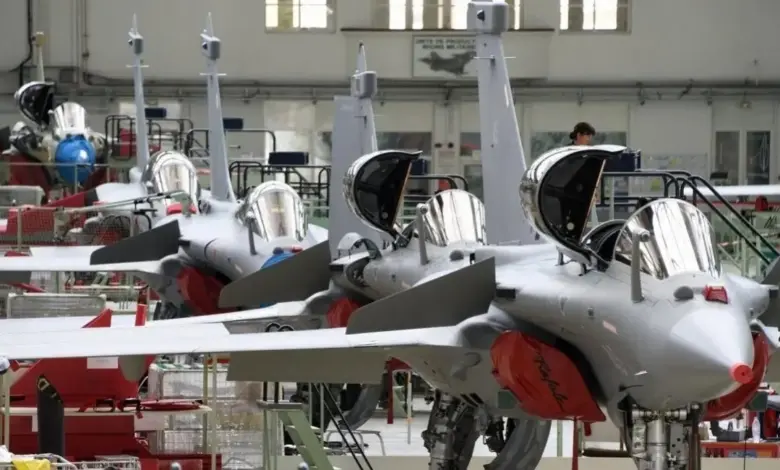
The Dassault Rafale deal for 114 fighters has moved from a headline-grabbing agreement to a difficult test of leverage, control, and timing. What was meant to be one of the largest fighter-jet sales in history now appears stuck on a single issue: whether India can integrate its own weapons and systems without surrendering the balance of control France wants to keep. That dispute may seem technical, but it has become the point where a tens-of-billions-of-euros deal could stall, or even unravel.
Why the Dassault Rafale talks matter now
The negotiations between France and India are described as having reached a deadlock only months after the signing of the agreement. The central issue is not the number of aircraft, but the terms under which they would be used and modified. India wants the ability to freely integrate its own weapons and systems into the aircraft, and officials close to the Indian defense minister have made clear that this condition is non-negotiable. For New Delhi, that demand fits the Atmanirbhar Bharat program, which stresses greater autonomy for domestic defense industries and long-term control over combat readiness.
France, meanwhile, has resisted granting access that could weaken its control over the platform. The dispute focuses on the Interface Control Document, which India wants access to, rather than the proprietary source code. Even that narrower demand has not resolved the impasse. France is open to Indian weapons integration only if French officials retain full control over the process, a line India appears unwilling to accept.
The real fault line behind the agreement
On paper, the disagreement is about modernization. In practice, it is about ownership of capability. India has already complained that maintaining its existing Rafale fleet is expensive because France refuses to provide the source code, and it has previously threatened steps that would allow it to reduce reliance on French support. That history matters because it shows the current deadlock is not an isolated technical dispute but part of a broader contest over operational independence.
There is also a strategic dimension that goes beyond procurement. France is concerned that granting such access could create a precedent and reduce future service sales. It is also worried that India’s close relationship with Moscow could create risks that the russian federation could gain access to sensitive software code. That possibility is being treated as a major warning sign not only for current operators of the aircraft but also for future buyers watching how the terms are handled.
What a stall means for Ukraine and the wider market
The delay could have consequences far beyond the India-France relationship. Ukraine has its own plans to purchase 100 Rafale aircraft for its air force, and a stalled Indian deal could move Ukraine up the production queue. In practical terms, that means a shorter wait and potentially faster delivery. The context is important: when a large order slows, smaller or later buyers may benefit from earlier access to manufacturing capacity.
This is why the Dassault Rafale file is being watched so closely. It is not just a bilateral procurement problem; it is a test of how much control a buyer can demand over an advanced Western fighter without forcing the seller to compromise its intellectual property boundaries. If India holds its position, the deal may remain frozen. If France softens, it risks setting a precedent that could shape future negotiations with other states.
Expert perspectives on a stalled fighter-jet deal
The clearest view from the Indian side comes from officials close to the Indian defense minister, who have framed freedom to integrate domestic weapons and systems as essential and non-negotiable. That stance reflects the wider goals of the Atmanirbhar Bharat program, which seeks deeper involvement of Indian defense industries and greater autonomy over maintenance and modernization.
On the French side, the refusal to concede control is tied to technology protection and future business interests. The concern is that opening the interface too widely could weaken France’s leverage over upgrades, services, and software governance. In that sense, the Dassault Rafale dispute is not just about a single contract but about the rules governing advanced weapons partnerships.
Regional and global consequences of the deadlock
If the deadlock continues, the impact could reach three fronts at once: India’s air-power modernization, France’s export credibility, and Ukraine’s procurement timeline. India would be left without the expected boost of more than a hundred new fighters. France would risk a visible failure in one of its biggest defense export projects. Ukraine, by contrast, could gain from the delay if its own Rafale plan moves forward faster.
For now, the most important fact is that the parties have not found a compromise. The gap is not over whether the aircraft are wanted, but over who controls what happens after delivery. That is why the Dassault Rafale deal has become a measure of strategic trust as much as a commercial contract.
The open question is whether both sides are still bargaining toward a deal, or whether this dispute has already exposed a limit neither Paris nor New Delhi is ready to cross.