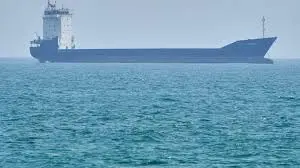
The energy crisis feels immediate in a way statistics rarely do: a tighter flow of oil from the Persian Gulf, anxious talk of shortages, and markets that seem to move before the public fully feels the strain. But the central argument now is that the price shock has already done much of the work. Oil prices have risen sharply since before the war, and that matters for how people should read the next phase.
Why does the Energy Crisis look so severe?
The closure of the Strait of Hormuz has cut oil exports out of the Persian Gulf to roughly half their ordinary capacity, including what moves through Saudi Arabia’s pipeline to the Red Sea. That is a physical shock, and it is large. Yet the market has not been blindsided by it. Prices have already climbed in anticipation of shortages, which means talk of another huge move higher can amount to double counting.
The comparison with the shock from Russia’s invasion of Ukraine helps explain the scale. Russia exports around seven million barrels per day. In normal times, about twenty million barrels transit the Strait of Hormuz daily. That makes the current disruption about three times as important for global oil markets. Brent has already risen by about fifty percent from before the war, far more than the roughly ten percent rise seen on a comparable time scale in 2022.
What does the physical shortage mean for prices?
The argument here is not that the Energy Crisis is imaginary. It is that markets are forward-looking. If traders and refiners already expected the supply shock, then the price move needed to reflect it may have happened already. Under a reasonable range for the price elasticity of demand, a Gulf flow at half of pre-war capacity implies oil prices should rise by about 67 percent. If the blockade on Iran has pushed exports down further, the rise could be closer to 80 percent. The point is that markets are already close to that range.
That also helps explain why Asian prices have risen more sharply than Brent or WTI. The immediate pressure is real, but the broader pricing picture suggests the physical shortage has been incorporated faster than many expected. The result is a market that still feels tight even as the biggest repricing may be behind it.
How does the Energy Crisis affect global growth?
The wider concern is not only oil prices but what they do to growth. The picture is uneven. The outlook is more positive for the US than for Europe and parts of Asia, though not for China, which is said to have huge stockpiles of crude. That difference matters because an oil shock does not hit every economy in the same way. Some can absorb it more easily; others feel it in slower activity, weaker confidence, and more pressure on consumers and businesses.
The framework used here separates annual average growth in 2025 from the statistical carryover into 2026, which is what growth would be if GDP did not grow at all beyond Q4 2025. That approach matters because a country can enter a new year with momentum already built in or already lost. In that sense, the Energy Crisis is not just about today’s price chart. It is about the conditions economies carry into the next year.
Who is warning, and what is the response?
The analysis comes from Robin J Brooks, a commentator writing on Substack, who argues that the market has already priced in much of the physical shortage. He has also said that oil reaching $150 or even $200 is unrealistic. He revisits that view in light of the closure of the Strait of Hormuz and the broader global growth picture.
For now, the response is largely being shaped by the market itself. Prices have adjusted, expectations have shifted, and the main question is whether the shortage continues to deepen or stabilizes at a level that the market has already absorbed. That uncertainty is what leaves households, firms, and governments watching the same numbers with very different levels of comfort.
At the edge of the Persian Gulf, the story begins with a shipping route running at roughly half its ordinary capacity. But by the time it reaches consumers, investors, and policymakers, the Energy Crisis has become something more complicated: a supply shock that feels new even when the market says much of it has already been priced.