Iran has become the center of a diplomatic pause that now looks more like a warning sign than a breakthrough. After Foreign Minister Abbas Araghchi left Pakistan, President Donald Trump said his envoys would not travel to Islamabad, even though talks had been framed as a possible path toward ending the conflict.
Verified fact: Trump said he ordered Steve Witkoff and Jared Kushner to cancel the trip. Verified fact: Araghchi had already departed Islamabad after meeting Pakistan’s top civilian and military leadership. Analysis: The sequence matters because it shows how quickly a planned diplomatic opening can collapse when each side believes time is on its side.
What changed after Araghchi left Pakistan?
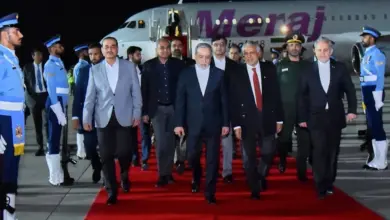
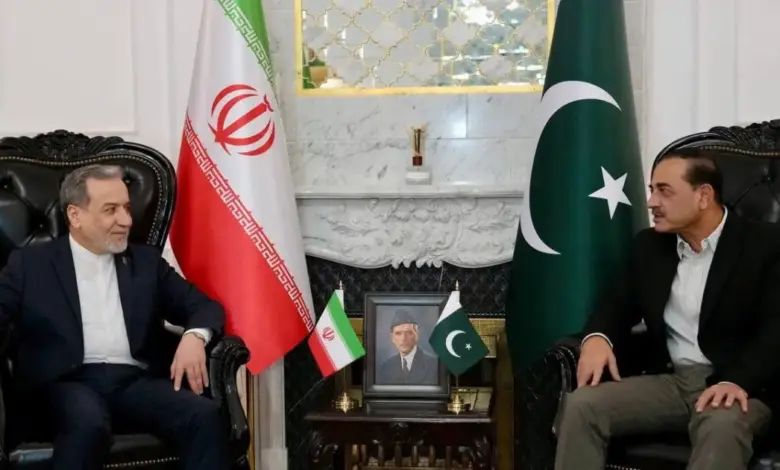
The immediate trigger was Araghchi’s departure from Islamabad after meetings with Prime Minister Shehbaz Sharif, Army chief Field Marshal Asim Munir, and Foreign Minister Ishaq Dar. Iran’s state-run Press TV confirmed that he left on Saturday after those talks. Trump then said there was no point in sending his envoys on what he described as an 18-hour flight to discuss “nothing. ”
Trump’s message was blunt: “We have all the cards. ” He later suggested that any further contact could happen by phone, adding, “If they want to talk, all they have to do is call!!!” Those remarks point to a harder negotiating posture, not a pause built around confidence. In the same comments, he said there was “tremendous infighting and confusion” within Iran’s leadership.
Analysis: In the context of iran, the cancellation signals that both sides are still using movement, timing, and public messaging as leverage. The diplomatic route remains open in theory, but the practical window is narrowing because neither side appears willing to concede the first visible step.
What was Araghchi trying to communicate?
Araghchi said he had shared “Iran’s position concerning workable framework to permanently end the war on Iran” with Pakistani officials. He also said he had yet to see whether the United States was serious about diplomacy. That language is important because it presents the trip as more than protocol: it was an attempt to test whether a settlement framework could exist at all.
Iranian officials also said Araghchi went on to Muscat for meetings with Omani officials and was expected to continue to Russia for discussions connected to efforts to end the war. The Ministry of Foreign Affairs said the Muscat stop would focus on bilateral relations and regional developments. A separate statement from Araghchi’s official Telegram account said he explained Iran’s “principled positions” on the ceasefire and the complete end of the war.
Verified fact: Tehran has ruled out a new round of direct talks with the United States. Verified fact: An Iranian diplomatic source in Islamabad said the Iranian side would not accept Washington’s “maximalist demands. ” Analysis: Those positions suggest Iran is trying to keep the diplomatic channel alive without accepting the terms it sees as imposed from outside.
Who is benefiting from the current impasse?
The standoff gives both sides room to claim firmness. Trump can present the canceled trip as proof that the United States will not waste time or travel for talks he sees as unproductive. Iranian officials can frame their contacts in Pakistan, Oman, and Russia as evidence that they are still pursuing a diplomatic framework while refusing pressure.
But the costs are visible. The Strait of Hormuz remains central to the dispute, and the disruption has pushed energy markets into turmoil. The news agency AFP said Iran’s Islamic Revolutionary Guard Corps declared no intention of ending its effective blocking of the waterway. The passage normally carries about one-fifth of global oil and liquefied natural gas shipments.
Verified fact: The United States and Israel began the war against Iran on February 28, and the ceasefire remains in force. Verified fact: Trump said the canceled trip did not mean a resumption of hostilities, adding, “We haven’t thought about it yet. ” Analysis: That distinction matters, but it does not remove the underlying pressure. The military backdrop remains active, and the diplomatic track now looks contingent on rhetoric that can shift quickly.
What does this say about the next phase of Iran diplomacy?
White House press secretary Karoline Leavitt said the United States had seen some progress from the Iranian side and hoped for more. She also said Vice President JD Vance was ready to travel to Pakistan. Separately, U. S. Defense Secretary Pete Hegseth told reporters that Iran had a chance to make a “good deal. ”
Still, the public record in this episode points to a deeper problem: each side is using the other’s hesitation as proof that its own position is justified. Trump says the other side can call. Iran says it wants a workable framework and doubts U. S. seriousness. Between those positions, the talks risk becoming a contest over who appears more willing to negotiate while neither side actually narrows its demands.
Analysis: For readers watching iran, the key issue is not only whether talks resume, but whether either side is prepared to move from pressure tactics to a specific, verifiable process. Without that shift, the diplomacy remains vulnerable to the same pattern: public bravado, canceled travel, and another missed opening.
What happens next will depend on whether the phone call Trump suggested becomes a real channel or just another message in a war of posture. For now, the evidence shows a diplomatic opening that narrowed almost as soon as it appeared, leaving Iran, Washington, and regional intermediaries to decide whether they want talks or simply the appearance of them.