Auckland Airport runway disruption exposes how fast one braking fault can ripple through flights

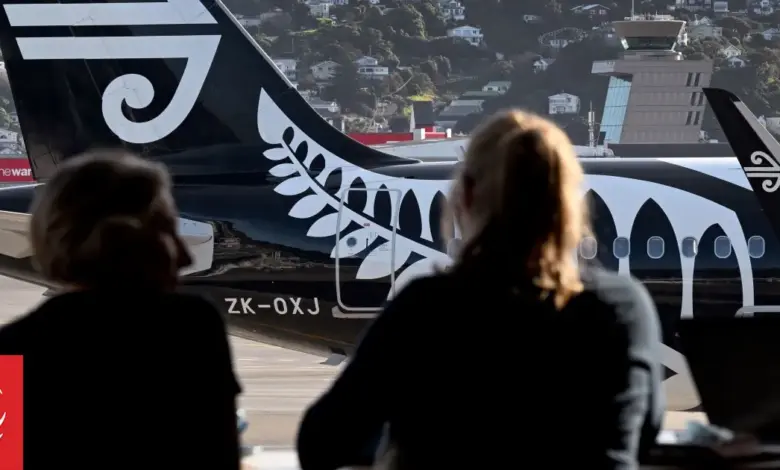
auckland airport was pushed into an unusual midday scramble when a braking-system fault on an Air New Zealand aircraft halted take-off, forced diversions, and left passengers waiting while engineers assessed the plane. The immediate disruption was temporary, but the pattern was clear: one technical issue was enough to interrupt departures, arrivals, and connecting travel at the same time.
What happened on the runway at Auckland Airport?
Verified fact: Flight NZ81 from Auckland to Hong Kong experienced a technical issue with its braking system when it was positioned for take-off at the end of the runway. Air New Zealand’s chief risk and safety officer, Nathan McGraw, said the aircraft was being assessed by engineers to ensure its safe removal from the runway. An airport spokesman said the aircraft encountered a mechanical issue while taxiing on the airfield, and flight operations were then returning to normal.
Verified fact: A witness saw smoke appear as the aircraft was taxiing before take-off. The plane then remained at the end of the runway while the situation was dealt with. The aircraft was eventually towed from the runway, and customers were to disembark before the engineering assessment continued.
Analysis: The visible smoke and the braking fault turned a routine departure into a runway blockage, which meant the problem was not limited to one flight. At auckland airport, the incident immediately became an operational issue for the whole airfield, not just for the passengers on board NZ81.
Why were other flights diverted or delayed?
Verified fact: Several arriving international flights were temporarily diverted into a holding pattern while the runway was cleared. Some flights were diverted to Hamilton. One Queenstown-to-Auckland flight, NZ614, was told it could not land and spent about half an hour circling the Hauraki Gulf before being re-routed to Hamilton. Passengers on that flight remained on board for two hours on the tarmac in Hamilton before later continuing to Auckland.
Verified fact: Another flight from Blenheim to Auckland was diverted to New Plymouth. A passenger on that service said they could smell fuel coming through the air vents inside. An Air New Zealand flight from Christchurch to Auckland was delayed by about 40 minutes, and arrivals were delayed by over 30 minutes in some cases.
Analysis: The disruption moved outward in layers: first the runway stop, then holding patterns, then diversions, then delayed arrivals. The effect was not a single cancelled movement but a chain reaction across domestic and international services. In practical terms, auckland airport became the point where the entire network had to be temporarily reorganized.
Who was affected, and what did Air New Zealand say?
Verified fact: Nathan McGraw said Air New Zealand was working to get customers to their destinations as soon as possible and thanked them for their patience and understanding. He also said customers would be reaccommodated on an alternative aircraft. The aircraft required engineering investigation, and the airline said it had a fault with its braking system.
Verified fact: An airport spokesman said the aircraft was undergoing engineering checks and that flight operations were returning to normal. Passengers on the diverted Queenstown service described waiting on the tarmac in Hamilton, where toilets became queued, tap water ran out at basins, hand sanitiser was provided, and snack packets were handed out.
Analysis: The airline’s response focused on safety, assessment, and reaccommodation. The passenger accounts, by contrast, show the human cost of a runway incident that lasted long enough to strain comfort, patience, and onward planning. That gap matters because it shows how quickly a technical fault becomes an experience issue for travelers.
What does this incident reveal about operational vulnerability?
Verified fact: The runway incident happened in the morning and operations were returning to normal later the same day. The Auckland to Hong Kong service eventually departed about 2. 30pm. Flights were landing again, although some were still running late after the earlier disruption.
Analysis: The key fact is not that a fault occurred, but that one braking issue was enough to interrupt an airport-wide flow of arrivals and departures. In a busy environment, the sequence of assessment, towing, diversion, and recovery creates a brief but real vulnerability window. That is what the public should notice: the runway did not simply host a broken aircraft; it became the bottleneck through which every other movement had to pass.
Accountability conclusion: The evidence points to a straightforward but important demand: transparent communication, prompt engineering assessment, and a clear explanation of how runway closures are managed when a technical fault arises. The public does not need alarmism; it needs confidence that the system can absorb a disruption without leaving passengers guessing. At auckland airport, the day’s events showed how a single aircraft fault can ripple across the schedule, and why that chain of consequences deserves scrutiny.