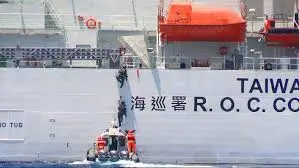
Taiwan’s South China Sea position just became harder to ignore: Ocean Affairs Minister Kuan Bi-ling made a rare visit to Itu Aba, a Taiwan-controlled islet that sits at the center of overlapping claims and growing military pressure. The visit was not ceremonial. It was tied to a coast guard exercise built around rescue, evacuation, and maritime interception, underscoring how the island is being treated as both a humanitarian outpost and a strategic asset.
What is being shown at Itu Aba, and why now?
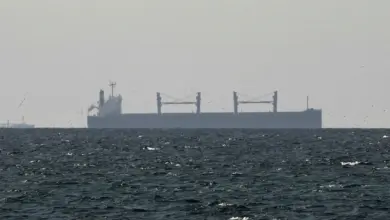
Verified fact: Kuan witnessed drills on Itu Aba involving humanitarian rescue and medical evacuation scenarios. The exercise included coast guard officials armed with guns intercepting a suspicious cargo vessel that did not respond to hails, and footage showed heavily armed special forces entering the ship’s control room. The island has about 200 residents, an airstrip, and a hospital, making it more than a symbolic marker in the South China Sea.
Informed analysis: The timing matters because the visit came as US and Filipino forces held their largest ever military drills across the Philippines, a development that drew anger from China. At the same time, China dispatched a new amphibious warship to the South China Sea and sailed one of its aircraft carriers in the nearby Taiwan Strait. Taken together, these moves suggest the region is being managed through visible signaling as much as through diplomacy.
Why does Itu Aba matter so much in the South China Sea dispute?
Verified fact: Itu Aba, also known as Taiping Island, is the largest natural island in the Spratly chain and is claimed by China, Vietnam, and the Philippines. Taiwan controls it and administers it as part of Kaohsiung’s Cijin District. It lies about 1, 600km southwest of Kaohsiung and is staffed by around 200 coast guard personnel trained by the Marine Corps.
Verified fact: An international tribunal ruling in 2016 classified Taiping Island as a “rock” under the United Nations’ Convention on the Law of the Sea. That classification limits Taiwan’s rights to resources to 12 nautical miles around the island, rather than 200 nautical miles if it were treated as an island. Taiwan and China rejected the ruling and refused to recognize the arbitration case brought by the Philippines.
Informed analysis: This is why the island’s infrastructure carries political weight. The runway can support military resupply flights from Taiwan proper, and a new wharf opened in 2023 to accommodate a 4, 000-tonne patrol ship. Those details indicate that the island is being maintained for more than routine administration; it is being prepared to sustain presence under stress.
Who gains from the current escalation?
Verified fact: The drill Kuan observed formed part of government efforts to transform the island into a base for humanitarian aid and supplies in the South China Sea. The exercise also simulated a fiery collision between a Vietnamese-registered fishing vessel and a cargo ship, including injured crew members, people falling overboard, and an oil spill that was contained with booms. The Ministry of National Defense deployed a C-130 transport aircraft to evacuate the injured to Taiwan proper for treatment.
Verified fact: Taiwan’s government said the island’s purpose includes regular preparedness drills, and the OAC noted that the last visit by a council head was in May 2019, when then-minister Lee Chung-wei made a similar trip.
Informed analysis: The beneficiaries are not just governments seeking leverage. The exercise supports a narrative that Taiwan can govern, rescue, and defend a remote territory under contested conditions. That matters because presence itself becomes evidence in sovereignty disputes. China, meanwhile, benefits from demonstrating reach through ships and military deployments that keep the pressure constant.
What does the visit reveal about the South China Sea today?
Verified fact: China also claims self-ruled Taiwan as part of its territory, while Taiwan sees itself as distinct. That broader dispute shadows every move near Itu Aba. The island is one of only two territories controlled by Taiwan in the South China Sea, the other being the Pratas Islands, and the latest visit places it back into a wider contest over legitimacy, access, and control.
Informed analysis: The central issue is not simply whether a minister visited an island. It is that a rescue drill, a military posture, and an international legal ruling now sit in the same frame. The South China Sea is being defined less by stable boundaries than by repeated demonstrations of capability. For Taiwan, the visit shows resolve. For China, it is another challenge to answer. For the region, it shows how quickly a humanitarian exercise can become a statement of sovereignty.
Accountability note: The public should be able to see clear explanations of what each side is doing, what legal position it claims, and how those claims affect civilians and crews operating in contested waters. In a dispute this layered, transparency is not optional. Without it, the facts of the South China Sea will keep being shaped by force, symbolism, and silence.