Iran at the FIFA World Cup has become the focus of an unexpected political and sporting dispute, after a proposal surfaced suggesting Italy should take Iran’s place. But the response from Italian officials, combined with Fifa’s own position, has made one thing clear: the idea has no traction. What began as a dramatic intervention from a US presidential envoy quickly turned into a test of football’s rules, the politics around the tournament, and the limits of late-stage intervention.
Why the proposal surfaced now
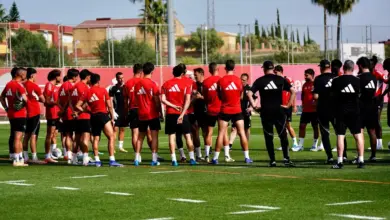
The discussion emerged amid ongoing uncertainty over Iran’s participation because of the war with the US and Israel. Iran are scheduled to play two group matches in Los Angeles and one in Seattle, while the tournament begins on 11 June and is hosted by the US, Canada and Mexico. Paolo Zampolli, a special envoy to Donald Trump, said he suggested to Trump and to Fifa president Gianni Infantino that Italy replace Iran at the tournament. He argued that Italy, as a four-time champion, had the pedigree for inclusion.
That proposal quickly collided with the practical and regulatory realities around the competition. Fifa has not announced any plan to remove Iran, and Infantino reiterated last week that the Iranian team “is coming, for sure. ” For now, Iran at the FIFA World Cup remains the governing assumption, not an open vacancy.
What Fifa rules allow, and what they do not
The most important obstacle is not political rhetoric but the rulebook. Under Fifa regulations, the world governing body has “sole discretion” over what happens if a team withdraws or is excluded. Article six of the World Cup regulations also says Fifa may replace a participating member association with another association. That wording leaves room for action in a specific circumstance, but it does not create an automatic pathway for Italy.
That distinction matters. Zampolli’s proposal was framed as a way to smooth things over politically, but no public indication has emerged that Iran has withdrawn or been excluded. Without that trigger, the legal basis for replacing one team with another remains dormant. The suggestion that Italy could simply step in after missing qualification is therefore not just controversial; it is structurally at odds with how the tournament is designed to work.
Why Italy’s officials pushed back so firmly
Italian leaders responded in unusually direct terms. Sports minister Andrea Abodi said the idea was “firstly not possible, secondly not appropriate, ” adding: “Qualification is on the pitch. ” Economy minister Giancarlo Giorgetti called the proposal “shameful, ” while Italian Olympic Committee president Luciano Buonfiglio said he would feel “offended. ”
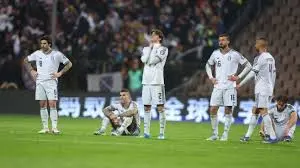
Those reactions reflect a broader concern inside Italy: any shortcut would undermine the legitimacy of competition at a moment when the country is already absorbing the disappointment of a third consecutive World Cup absence. Italy failed to qualify after a play-off defeat by Bosnia and Herzegovina last month. In that context, a politically brokered route into the tournament would risk turning sporting failure into a reputational crisis.
The pushback also highlights a central tension in the modern game. Iran at the FIFA World Cup is being treated by football authorities as a matter for competition and governance, while the proposal itself was driven by diplomacy and timing. Italy’s officials were clear that football’s credibility depends on resisting that kind of substitution.
Regional and global impact beyond one team
The dispute has implications that extend beyond these two nations. Iran’s embassy said the suggestion showed “moral bankruptcy” by the United States, and argued that Iran had earned its place on the pitch rather than through political privilege. That response shows how quickly a sporting question can become a symbolic confrontation when international tensions are already high.
There is also a wider sporting question about precedent. If one qualified side can be discussed as a replacement while another remains active in the draw, the credibility of qualification across confederations comes under pressure. The next-highest-ranked Asian team not to qualify, the United Arab Emirates, has been mentioned as a more logical potential replacement if Iran’s status ever changed. But that scenario remains hypothetical. For now, the message from Fifa and from Italy is that tournament places are earned, not reassigned.
As the countdown continues, Iran at the FIFA World Cup sits at the intersection of politics, regulation and sporting merit. The open question is whether the tournament will remain insulated from further pressure, or whether this episode marks the beginning of a longer struggle over who gets to decide football’s most visible stage.