The launch of Laptop 13 Pro is not just another product refresh. It is a statement about where Framework sees its users, and where it wants to compete. The company says its Framework Laptop 13 audience is slightly more Linux than Windows, and that creates a very different pitch for Laptop 13 Pro than for a typical premium notebook.
What is Framework really trying to prove with Laptop 13 Pro?
Verified fact: Framework is adding an updated motherboard with Intel’s Core Ultra Series 3 processors that can be installed in the existing Framework Laptop 13 or purchased in the new Laptop 13 Pro. The company is also releasing updated screens, keyboards, and other parts that remain mostly compatible with its existing laptops and are meant to address specific complaints or missing features.
Verified fact: Laptop 13 Pro is the first pre-built Laptop 13 that can ship with Linux installed from the factory, and it is Framework’s first officially Ubuntu Certified system. Framework CEO Nirav Patel is positioning it as a “MacBook Pro for Linux users. ”
Analysis: That framing matters because it shows a deliberate shift from repairability alone to premium identity. The new model is being presented not simply as modular hardware, but as a machine meant to compete on feel, finish, and familiarity. That is a larger claim than the company has previously made, and it signals a new phase in its product strategy.
Why does the company keep emphasizing Linux?
Verified fact: Patel said Framework surveys its customers to understand what they use, and on Framework Laptop 13 the company has slightly more Linux users than Windows users, roughly 55/45. He said the Framework Laptop 16 is more Windows heavy.
Verified fact: The company’s teaser site encouraged users to “follow the white penguin, ” a Linux reference. Framework has long officially supported Linux on its systems, but the Laptop 13 Pro is the first pre-built Laptop 13 that can arrive with Linux from the factory.
Analysis: The Linux focus is not a niche flourish; it is tied to the audience Framework already serves. That helps explain why the company is not only trying to win over Windows users. It is also trying to validate a user base that already exists inside its own customer surveys. In that sense, Laptop 13 Pro is as much a signal to current owners as it is a bid for new ones.
How does the hardware change the story?
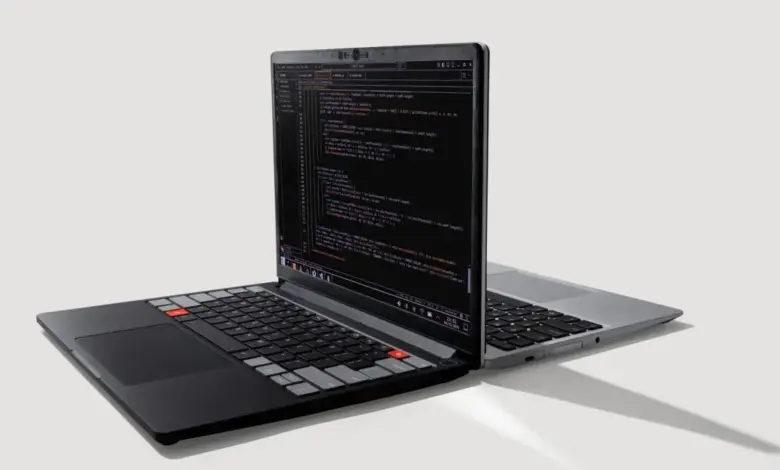
Verified fact: Laptop 13 Pro is the company’s first laptop fully machined out of blocks of 6000-series aluminum. It is also its first with a haptic trackpad and its first with a fully custom 13. 5-inch, 3: 2, 2. 8K, variable refresh rate IPS screen that is color-calibrated out of the box.
Verified fact: The laptop includes a 22 percent higher capacity battery at 74Wh, LPCAMM2 compression-mounted memory, PCIe 5. 0 support for up to 8TB of 14, 000MB/s SSD storage, touchscreen support without stylus input, and Dolby Atmos certification for its newly side-firing speakers.
Analysis: Taken together, these changes address the exact criticisms Framework has faced: battery life, build quality, and the sense that its laptops felt pieced together rather than fully premium. The new design language is important because it narrows the gap between Framework and the polished feel buyers expect from high-end laptops. The company is also explicitly leaning on the haptic trackpad and the more rigid chassis to improve everyday usability, including single-finger lid opening.
Who benefits, and who is still left with trade-offs?
Verified fact: Framework says the Laptop 13 Pro can be ordered with Ubuntu instead of only Windows. The machine can still have its M. 2 2280 storage and RAM replaced, unlike many competing premium laptops. Patel said the haptic trackpad helped create room for the bigger battery, but also improved familiarity for users coming from Mac-style devices.
Verified fact: The company also acknowledged that RAM and storage shortages remain part of the environment it is navigating, and that the new LPCAMM2 modules may be difficult to find and afford once shortages ease only gradually.
Analysis: The benefits are clearest for users who want repairability without giving up premium design. But the trade-off is plain: a more polished machine may also mean a more expensive memory path at a time when affordability remains uncertain. That makes Laptop 13 Pro less of a simple upgrade and more of a test of whether Framework can satisfy enthusiasts, Linux users, and premium-laptop buyers at once.
What does Laptop 13 Pro reveal about the market shift?
Verified fact: Framework’s renewed emphasis on Linux comes while Microsoft is publicly reassuring users about Windows performance, reliability, security, and usability. Patel’s own comments suggest Framework sees meaningful demand beyond the Windows default.
Analysis: The bigger story is that Framework is not merely reacting to software trends; it is trying to build a hardware identity around them. Laptop 13 Pro is a bet that repairability, Linux certification, and premium industrial design can coexist in one product. If that bet works, it may redefine what a modular laptop can look like in the high-end market.
For now, the key question is not whether Laptop 13 Pro is simply better than its predecessors. It is whether Framework can sustain this more ambitious promise without losing the repair-first identity that made it relevant in the first place. The answer will determine whether Laptop 13 Pro becomes a niche upgrade or a durable shift in how premium computing is sold.