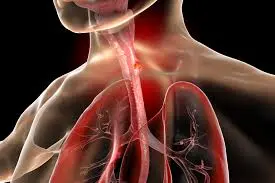
In oesophageal cancer, the most important clue may not always be where doctors expect to find it. A new analysis says the assumed precancerous route through Barrett’s esophagus may not be the only path, adding urgency to how patients are identified and monitored.
What does the new analysis say about oesophageal cancer?
The study brought together epidemiological and clinical information from a prospective cohort of 3, 100 patients with esophageal adenocarcinoma, then compared genomic features in a subset of 710 patients with whole-genome sequencing and 87 patients, across 380 samples, with multiregional whole-exome sequencing. The aim was direct: test whether Barrett’s esophagus is truly required before oesophageal cancer develops.
The answer was more complicated than the long-standing assumption. Demographic and genomic features usually associated with Barrett’s esophagus appeared in both Barrett’s-positive and Barrett’s-negative cases. Molecular features consistent with early Barrett’s evolution were also seen in both groups. In other words, the data suggest that the boundary between precursor and cancer is less clean than many earlier models implied.
Why does Barrett’s esophagus matter here?
Barrett’s esophagus has long been treated as the presumed precursor to esophageal adenocarcinoma, yet the study notes that it is visible in only about half of cases. That matters because prevention and screening depend on identifying the right at-risk state before cancer takes hold. If the precursor relationship is incomplete or uneven, then surveillance built around one pathway may miss other patients moving toward disease.
One finding stood out: advanced tumor stage was the only variable linked to a greater likelihood of Barrett’s-negative cases, including some patients who had previously received a Barrett’s diagnosis. The analysis also found shared evolutionary trajectories in phylogenetic work, while spatial transcriptomic and proteomic analyses showed intestinal metaplasia-associated lineage markers in both groups. Together, these results point toward a single pathway to oesophageal cancer rather than two separate biological stories.
What does this mean for patients and clinicians?
For patients, the human reality is that a cancer often framed as predictable may not always announce itself in the expected way. The study emphasizes that cancer can take years to evolve, and that early diagnosis can prevent life-threatening disease. But it also shows why that goal is difficult when the line between precursor tissue and cancer is not fully settled.
For clinicians and health systems, the implications are practical. Screening and prevention work best when the precursor state is well defined. When that link is uncertain, programs can miss cases or create false confidence. The study places oesophageal cancer in that difficult middle ground: high stakes, incomplete clarity, and a need for more precise risk mapping.
Who is being challenged by these findings?
The findings challenge the long-held view that Barrett’s esophagus is always the obligate precursor to esophageal adenocarcinoma. They also challenge the idea that BE-positive and BE-negative cancers are fundamentally separate categories. Instead, the integrated epidemiological and molecular evidence points to overlap in biology and evolution.
That does not erase the role of Barrett’s esophagus. It does, however, widen the field of concern. Some patients may move toward oesophageal cancer through a route that leaves only faint traces of the precursor state, or traces that are difficult to detect with current approaches. The study leaves room for that possibility while staying anchored in the observed data.
What happens next for screening and prevention?
The research points to early diagnosis and prevention strategies that may need to account for more than one visible pattern of disease development. It does not offer a finished clinical solution, but it does strengthen the case for rethinking how risk is defined, how patients are followed, and how molecular information might support screening decisions.
For now, the opening image remains unsettled: a patient entering care through one recognizable pathway, while the disease may have already taken a different route beneath the surface. The question raised by oesophageal cancer is not only how early it can be found, but whether medicine is looking closely enough in the right places.