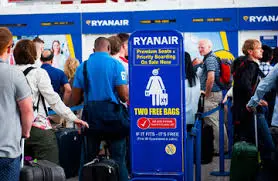
Ryanair passengers will soon have less margin for error, and airport check-in is at the center of the change. From 10 November, bag-drop and check-in desks will close 60 minutes before departure, rather than 40 minutes earlier. The airline says the shift is meant to give travelers more time to clear security and passport queues, while reducing the small number of passengers who miss flights because they are delayed in airport lines.
Why the deadline is moving earlier
The change is narrow in scope but significant in practice. Ryanair says only 20% of customers check in a bag, which means the majority are not directly affected. Still, for those who rely on bag drop or need airport assistance, the new timetable compresses the amount of time available before departure. The airline says the goal is to reduce missed departures caused by congestion at security and passport control, especially during busy travel periods when queues can be longer.
Ryanair CMO Dara Brady said the earlier deadline should help passengers reach their gate with more time to spare. The airline also said self-service kiosks for bag drop and airport check-in will be available at more than 95% of Ryanair airports before October. That detail matters because it suggests the company is trying to push more of the process into automation even as it tightens the final cutoff for in-person handling.
What the change means for airport check-in
The practical impact is clearest for late arrivals. A traveler who once had 40 minutes before departure now has to reach airport check-in much earlier, with less room for delays on the road, at the terminal entrance, or in a queue. The policy also reinforces Ryanair’s broader shift toward digital boarding. Last year, the airline moved to 100% digital boarding passes, and passengers can no longer download and print a paper boarding pass. Instead, they must use the digital version generated in the Ryanair app during online check-in.
That makes the airport process more rigid, but also more predictable for the airline. Passengers who arrive unprepared may face a steep cost: airport check-in on a Ryanair flight carries a fee of €55 per passenger, or €30 for flights from Spain. The airline has said that customers who already checked in and downloaded a boarding pass, but later find their smartphone is lost or out of battery, will be assisted free of charge at the airport.
Expert perspective and wider impact
The airline’s explanation frames the change as a service measure rather than a penalty. Dara Brady, Ryanair’s CMO, said the longer window before departure should help passengers get to the gate “especially during busy travel periods when some of these airport queues can be longer. ” That statement highlights a basic tension in airline operations: more automation and earlier deadlines can reduce bottlenecks, but they also transfer more responsibility to passengers to arrive prepared and early.
For travelers, the message is simple but consequential. The new rule does not appear to change how most passengers travel, yet it sharpens the risk for anyone depending on bag drop or making last-minute decisions. In that sense, airport check-in is becoming less of a flexible airport task and more of a fixed deadline with fewer exceptions. For an airline that already pushes digital boarding and online check-in, the change extends a system built around speed, compliance, and limited tolerance for delay.
Regional and travel implications
The impact may be felt most sharply at busy airports, where queues can lengthen and connections between arrival, security, and boarding are tight. Ryanair says the earlier closure is intended to reduce missed departures tied to those bottlenecks. If the policy works as intended, it could also encourage passengers across the network to arrive earlier and use online check-in more consistently.
But the policy also raises a broader question about how airlines balance efficiency with flexibility. As more processes move to digital systems and airport check-in windows tighten, travelers with bags, slower terminal access, or last-minute disruptions may have fewer options. The immediate change is just 20 minutes, but for passengers running late, those 20 minutes may now define whether they fly or watch the gate close.
With Ryanair’s airport check-in deadline now moving earlier, the real test will be whether passengers adjust fast enough to match the airline’s stricter timetable.