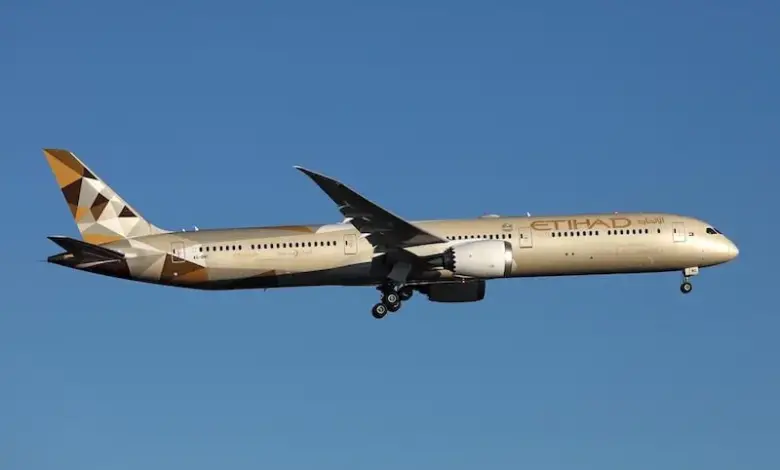
Etihad is adding six African destinations, and the timing matters: the carrier is not only enlarging its map, it is pairing Africa with a parallel expansion into China. That makes Etihad’s latest move less about isolated route growth and more about building a single network logic centered on Abu Dhabi.
What is Etihad really building across Africa and Asia?
Verified fact: Etihad Airways said on Friday, April 17, 2026, that it will add services to Accra, Asmara, Harare, Kinshasa, Lubumbashi, and Lagos. The airline also tied the expansion to new services from Abu Dhabi to five Chinese cities: Shanghai, Guangzhou, Chengdu, Hangzhou, and Shenzhen.
Analysis: Taken together, the two announcements point to a deliberate corridor strategy. Etihad is not presenting Africa as a stand-alone growth market; it is placing African cities inside a wider flow that also reaches Asia. The practical result is a network that positions Abu Dhabi as the transfer point between regions where trade, investment, and passenger traffic are all increasing.
The route details reinforce that picture. Etihad plans 4X-weekly flights between Abu Dhabi and Asmara from Nov. 7, followed by 4X-weekly service to Accra from March 17, 2027. Kinshasa will be served 3X-weekly from March 18, 2027, while Lagos will be daily from the same date. A combined Abu Dhabi–Harare–Lubumbashi route is set to launch 3X-weekly from March 24, 2027. In isolation, each city pair is a route addition. In combination, they form a dense regional pattern built around one hub.
Why does the airline frame this as more than route growth?
Verified fact: Etihad said the move complements partnerships including Ethiopian Airlines and reflects growing economic ties between the UAE and Africa. The airline’s chief executive, Antonoaldo Neves, said these are markets with strong underlying demand driven by trade, investment, and population growth, and that the expansion responds to a structural opportunity.
That language is revealing. The airline is not describing a speculative bet on leisure travel. It is framing the network as a response to demand that is already present and, in its view, under-served. Neves also said demand for air connectivity in key African markets is outpacing existing supply, especially in cargo and trade-linked sectors. In other words, Etihad is making a case that passenger demand and freight demand are moving together.
Analysis: This matters because it shifts the center of gravity from tourism alone to logistics and commercial connectivity. The mention of cargo, trade-linked sectors, and reliable access suggests that the airline sees value in carrying business flows, not just travelers. That is especially important in a network that is being built alongside new China services, since both Africa and Asia are being treated as parts of the same economic map.
Who benefits from the Abu Dhabi hub model?
Verified fact: A spokesperson for Etihad said the developments position Abu Dhabi as a key gateway between Africa, India, and Asia, enabling more efficient movement of goods, investment, and people between two of the world’s fastest-growing regions. The airline also said the expansion continues in line with long-term growth plans despite operational headwinds linked to regional instability involving Iran.
The beneficiaries are clear enough: Etihad gains a larger network footprint, Abu Dhabi strengthens its transit role, and connected markets gain additional access points. For passengers, the airline says the result will be simpler, faster journeys. For cargo, it says the result will be more direct and reliable access between regions where trade is growing rapidly.
But the model also creates dependencies. A hub-and-spoke strategy concentrates value in one city, which means the network’s promise depends on the hub functioning smoothly and on demand remaining strong across multiple markets. The airline’s own statement suggests that it views this concentration as an advantage rather than a risk.
Analysis: The strategic question is not whether Etihad is adding destinations; it is whether the airline is using route expansion to shape the commercial geography around Abu Dhabi. The answer, based on the stated facts, appears to be yes. The Africa additions are important, but they are only one half of a broader move that also reaches China. That is what makes the announcement more significant than a standard network update. It is a blueprint for connectivity.
What does the expansion say about Etihad’s next phase?
Verified fact: The airline says the expansion underscores growing economic ties between the United Arab Emirates and Africa, with rising activity in energy, infrastructure, mining, and logistics driving increased demand for air transport and freight capacity.
This is the clearest statement of intent in the record. Etihad is aligning its route growth with sectors that move goods, capital, and people across borders. The six African routes do not stand alone; they sit inside an argument that Abu Dhabi can serve as the meeting point for Africa, the Middle East, India, and Asia.
For now, the main uncertainty is operational rather than strategic: whether the network can translate stated demand into sustainable service over time. The airline has set out the schedule, the markets, and the rationale. What remains to be tested is whether the corridor it is building can deliver the volume it anticipates. That is the real significance of Etihad: it is not just adding places to fly, it is trying to define how regions connect through Abu Dhabi.