g has become more than a festival slot: it is now a test of scale, strategy, and reach. Karol G’s Coachella appearance showed how a headline set can function like a global event, with the livestream audience shaping the show almost as much as the crowd in the desert.
What Happens When a Headline Set Becomes a Global Broadcast?
Coachella’s top billing has long signaled superstar status, but the livestream era has changed the equation. The festival now draws millions of eyes on YouTube, turning a live performance into a production that must satisfy both the arena and the screen. That is why the most ambitious sets are increasingly designed around cameras, pacing, and visual detail, not just sound and stagecraft.
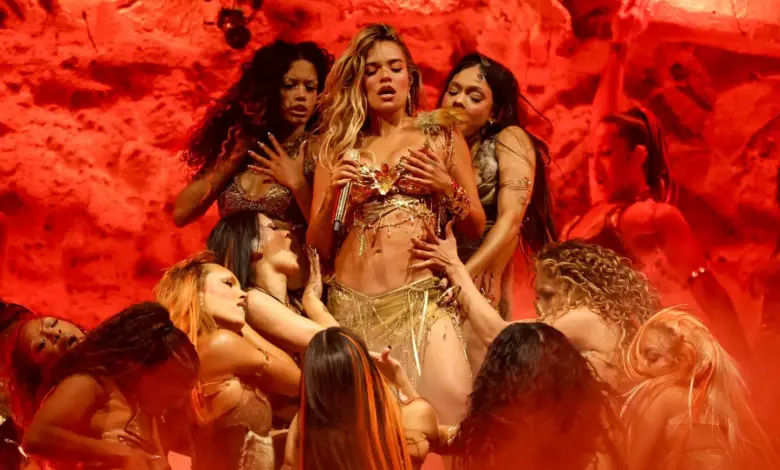
Karol G’s set fit that model. Her production included months of preparation and three weeks of rehearsals in Las Vegas, and one agent close to her team said she spent three times what Coachella paid her on production costs alone. The same calculation explains why such a show can still make sense: the value is no longer limited to a single night’s fee. It includes global exposure, long-tail cultural impact, and the chance to frame an artist as a world-scale act.
What If the Livestream Is Now the Real Headliner?
The new standard is not simply performance quality, but translation quality. Ian Simon, CEO of Strangeloop Studios, said there is now equal or greater attention on how a set will translate on camera and whether the cinematography reflects the scale of the production. In other words, if the livestream underdelivers, the artist risks disappointing an audience that now expects a premium viewing experience.
That expectation also helps explain why Coachella’s biggest sets are becoming more elaborate. Sabrina Carpenter and Karol G both used grand productions, multiple set changes, dozens of dancers, and detailed visuals to create something that reads as an event from every angle. The bar set by earlier landmark performances has shifted from exceptional to expected.
| Force | What it changes | Why it matters |
|---|---|---|
| Livestream scale | Millions watch remotely | Artists must think beyond the on-site audience |
| Production spending | Budgets rise sharply | Costs can exceed the headline fee |
| Global audience | Culture travels faster | A festival set becomes a career signal |
| Visual expectation | Cinematography becomes central | Performance quality is judged on camera as much as in person |
What Happens When the U. S. Touring Market Feels Less Stable?
Karol G’s performance also landed in a more complicated climate for international artists. Her onstage message focused on pride and resistance for Latinos in the country, while broader industry concerns point to a tougher environment for foreign acts considering U. S. touring. Andy Gensler, editor of Pollstar, said there is a chilling effect even where the most severe fears have not materialized.
The pressure points are practical as well as political: visa costs, gas prices, border tensions, and the wider strain of touring logistics. Pollstar estimates that the total number of concerts tracked in the U. S. for the first quarter of 2026 was down about 17% from the year before, a decline that may reflect several factors, including slower international touring. Adam Lewis, head of Planetary Group, said artists are thinking twice because of what the government is doing right now and because the fees needed to secure visas can be cost prohibitive.
What If the Next Big Stars Stay Home?
Best case: the Coachella model proves that global acts can still justify U. S. touring if the scale, audience, and earnings balance out. Big festivals remain launchpads, and international artists keep treating them as essential stages.
Most likely: top-tier names still come, but younger and mid-tier foreign acts become more selective. They prioritize fewer, larger dates and avoid thin-margin runs that carry heavy administrative risk.
Most challenging: the combination of economic friction and political uncertainty pushes more international artists away from the U. S. market, leaving fewer touring stops and a narrower pipeline of global talent.
What Does Karol G’s Moment Mean for Artists and Promoters?
The clearest winners are artists with enough scale to turn a festival slot into a worldwide statement. Promoters and production teams also benefit when the show becomes a must-watch livestream event. Fans gain access to more ambitious performances, especially when artists treat the camera as a second stage.
The potential losers are emerging foreign acts, smaller venues, and touring businesses that rely on steady cross-border movement. If costs keep rising and uncertainty continues, the U. S. may remain lucrative at the arena and stadium level while becoming harder to navigate for everyone below that tier.
That is the core lesson of g in this moment: the performance is no longer just what happens onstage, but what it signals about power, reach, and risk. Karol G showed how a headline slot can justify outsized investment when the audience is truly global. The question now is whether the wider system can support that model for the next wave of international artists, or whether the barriers will narrow the field. g