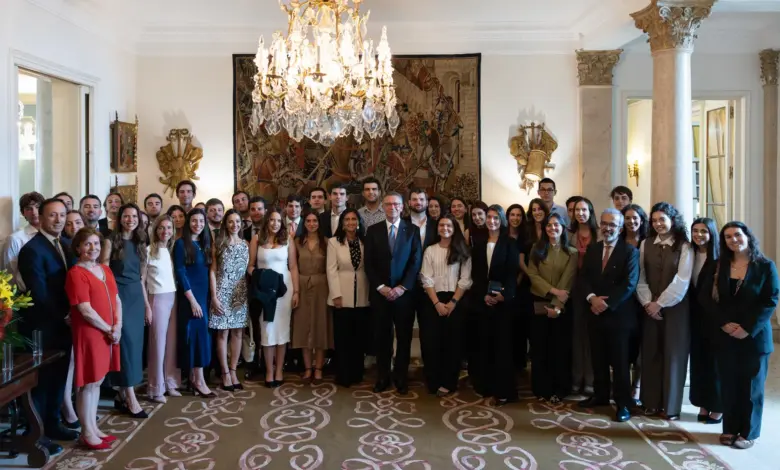
In Madrid, Portugal came into view not as a distant homeland, but as a question hanging over a room of young people who study and work in Spain. António José Seguro used his first official trip abroad to make a direct appeal: do not give up on Portugal.
What happened in Madrid?
António José Seguro met a group of young Portuguese living in Spain during a reception at the residence of Portugal’s ambassador in Madrid, José Augusto Duarte. The gathering brought together about 40 young people who study or work in Spain, and it took place before Seguro’s planned meetings with the King and with Pedro Sanchéz. His message was clear and repeated with force: “Do not give up on Portugal. ”
He framed the visit as more than a diplomatic opening. Choosing Spain for his first official trip abroad, he said, was not accidental. It was meant to give meaning to the visit and help strengthen bilateral relations between Portugal and Spain, including a broad commercial relationship. He also said he would like Portuguese companies to have a greater presence in the Spanish economy, adding that this was one of the concerns guiding the visit and the high-level meetings.
Why does Portugal matter to these young people?
The young Portuguese in the room were not there as symbols; they were there as people making daily choices about where to build a life. Some study in Spain, others work there, and several spoke about the opportunities and conditions that drew them across the border. One young woman pointed directly to salary differences as a major factor in her decision, calling it “a very relevant issue” in the choice she made.
That exchange gave the conversation a practical edge. Seguro asked whether the difference was truly substantial. She answered that, in a city so close to Lisbon or Porto, the gap was very large. He replied that he hoped that one day he would have salary reasons to encourage her return. The moment captured the tension behind many migration decisions: proximity does not erase the pull of better conditions, and affection for home does not automatically override professional reality.
What does Seguro mean when he says Portugal needs improvements?
Seguro said Portugal needs improvements so that it can also be “an extraordinary country to work in. ” That line sits at the center of the story because it connects the emotional appeal to a policy concern. The issue is not whether young people love Portugal. The issue is whether Portugal can offer enough to keep talent connected to the country, whether through return, investment, or contribution from abroad.
He asked the young people not only to avoid turning their backs on Portugal, but also to keep in mind the possibility of helping develop the Portuguese economy. That broadens the meaning of belonging. It suggests that support for Portugal can take several forms, including work, ideas, and future plans, even for those currently living outside the country.
Can one meeting reflect a wider national challenge?
The answer appears to be yes, at least in the way the discussion was framed in Madrid. The meeting linked individual career choices with the wider need to strengthen economic ties and make Portugal more attractive for work. It also revealed the human side of that challenge: the uncertainty of young people who are building lives elsewhere while still being asked to imagine a place for Portugal in those lives.
This is where the story becomes larger than a reception. A first official foreign trip, a room of about 40 young Portuguese, a conversation about salaries, and a plea not to surrender hope all point to the same underlying reality: Portugal is still present in the plans of its young people, but it must compete for their future. The country’s appeal may remain strong, yet its ability to retain or regain talent depends on more than sentiment alone.
As the evening in Madrid unfolded, the scene was both simple and unresolved. A president spoke to young people far from home and asked them not to give up on Portugal. They listened, spoke about opportunity and pay, and left behind a question that will not be answered in one reception: what kind of Portugal will give them a reason to come back?