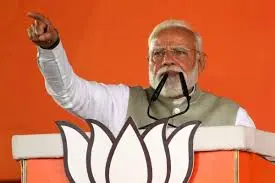
In a chamber split between applause and outrage, pm modi speech came the day after India’s parliament failed to pass a bill meant to boost women’s representation. The setting was formal, but the political mood was raw: lawmakers had just rejected a measure tied to a much larger fight over how the country’s electoral map should be drawn.
Why did the women’s quota bill fail?
The bill sought to reserve one-third of parliamentary seats for women, but it was tied to delimitation, the process that would redraw constituencies along population lines based on the 2011 census. That link became the central fault line. Opposition parties argued the government was using the quota as cover for a redistricting plan that could alter political power across India.
The measure needed a two-thirds majority because it was a constitutional amendment. In the final tally, 298 MPs voted in favour and 230 against. It was the first time in 12 years in power that a constitutional amendment proposed by Narendra Modi’s Bharatiya Janata Party government was not passed by parliament.
How did the debate widen beyond women’s representation?
What began as a women’s representation bill quickly became a broader argument over democracy, federal balance, and regional power. Priyanka Gandhi Vadra of the Indian National Congress called it an “open attack” on democracy. Gaurav Gogoi, also of the Indian National Congress, accused the government of trying to “bulldoze” delimitation through the backdoor. Rahul Gandhi said the bill had nothing to do with women’s empowerment and was instead “an attempt to change the electoral map of India. ”
The clash cut along regional lines as well. Delimitation is especially contentious in prosperous southern states such as Tamil Nadu and Kerala, where population growth has slowed and leaders fear their representation would be reduced. Poorer and more populous northern states, meanwhile, would stand to gain more seats if the map were redrawn. MPs from the Dravida Munnetra Kazhagam arrived in parliament dressed in black, while Tamil Nadu chief minister MK Stalin described the bill as a “punishment” for southern states and burned a copy outside parliament.
The government defended the link. Amit Shah, the home affairs minister, said delimitation was needed to reflect population growth in a country of more than 1. 4 billion people. “Every voter should have an equal value for their right, and post this expansion, we believe, they will, ” he said.
What does pm modi speech reveal about the government’s position?
pm modi speech framed the issue as a national one, not a partisan one. He urged lawmakers not to look at the plan through a political lens and said the moment should be used to give reservation to women. The BJP has said the broader bill would speed up implementation of female parliamentary quotas that were already passed unanimously in 2023, but whose rollout has been delayed until at least 2029 because of other electoral processes.
That timeline matters to many women who have waited for a larger role in parliament. The country’s own legislative record has already shown support for the principle; the dispute now is over method, timing, and trust. For critics, the concern is that women’s representation is being attached to a separate exercise with much larger consequences. For the government, the argument is that both changes can move together.
What happens after the vote?
The government later withdrew the delimitation proposal, but the defeat left a clear political scar. India’s fragmented opposition showed rare unity in resisting the package, while the ruling side failed to carry the constitutional threshold needed to move it forward. That makes the setback more than a parliamentary loss; it is a reminder that changes touching identity, representation, and federal balance can still force unusual alliances.
For now, the scene returns to the same chamber where the argument unfolded: a promise of more seats for women, a dispute over who gets to shape them, and pm modi speech trying to hold both ideas together. The question left behind is whether India can expand representation without reopening the battle over who the map is really meant to serve.