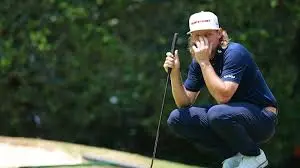
Golf’s biggest off-course story this week has nothing to do with a shot shape or a leaderboard move. In Mexico City, Jon Rahm kept playing through the noise, saying the uncertainty around LIV Golf had no effect inside the ropes. He followed an opening 65 with a 4-under 67 on Friday to take a one-shot lead at LIV Golf Mexico, even as a deleted interview with CEO Scott O’Neil added fresh questions about the league’s future.
Rahm stays focused while the business talk swirls
Rahm’s position at the top of the board came at a moment when golf was being pulled in two directions: the competition on the course and the financial debate around the league behind it. After a difficult Masters showing, he said he was simply trying to convert the chances he is creating. “It takes a lot to win, and you also need a little bit of luck, ” Rahm said. “I’m clearly playing good enough, I just need to take advantage of the opportunities I’ve been giving myself. ”
On the scoreboard, Rahm led by one shot over Matthew Wolff, Tom McKibbin and Harold Varner III at Chapultepec Golf Club. But the round was framed by broader concern over LIV Golf’s durability, after speculation spread that Saudi Arabia’s sovereign wealth fund — the circuit’s main source of funding — could be under pressure. That is why this week’s golf conversation extended beyond the leaderboard and into the economics of keeping a new league operating at scale.
The deleted interview and what it revealed
The sharpest moment came from O’Neil’s comments in a television interview, later removed and replaced with a different version on the broadcaster’s social media account. In that interview, he said the league is funded through the season and then must work “like crazy” as a business to build a plan to keep going. He also described that challenge as similar to other private equity-backed businesses.
That candor matters because it cut against the more confident tone O’Neil struck in a separate interview with LIV Golf’s broadcast team. There, he said the business had strong momentum and that he had presented a plan at the Masters that “might surprise people. ” He also pointed to improving ticket sales and team sponsorships, and said he expected 10 of the 13 teams and four of the 14 events to be profitable.
Still, the numbers around the product remain steep. Prize funds alone are set at $30 million for each tournament, with operations adding to the burden. A February report from Money in Sport said LIV Golf had already spent $5. 3 billion and was projected to exceed $6 billion by the end of the year. Those figures help explain why even a single interview — especially a deleted one — can intensify the sense that this stage of golf is being judged as much by balance sheets as by birdies.
What the financial pressure means for golf
The immediate impact is uncertainty, not closure. O’Neil’s memo to staff said the 2026 season would move ahead without interruption and “full throttle, ” but that statement did not settle the wider issue of what comes after the season. That gap is central to the current debate because it creates a split between short-term continuity and longer-term stability.
For players, that means the competition can continue even when questions about the business remain unresolved. For the league, it means every public statement is now interpreted through the lens of survival, especially when the costs are so high and the path to profitability is still being defined. In that setting, golf becomes both a sporting contest and a test of whether a heavily funded model can justify itself.
Experts, messaging and the broader stakes
O’Neil’s comments effectively put the league’s operating model under a brighter spotlight. His message was twofold: the season is funded, and the long-term business has to be built. That distinction is important because it suggests the organization is managing immediate delivery while still searching for a durable economic structure.
Rahm, meanwhile, offered the cleanest sporting response. He did not address the business side in detail; instead, he treated the uncertainty as background noise. That approach may be the clearest sign of how elite players are adapting to the current environment in golf: perform first, wait for the structural answers later.
For the wider game, the stakes go beyond one week in Mexico. If the league can sustain ticket sales, sponsorships and event profitability, it strengthens its case. If not, the gap between the current season and what comes next will keep widening. For now, the leaderboard offers certainty, while the business model does not.
Rahm has given himself a chance to win, but the larger question still hangs over the sport: can golf’s newest heavyweight project prove that momentum alone is enough to keep going?