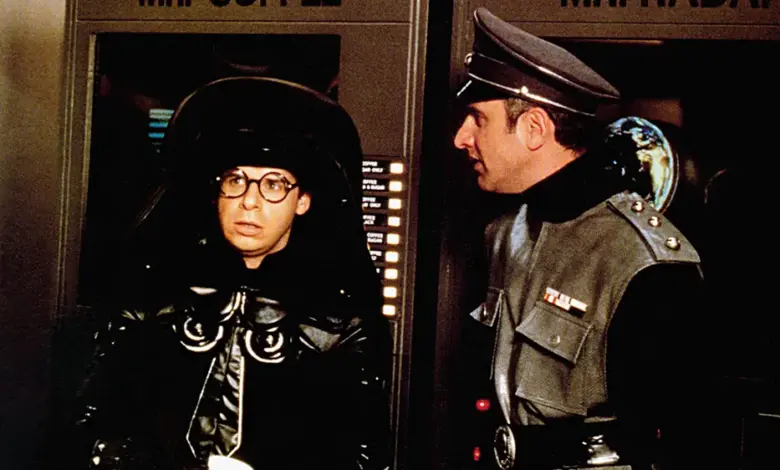
Spaceballs 2 is moving from long-running joke to a defined theatrical event, and that shift matters because the sequel now has an official title, a release date, and a clearer place in Amazon MGM’s film strategy. At CinemaCon, Mel Brooks appeared in a pre-taped message to unveil Spaceballs: The New One, giving the project a formal identity and reinforcing that the follow-up is being positioned as a genuine theatrical release rather than a throwaway nostalgia play.
What Happens When a Cult Comedy Becomes a Studio Priority?
The new title reveal is more than a punchline. It signals that Spaceballs 2 is being handled with enough confidence to sit inside a major studio presentation alongside broader commitments to theaters. Amazon MGM has already set the film for April 23, 2027, and the message around the sequel is unmistakable: this is a feature meant for cinemas, with a full rollout and a marketing plan built around anticipation.
The trailer footage shown at CinemaCon leaned into parody on multiple fronts. It spoofed Star Wars, Avatar, and Harry Potter, while also mocking Hollywood mergers and the self-serious language that surrounds modern franchise filmmaking. The humor was broad, but the underlying strategy was precise: remind audiences why the original worked, then update the joke for a more consolidated entertainment era.
What Does the Current State of Play Look Like?
Spaceballs 2 is still keeping its plot details under wraps, and the studio has not clarified the identities of the new characters played by Josh Gad, Keke Palmer, Lewis Pullman, and Anthony Carrigan. What is clear is the returning core. Rick Moranis is back as Lord Dark Helmet, Bill Pullman returns as Lone Starr, Daphne Zuniga returns as Princess Vespa, George Wyner is back as Colonel Sandurz, and Mel Brooks returns as Yogurt. Josh Greenbaum is directing from a script by Gad, Benji Samit, and Dan Hernandez.
The cast reunion and the continued secrecy are working together as a business signal. The film is being built as an event title with legacy recognition, but without over-explaining itself too soon. That approach fits a marketplace where familiar intellectual property can still attract attention, especially when it arrives with a theatrical date and a clear comic identity.
| Signal | What it suggests |
|---|---|
| Official title reveal | The project is far enough along to be marketed as a real release |
| April 23, 2027 date | Amazon MGM is planning for a long runway |
| Original cast returning | The film is relying on memory, continuity, and fan recognition |
| New cast kept secret | Curiosity is being preserved for a later promotional phase |
What Forces Are Shaping Spaceballs 2?
Several forces are converging around Spaceballs 2. First, theatrical commitment is being treated as a strategic choice, not a placeholder. Mike Hopkins, head of Prime Video and Amazon MGM Studios, told theater owners that the studio’s release plan is not “a test or an experiment, ” and that it remains committed to releasing at least 15 films every year into theaters. That broader stance gives the sequel a stronger industrial footing.
Second, the comedy itself is being framed as commentary on consolidation. The trailer’s joke about Hollywood studios “merging willy-nilly” shows that the film intends to satirize the same business climate that is helping define its release context. Third, nostalgia is being paired with controlled novelty. Brooks, Moranis, and the returning ensemble supply familiarity, while the new cast and the guarded storyline create room for surprise.
What If the Film Lands as Planned?
Best case: Spaceballs 2 becomes a sharp, widely shared theatrical comedy that benefits from its title reveal, its returning cast, and its timed jokes about the current entertainment landscape. If the film delivers on the trailer’s energy, it could stand out as a rare legacy sequel that feels tailored to the moment rather than trapped by it.
Most likely: it plays as a niche but meaningful theatrical event, strongest with audiences who know the original and with viewers open to broad parody. The sequel’s biggest advantage is recognition; its biggest challenge is that comedy is harder to forecast than genre spectacle.
Most challenging: the film’s long lead time and secrecy could dilute momentum if it does not keep generating fresh reasons for attention. In that case, the title reveal and cast reunion may remain the high point until release.
Who Wins, Who Loses if Spaceballs 2 Works?
Winners include Amazon MGM, which gains a recognizable comedy property that supports its theatrical push; the returning cast, especially Moranis, whose comeback is itself part of the story; and theaters, which benefit from another reason for audiences to leave home. The film also benefits anyone looking for evidence that studio comedy can still be positioned as a big-screen event.
Losers are harder to name directly, but the project clearly pokes at an industry that has become comfortable with scale, mergers, and franchise repetition. Spaceballs 2 is built to mock that environment while also participating in it, which is part of the joke and part of the risk.
What readers should take from Spaceballs 2 is simple: the sequel is no longer just a nostalgic idea. It now has a title, a date, a returning ensemble, and a studio strategy behind it. That combination makes it a meaningful test of whether a comedy sequel can still be launched as a theatrical event in a crowded marketplace. Spaceballs 2