Julius Malema has been sentenced to five years in prison after being found guilty of illegal possession of a gun and firing it in public. The sentence, handed down in East London, comes with an immediate appeal from his lawyer, preventing the leader of the Economic Freedom Fighters and member of parliament from being taken to prison right away.
What does the court sentence mean right now?
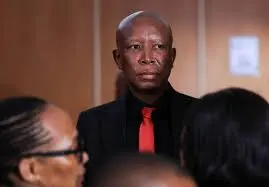
Verified fact: Malema, 45, stood in a dark suit and red tie as Magistrate Twanet Olivier read out the sentence. He had already been convicted last year on five offences, including unlawful possession of a firearm, discharging it in a public space, and reckless endangerment.
The case centers on an incident in 2018, when a video emerged showing him using a semi-automatic rifle to fire several shots into the air during his party’s fifth anniversary celebrations in the Eastern Cape province. In court, Malema said the firearm was not his and that he fired the shots to rouse the crowd. The sentencing ruling rejected the idea that this was a spur-of-the-moment act, with Olivier saying it was “the event of the evening. ”
Analysis: The sentence is severe not only because of its length, but because it lands on a figure whose political identity is built around confrontation and symbolism. The result is a legal ruling that instantly becomes a political signal. For supporters, the case is already framed as a fight over much more than a firearm. For the court, it remains a matter of conduct and public safety.
Why did the Malema case draw so much attention outside the court?
Outside the East London court, hundreds gathered in support, chanting and singing revolutionary songs. Inside, Malema showed little emotion as the sentence was read. That contrast matters: the courtroom treated the matter as a criminal conviction, while the crowd treated it as a political moment.
His legal team moved quickly to appeal the decision, a step aimed at stopping any immediate prison transfer. Malema also said he would challenge the judgment all the way to South Africa’s highest court, the Constitutional Court. Verified fact: legal arguments are ongoing.
The prosecution began after AfriForum, an Afrikaner lobby group with a contentious relationship with Malema and the EFF, opened a case after the video went viral. That detail shows how the matter moved from a public clip to a formal courtroom battle, and then into a wider dispute over who gets to define the meaning of the footage.
How did Julius Malema become such a polarizing figure?
Verified fact: Malema was once the leader of the youth wing of the governing African National Congress. After being expelled following a falling-out with then President Jacob Zuma, he formed the EFF. The party later became South Africa’s fourth largest at the 2024 elections.
His political base has remained loyal. He has long been described as outspoken, charismatic and radical left-wing, and his supporters have stayed close even as his legal troubles deepened. His calls for the seizure of white-owned land and arguments that more should be done to transfer wealth to the black majority helped the EFF eat into the ANC vote.
Analysis: That history is central to understanding why this sentence matters beyond the courtroom. Julius Malema is not only a defendant in a firearm case; he is also a politician whose rise has been tied to confrontation with the ruling order. The sentence therefore lands on a figure who already occupies a place in South Africa’s most volatile debates over power, race and redistribution.
Who benefits from the ruling, and who is implicated?
Verified fact: Malema’s prosecution came after the video of him firing the rifle became public, and the legal case ended in a conviction on serious firearms-related charges. His supporters, meanwhile, gathered outside court to back him publicly.
Those developments place several actors in view. The court has established criminal liability. The EFF has been forced to defend its leader under intense scrutiny. AfriForum’s role in opening the case gave the dispute a clear starting point outside the political arena. And Malema himself has turned the sentence into a fresh confrontation, telling supporters after the conviction last October that “going to prison or death is a badge of honour. ”
He added: “We cannot be scared of prison [or] to die for the revolution. Whatever they want to do, they must know we will never retreat. ” Those words now sit beside the sentence as part of the public record, underscoring how quickly the legal case has become inseparable from his political messaging.
Analysis: The immediate appeal means the final outcome is not settled. But the wider picture is already clear: the sentence has intensified the clash between a court ruling rooted in public conduct and a political movement that sees itself under attack. That tension is what gives the case its force. Julius Malema is now fighting not only for his liberty, but for the narrative around what happened in 2018, what it meant, and what it says about his place in South Africa’s political order.
For now, the key facts are established: a five-year sentence, an ongoing appeal, a conviction tied to a 2018 incident, and a public response that suggests the case will continue to resonate far beyond the East London court. The next test is whether the legal process will clarify the facts further, or whether the fight over Julius Malema becomes even more central than the firearm case itself.