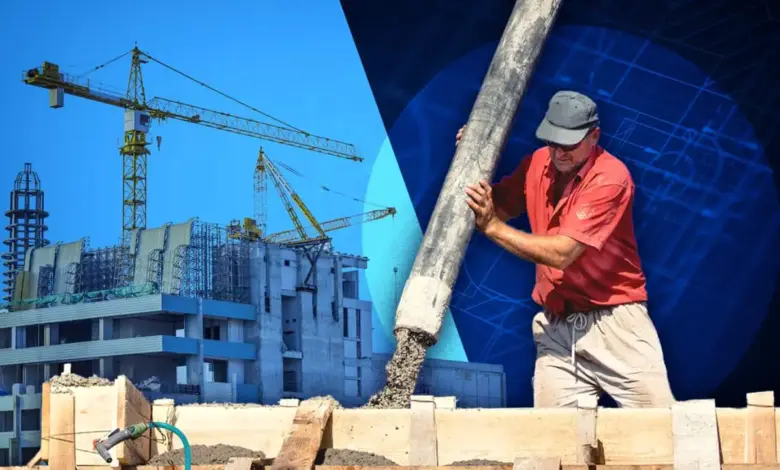
The housing crisis debate in Australia has shifted from long-term planning to immediate cost pressure, with builders warning that a new wave of fuel and materials increases is hitting projects already stretched by thin margins. What makes this moment different is not just the scale of the price rise, but the timing: industry leaders say the system is being asked to deliver more homes while absorbing higher costs, complex rules and a difficult trading environment. That combination is driving a sharper push for reform ahead of national housing talks.
Why the Construction Push Matters Now
Peak building and housing bodies are calling on the government to cut red tape in housing and construction as rising fuel costs undermine the sector and push prices higher. The war in the Middle East has driven up fuel prices, creating worksite pressure for one of Australia’s most diesel-reliant industries. It has also lifted the cost of plastics, cabling and piping, with some key products rising by up to 40 per cent at the register.
The issue is arriving at a sensitive moment. The federal government has committed to delivering 1. 2 million homes by 2029, and the industry says that target is facing significant headwinds. In that context, the housing crisis is no longer being framed only as a supply challenge; it is also becoming a question of whether builders can absorb added costs without slowing projects or passing more pressure into the market.
Cost Pressures on Builders and Fixed-Price Contracts
Jocelyn Martin, managing director of the Housing Industry Association, said conditions are “tough but manageable. ” Her estimate is that builders are paying an extra $5, 000 in expenses on a standard four-bedroom home in a new development, with many operating under fixed-price contracts. For volume builders, she said, that per-home amount can make a difference because businesses still have employees and premises to support.
That matters because the current price shock is landing on top of an already strained sector. The construction industry was facing crushing costs before the conflict in the Middle East began at the end of February. Data from ASIC shows that more companies entered insolvency last year than before or during the COVID-19 pandemic. In 2025, 3, 490 construction companies went insolvent, almost double the figure for 2013.
The result is a tightening squeeze: input costs are climbing, margins are narrowing and the ability to deliver homes at scale is becoming harder to forecast. In a market where fixed-price contracts are common, even a relatively modest rise in per-home costs can erode flexibility quickly. That is why the housing crisis discussion is now tied directly to business viability, not only housing demand.
Reform Pressure Ahead of National Talks
Martin and other industry leaders want the government to streamline the National Construction Code, the document that sets industry standards, in order to reduce pressure on builders. Critics say the code is far longer and more complex than necessary, and the federal government has already hinted at reforming it.
In August, Labor paused changes to the code while it looks for ways to reduce delays in approvals and speed up residential construction. A spokesperson for Housing Minister Clare O’Neil said changes remain on hold while consultations continue across the sector to make the code easier and more effective.
The debate is expected to feature at the Housing Industry Association’s national housing conference on Thursday, where reform will be discussed alongside the broader challenge of meeting the federal housing target. Martin described the moment as a “once in a generation opportunity” to address Australia’s housing crisis, a phrase that captures both the urgency and the political stakes. The industry argument is straightforward: if the system is too slow or too complex, higher costs will keep feeding delay.
Regional and Global Implications
The pressures reaching Australian worksites are also tied to global supply chains. Australia and the world are highly dependent on imports from the Middle East for construction, including around 20 per cent of global fuel and 30 per cent of petrochemical plastics. That means local building conditions can be affected by events far beyond domestic housing policy.
For Australia, the implication is not only higher costs today but greater uncertainty around supply and pricing tomorrow. If fuel and materials remain volatile, the housing crisis could deepen through slower delivery, weaker builder confidence and continued strain on the companies expected to build the homes. The challenge now is whether reform can move quickly enough to ease pressure before more projects become unworkable.
The broader question is whether policymakers can simplify the system while the industry is still absorbing fresh shocks, or whether the housing crisis will keep widening as costs, complexity and insolvency risks continue to build.