Motor vehicle theft is at a turning point in Ballarat as police and residents face a sharper mix of old habits and newer technology-driven offending.
What happens when theft becomes faster and harder to spot?
The current picture is clear: motor vehicle theft offences in the Ballarat local government area are at their highest level since 2001. At the same time, police say offenders are increasingly using computerised systems in newer models to get inside vehicles and drive away in minutes.
Ballarat Proactive Policing Unit Sergeant Joel Dash said offenders can use the onboard diagnostics port, or OBD, together with scan tools to access a vehicle’s computer system and re-code a digital key. He said the process can take five to 10 minutes. Late-model, push-start vehicles are among those at risk.
The shift matters because it changes the shape of the offence. Police say some thieves still rely on simple methods, including unlocked doors or a cracked quarter window, but the rise of technology-enabled crime means the point of vulnerability is moving from the house to the car itself.
What if the old risks still matter most?
Even with more advanced methods in play, police say basic carelessness remains a major weakness. Sergeant Dash said 80 per cent of aggravated burglaries in Ballarat involve unlocked or open doors. That creates a pathway for offenders who may take keys before stealing a vehicle.
The local picture also shows how stolen-vehicle crime is spreading across different settings. In one major overnight operation in Ballarat, police arrested 12 people, seized four stolen cars and issued five infringement notices for traffic offences. Two alleged car thieves were among those arrested after police, the Air Wing and Dog Squad tracked a stolen Subaru Impreza and later intercepted another vehicle in Wendouree.
That operation suggests enforcement remains active, but the broader trend is harder to reverse quickly. Crime Statistics Agency figures show vehicle theft incidents rose almost 10 per cent in 2025 compared with 2024, climbing from 519 incidents to 573.
What if prevention is still the fastest response?
| Risk factor | What police say helps |
|---|---|
| Unlocked or open access | Lock up consistently |
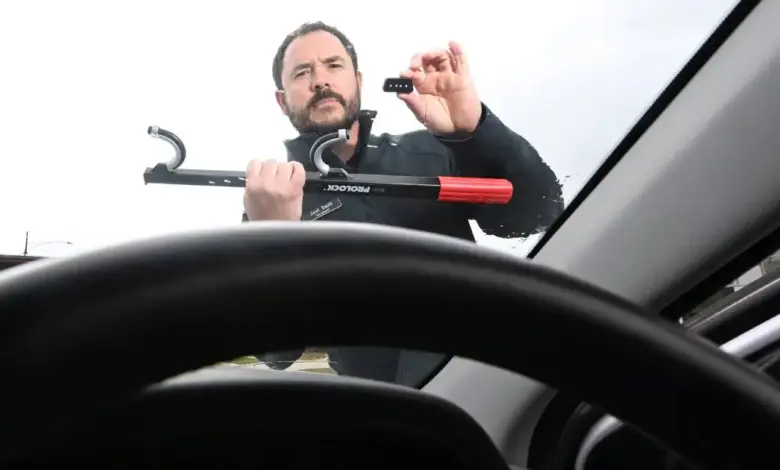
| Push-start, late-model vehicles | Use steering wheel locks |
| OBD access | Block the OBD port |
| Vehicle removal after access | Install third-party immobilising devices |
For residents, the advice is practical rather than dramatic. Manual prevention tools such as steering wheel locks have seen a spike in sales in Ballarat, reflecting a return to visible deterrence just as thieves become more technical.
The pattern is important because it shows a gap between capability and opportunity. Offenders may have learned new ways to start cars, but they still appear willing to take the quickest route. That means visible barriers and locked vehicles can still change the calculus.
What if the next wave is shaped by both technology and behaviour?
The most significant force behind motor vehicle theft in Ballarat is not one factor but the interaction of several. Police say offenders as young as 14 are accessing information through online networks or through sharing inside youth detention and prisons. Sergeant Dash described those places as a hive of information sharing, which suggests the problem is social as well as technical.
At the same time, crime is evolving alongside artificial intelligence and other emerging technologies, making the next phase harder to predict with certainty. The strongest near-term forecast is not that every theft will become high-tech, but that both basic and advanced methods will continue side by side.
Best case: more residents lock vehicles, use deterrents and block access points, while enforcement keeps pressure on repeat offenders. Most likely: theft remains elevated, with a continuing mix of opportunistic and technology-enabled offending. Most challenging: the tools used to re-code keys spread further through informal networks, making late-model vehicles more exposed and community prevention more urgent.
Who wins? Residents who act early, and police teams that can combine local patrols with specialist units. Who loses? Owners of late-model vehicles, people who leave cars unsecured, and communities where theft becomes normalised. The lesson is straightforward: in a market where motor vehicle theft is changing shape quickly, the most effective response is still a combination of vigilance, physical barriers and rapid reporting.