Paul Townend and Gold Dancer: the fatal Aintree win that left no one to blame, and everything to answer for

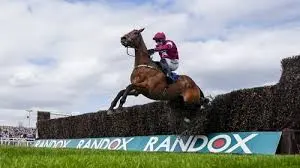
Gold Dancer was leading at the finish, and yet the race ended in tragedy. The horse won the Mildmay Novices’ Chase at the Grand National Meeting at Aintree, then had to be put down after suffering a broken back. For Paul Townend, the key issue is not whether he pushed on to victory, but whether anyone could have known the injury was already there. That is the dispute at the heart of this case.
What happened to Gold Dancer after the finish line?
Verified fact: Gold Dancer was the 10-3 favourite for the Mildmay Novices’ Chase and won by four lengths under Paul Townend for trainer Willie Mullins. He dragged his back legs through the final fence while leading Regent’s Stroll, then was immediately pulled up after crossing the line. Screens were erected as veterinary experts assessed him, but the seven-year-old could not be saved.
Verified fact: Owners Gigginstown said the horse had been put down because he broke his back. Eddie O’Leary of Gigginstown House Stud said Gold Dancer made one mistake, felt nothing on the run to the line, and only showed signs of trouble after he was pulled up.
Analysis: The sequence matters. The horse was competitive through the finish, then collapsed into a fatal outcome once the race was over. That distinction is central to understanding why the riding of Paul Townend was examined but no action followed.
Was Paul Townend at fault, or did the injury reveal itself too late?
Verified fact: The stewards held an inquiry into the riding of the winner and took no action. James Given, director of equine health and welfare for the British Horseracing Authority, said the horse jumped, slipped, lost his back end, and then moved straight to the finish. He added that the injury only became apparent after the line, when the horse changed from a canter to a trot and Paul Townend became aware.
Verified fact: Willie Mullins defended Paul Townend, saying his jockey did not feel any problem until after the race was over. Mullins said the horse galloped to the line, pulled up in a canter, and only then lost his action when turning. He also said that if Paul Townend had sensed something was wrong, he would have pulled the horse up.
Analysis: The official and trainer accounts align on a narrow point: the fatal injury was not obvious while the horse was in full motion. That does not remove the emotional impact, but it does explain why blame did not attach to Paul Townend in the inquiry.
Why does Gold Dancer add to the welfare debate at Aintree?
Verified fact: Two horses, Willy De Houelle and Celebre D’Allen, died at last year’s Aintree Festival. Emma Slawinski, chief executive at the League Against Cruel Sports, said Gold Dancer was the latest victim of what she called a heartless spectacle, and urged the public and businesses to boycott the festival, refuse to bet, and stop watching the coverage and advertising.
Verified fact: James Given’s account and the stewards’ decision indicate the race was reviewed through the formal process. But the wider reaction shows the welfare argument does not end with the inquiry. For critics, the fact of a fatal injury after a winning run is not an isolated incident; it is part of a pattern they say should force a public reckoning.
Analysis: The racing authorities and animal welfare campaigners are looking at the same event and drawing very different conclusions. One side sees a tragic but unintentional injury that emerged only after the race. The other sees another death at Aintree as evidence that the sport itself is the problem.
What should the public take from the Gold Dancer case?
Verified fact: The British Horseracing Authority said it was saddened by Gold Dancer’s fatal injury and that its thoughts were with everyone connected to the horse. The stewards examined the circumstances and heard evidence from vets and from Paul Townend. No action was taken against the rider.
Analysis: Taken together, the record points to two truths at once: Paul Townend was not shown to have acted improperly, and Gold Dancer still died from an injury that only became visible after the finish. That combination leaves racing with a harder question than rider blame alone: whether the sport’s current safeguards are enough when a horse can appear sound, win, and still suffer a fatal collapse moments later.
The final reckoning may not rest on Paul Townend. It rests on whether racing bodies, owners, and the public are willing to confront what Gold Dancer revealed about the limits of what can be seen in real time. Until that happens, Gold Dancer will remain more than a result on a card; it will remain a test of whether Aintree can answer for Gold Dancer and for the next case that looks equally invisible until it is too late.