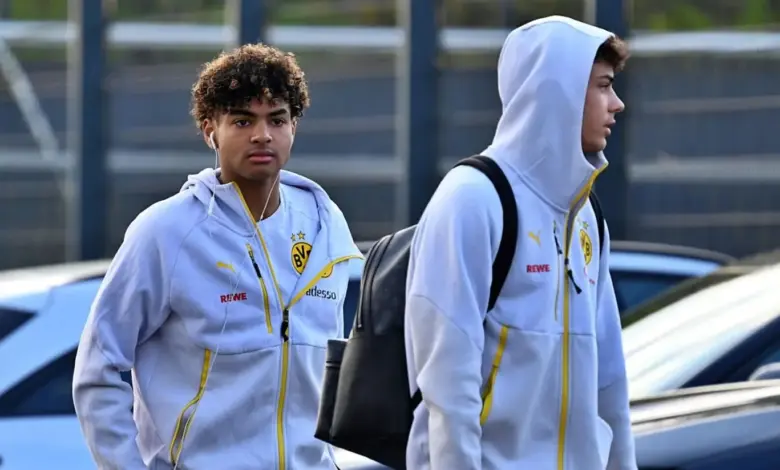
Dortmund Vs Leverkusen arrives with more than points on the line. Borussia Dortmund face a game shaped by a clear decision on Couto, a Youngster replacing Adeyemi, and a squad list that already hints at how the match may be managed. On the other side, Leverkusen come in carrying the weight of an officially defined transition year, with their season still judged through the lens of the Champions League race and internal uncertainty.
Selection decisions set the tone for Dortmund Vs Leverkusen
The immediate story is Dortmund’s squad. The decision on Couto has been made, and a Youngster will replace Adeyemi. That alone turns this into a game of fine margins, because the selection is not just about filling a gap. It also suggests Dortmund are balancing short-term needs with the reality of who is available and trusted for a match of this size.
For Dortmund, the significance is practical: the squad choice underlines that this is a fixture in which personnel matters as much as form. For Leverkusen, the same fixture is being approached with urgency. Coach Kasper Hjulmand said his team needs “sharpness” against a “super opponent, ” a line that reflects both respect for Dortmund’s current position and pressure on his own side to respond.
Why the match matters in the table fight
The broader context is stark. Dortmund are 15 points ahead of Leverkusen, and the West clash comes at a moment when Dortmund can, in the best-case scenario, secure Champions League qualification this weekend. Leverkusen, meanwhile, are four points behind fourth place and still chasing the minimum target attached to a difficult season.
That gap gives the match a different emotional profile for each club. Dortmund are playing with the cushion of a strong position. Leverkusen are playing with the urgency of a team that must not let the season slip further. The phrase “transition year” has become central to Leverkusen’s identity this season, but the danger is that the label is no longer enough to soften expectations.
Leverkusen’s transition year is becoming harder to control
The pressure on Hjulmand goes beyond the next result. He took over in September after just two league matches, replacing Erik ten Hag. Since then, his task has been to steady a squad already marked by major change. The club had 14 newly assigned squad places in the previous summer, and more significant changes are now being discussed again.
Sporting director Fernando Carro has spoken of building “the next championship team, ” while Simon Rolfes has stressed that the club cannot buy a team like the one that won in 2024 and must instead develop one. That tension is central to Leverkusen’s current problem: the project is ambitious, but development takes time, and time is becoming scarce.
Hjulmand himself acknowledged that new players need time and said the squad has quality. The issue is that results have not consistently matched the plan. After a weak start to the year and several setbacks in the race for Champions League places, internal dissatisfaction has grown, and Hjulmand may not survive to the end of the season.
What the squad picture says about the bigger picture
The personnel picture around Leverkusen points to more than one problem. In attack, returning players such as Kerim Alajbegovic and Francis Onyeka could create an oversupply, while Jonas Hofmann, Martin Terrier, or Eliesse Ben Seghir are mentioned as possible sale candidates. Edmond Tapsoba is linked to interest in a Premier League move, and Jarell Quansah could be affected by a buy-back option from his former club Liverpool. Alejandro Grimaldo, by contrast, is a player Leverkusen want to keep.
That mix of retention, reshaping, and uncertainty is exactly why Dortmund Vs Leverkusen has become more than a standard league fixture. It is a test of whether Leverkusen can keep their project stable long enough to recover, or whether the next round of change arrives sooner than planned.
Expert views inside the pressure points
Hjulmand’s own words capture the central problem. He said that when so many players are new, time is needed. That is not a complaint so much as a diagnosis. The club’s leadership has set a high bar, but the squad is still absorbing the consequences of change.
Carro’s championship ambition and Rolfes’s insistence on development create a framework that sounds coherent in public but is difficult in practice. The challenge is not simply to rebuild; it is to rebuild while staying competitive enough to protect a Champions League position. That is why this match matters beyond the scoreboard. For Dortmund, it is a chance to confirm control. For Leverkusen, it is a chance to stop the drift.
In that sense, Dortmund Vs Leverkusen is a snapshot of two different stages of competition: one side consolidating, the other still searching for a stable form of renewal.
What happens next could decide whether Leverkusen’s transition year remains a temporary hurdle or becomes the start of a much bigger reset.