The united kingdom has put its Chagos Islands plan on hold at the exact moment it was supposed to become law. That is not just a procedural delay. It is a sign that the deal’s fate now hinges on Washington, Westminster, and the future of Diego Garcia, the military base at the center of the agreement. Officials say the government has not abandoned the plan, but time has run out in the current parliamentary session. The result is a political pause with strategic consequences.
Why the Chagos file matters now
The immediate issue is legislative timing. Government officials say there is no longer enough time to pass the bill before Parliament is prorogued in the coming weeks. A new Chagos bill is not expected to appear in the King’s Speech in mid-May, which makes the hold-up more than a short administrative delay. The united kingdom had been moving to place the deal into law after signing it in May 2025, but the process has now stalled.
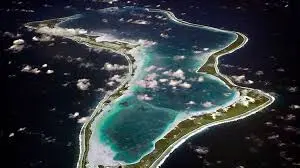
At the center of the agreement is sovereignty. The plan would transfer the British Indian Ocean Territory to Mauritius while allowing the united kingdom and the United States to continue using Diego Garcia under a lease arrangement. The base is described by a government spokesperson as a key strategic military asset for both countries. Officials have said long-term operational security remains the priority, and that the deal was always dependent on US support.
Trump opposition and the legal obstacle
The largest obstacle is not parliamentary procedure alone, but the absence of a formal exchange of letters from the US, which officials say is legally required for the treaty to be enacted. That missing step has become decisive. Donald Trump had previously expressed support for the deal, but later reversed course and urged Sir Keir Starmer to scrap it. In January, Trump called the plan an “act of total weakness. ” Later comments went further, with Trump describing the handover as “a blight on our great ally. ”
That shift matters because the united kingdom has framed the treaty as workable only with US backing. The government spokesperson’s language makes the hierarchy clear: the base comes first, and the deal exists to secure its future. In practical terms, the absence of formal US confirmation has turned what was meant to be a controlled transfer into a political stalemate. The bill may be shelved, but the agreement itself is not fully dead.
Political and diplomatic fallout
The delay also exposes the tension between strategic continuity and diplomatic trust. Government officials denied in February that the deal had been paused, only for a minister to tell MPs that the process was indeed being paused. That confusion has widened the perception that the policy is being pulled in two directions at once: one toward legal completion, the other toward caution in the face of changing US signals.
For Mauritius, the shelving means the expected transfer of sovereignty is on hold. For the united kingdom, it leaves unresolved a long-running territorial question tied to military planning. For Chagossians, the situation remains emotionally and politically charged. Many see the deal as a betrayal and want the UK to retain sovereignty so they can one day return to their homeland. That adds a human dimension to what otherwise reads like a legal and strategic dispute.
What experts and officials are signaling
Officials have tried to keep the message narrow: the deal is being delayed, not abandoned. But the wording matters. A government spokesperson said the UK continues to believe the agreement is the best way to protect the long-term future of the base, while also stressing that the government would only proceed with US support. Hamish Falconer, a Foreign Office minister and former diplomat, told MPs that discussions with American counterparts were paused and that the parliamentary process would be brought back at an appropriate time.
The united kingdom now faces a familiar policy trap: a deal designed to reduce uncertainty has been overtaken by political uncertainty. If the US does not formalize support, the legal path remains blocked. If it does, the government may try again. Until then, the Chagos file sits in limbo, shaped less by the text of the treaty than by the shifting politics around it.
Regional and global implications
The stakes reach beyond Westminster and Mauritius. Diego Garcia remains central to US-UK military cooperation, and any uncertainty around its future reverberates across the broader security relationship. The agreement also sits within a wider pattern of strain in transatlantic politics, where support can change quickly and reshape legal timelines. In that sense, the united kingdom is not just managing a territorial handover; it is trying to preserve strategic access while navigating an unpredictable alliance.
The broader question is whether this delay is a temporary interruption or a warning that the entire framework is more fragile than officials have suggested. If the deal depends on stable US backing, what happens when that backing becomes conditional? And if the legislative window closes again, how long can the united kingdom keep the Chagos issue suspended before the political cost rises further?