The Irish government says a water cannon package is being finalised after a day of constructive engagement with haulage and farming representatives, as fuel protests continued to disrupt travel across parts of the Republic of Ireland on Friday, April 11, 2026 ET. Ministers say the deal will be substantial, but they also insist the blockades must end before it is unveiled. The protests, driven by anger over high fuel prices tied to the US-Israeli war against Iran, have now stretched into a fourth day.
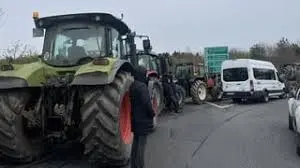
Travel problems were reported on roads and motorways, with slow-moving convoys of vehicles, including tractors, blocking routes and creating long queues. On the M1 near Dundalk, traffic heading toward the border with Northern Ireland was delayed after protesters closed the motorway at the Carlingford turnoff, adding fresh pressure to an already tense situation.
Support package tied to end of blockades
Tánaiste and Finance Minister Simon Harris said the government is preparing a “substantial and significant” package for key sectors of the economy. Speaking on RTÉ, he said talks were going well and that further intensive engagement over the weekend was likely, but he made the government line clear: “The blockade has to end. ”
Earlier on Friday, Taoiseach Micheál Martin said the blockades mean the country is “on the precipice of turning oil away from the country” in the middle of a global oil supply crisis. Ministers had already said no further package of support measures would be announced until the protesters ended their blockades around the country. The latest discussions involved farming, haulage and business representatives meeting government figures for almost five hours.
Emergency services face growing pressure
The National Emergency Coordination Group said fuel supplies for emergency response vehicles, including ambulances and fire service vehicles, are under increasing pressure. It said these vehicles rely on retail fuel forecourts for fuel through the use of fuel cards, adding urgency to the government’s response as the disruption continues. Health ministers later issued a joint statement saying the risks to patient safety caused by the blockade of fuel supplies are completely unacceptable.
The health ministers called on protesters to reflect on their actions and cease the restriction of access to critical fuel infrastructure immediately. The National Emergency Co-ordination Group also heard that fire services will cease non-essential activities, and responses to non-life-threatening call-outs will be restricted as a fuel-saving measure.
Police response and wider fallout
An Garda Síochána declared an exceptional event because of the protests, in agreement with Garda associations. That allows authorities to take steps such as preventing officers from taking leave to maintain staffing levels. Government enforcement was expected to intensify, while gardaí moved to secure access to key fuel infrastructure, including the Whitegate refinery in County Cork.
A protester at the refinery was arrested for an alleged public-order offence. The fuel industry has warned that more forecourts are at risk of running dry, while online discussion groups linked to protesters have promised more action in the days ahead.
What comes next
Meetings between ministers and stakeholders are expected to continue over the weekend, with talks split into smaller groups involving transport and agriculture organisations. The package under discussion is expected to include an extension of the diesel rebate scheme and other measures, some of which may need agreement with European Union authorities. In the closing stage of this standoff, the government is trying to contain the damage while keeping pressure on protesters to end the blockade, and the water cannon question now hangs over how quickly that balance can be restored.