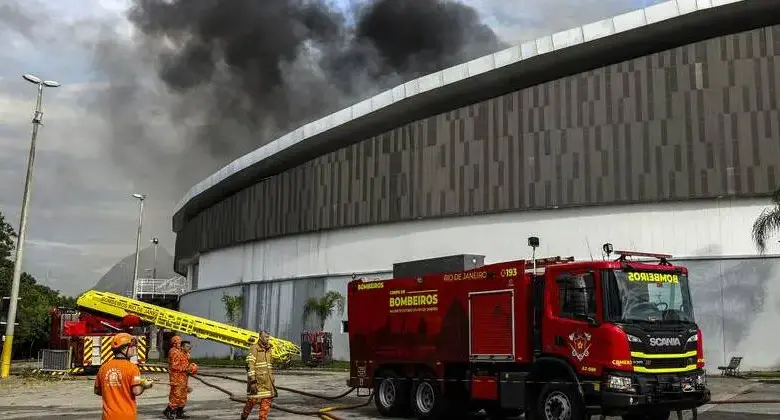
Fire broke out at Rio de Janeiro’s Olympic Park velodrome, drawing a major emergency response and putting the venue back in the spotlight for a problem it has faced before. Authorities said about 80 firefighters and 20 vehicles were involved, and the blaze was largely confined to the fabric roof.
What Happens When a Venue’s Roof Becomes the Main Risk?
The immediate turning point was the scale of the response. Rio state military fire department said the situation was under control, and the interior of the building, including the Olympic Museum, remained untouched. No injuries were reported. That matters because it shifts the event from a potential public safety crisis to a contained infrastructure incident, while still leaving open the question of why the roof was vulnerable again.
This is not the first time the venue has faced a roof fire. Two similar blazes occurred in 2017, both caused by falling paper sky lanterns. The latest incident is now under investigation, but the context already points to a recurring exposure: a large, specialized structure with a roof material that can be affected quickly once ignition starts.
What Does the Current State of Play Show?
The current facts suggest a fire that spread fast enough to require a large operational response, but not fast enough to reach the interior spaces. That combination is important. It shows emergency crews were able to limit the damage to the roof area, while also indicating how quickly a single ignition point can threaten a major sporting venue.
| Issue | Current status |
|---|---|
| Emergency response | About 80 firefighters and 20 vehicles deployed |
| Containment | Blaze under control and largely confined to the fabric roof |
| Injuries | No reported injuries |
| Interior damage | Building interior, including the Olympic Museum, untouched |
| Cause | Under investigation |
The venue’s role also raises the stakes. Since hosting track cycling during the 2016 Summer Games, the Velodrome has served as a primary training base for Brazil’s cycling and weightlifting teams. That means any damage, even if limited, affects more than a single building. It touches training continuity, event readiness, and confidence in how the site is managed.
What Forces Are Reshaping the Risk Around Fire?
In this case, the central forces are physical and operational rather than abstract. The first is construction vulnerability: a fabric roof can be a difficult surface to protect once flames begin. The second is repetition. When a venue has a history of roof fires, even a contained incident can revive scrutiny over prevention, monitoring, and response readiness.
The third force is institutional pressure. Olympic-era facilities carry symbolic value long after the Games end. They are expected to remain usable, safe, and credible. Fire exposes how hard that can be when a venue must serve as both a sporting asset and a public landmark.
The fourth force is uncertainty. The cause remains under investigation, and that limits any firm judgment about whether the latest blaze reflects a broader maintenance problem, an external trigger, or an isolated event. Still, the pattern of prior roof fires makes this more than a routine incident.
What If the Pattern Repeats?
There are three broad ways this could develop from here:
- Best case: Damage remains limited to the roof area, the cause is identified clearly, and the venue resumes normal use with stronger safeguards.
- Most likely: Investigators confirm the blaze was contained, repairs are needed, and the site faces a period of inspection and operational disruption while training continues elsewhere or around the damage.
- Most challenging: The inquiry reveals deeper vulnerabilities, forcing more extensive repair work and renewed concern about whether the venue can be relied on as a long-term training base.
For now, the facts support caution rather than alarm. The fire was serious enough to require a major emergency response, but the outcome was far better than it might have been. That distinction will shape how officials, athletes, and venue managers judge the next steps.
Who Wins, Who Loses, and What Comes Next?
The immediate winners are the firefighters and emergency teams who contained the blaze and kept the interior intact. The venue also avoids the worst-case scenario of injuries or widespread structural loss. The main losers are the organizations that must now deal with renewed scrutiny, possible repair costs, and potential disruption to training.
For athletes and coaches, the practical concern is continuity. A primary training base is only as useful as its reliability. For the venue’s managers, the challenge is credibility: a second round of roof fire concerns can quickly become a question about oversight, not just bad luck. For the public, the episode is a reminder that iconic sports sites can still be fragile.
Fire has again exposed the tension between legacy and upkeep at Rio’s Olympic Park. The containment was successful, the injuries were absent, and the interior was spared, but the pattern remains too notable to ignore. The next phase will be less about spectacle and more about accountability, repair, and whether the same risk can be reduced before it returns. fire