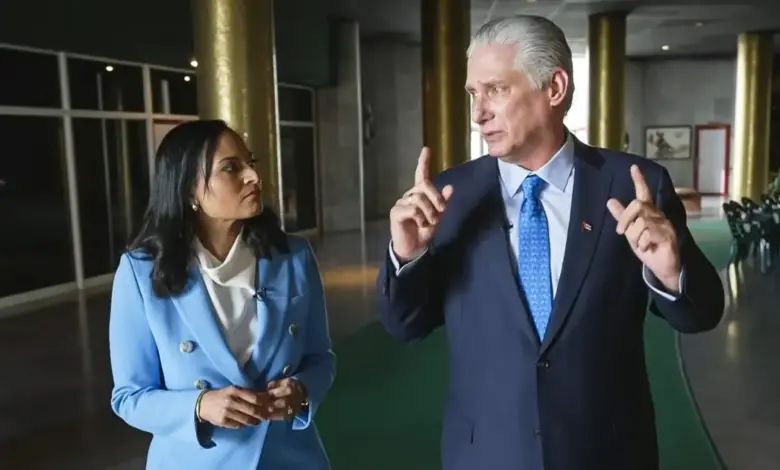
President Of Cuba Miguel Díaz-Canel’s refusal to step aside marks a clear inflection point in the latest phase of U. S. -Cuba tension. In his first interview with a U. S. broadcast network, he said he is not “stepping down, ” rejecting the idea that Washington should shape Cuba’s leadership choices.
The timing matters because the political standoff is unfolding alongside worsening economic strain, continued fuel shortages, and fresh pressure from the Trump administration. That combination makes this more than a rhetorical clash. It is a signal that both sides are hardening their positions while still leaving room for talks.
What Happens When Leadership Becomes the Message?
In Havana, Díaz-Canel framed the issue as one of sovereignty, saying Cuba’s leaders are not elected by the U. S. government and do not hold a mandate from it. He also said, “Stepping down is not part of our vocabulary. ” That line is now central to the current dispute because it turns a personal question into a national one.
The interview came during a period of increased pressure from Washington. President Donald Trump has called Cuba a “failing nation, ” while Secretary of State Marco Rubio has described the country’s economic system as broken and argued that change in leadership and economic model is needed. A White House official, meanwhile, said the two sides are talking and implied a deal is possible.
That combination of public pressure and private contact creates a narrow diplomatic space. Díaz-Canel said Cuba is interested in dialogue on any topic, but without conditions and without demands for political-system change.
What Is Driving the Current Standoff?
The immediate drivers are political, economic, and strategic. The U. S. has tightened pressure through actions affecting oil shipments, while Cuban officials blame Washington for fuel shortages, power outages, and damage to key parts of daily life.
At the same time, the Cuban government has been trying to manage the narrative more actively. Over the past couple of months, it has granted interviews to several news organizations and addressed mounting pressure from the U. S. amid what officials describe as a near economic collapse.
The context is also shaped by the broader regional picture. Cuba’s leadership has linked its problems to the loss of Venezuelan oil support, while Washington has argued that the island’s rulers should make a deal and that the current system is failing. These are not just competing talking points; they are competing explanations for the same crisis.
- Political pressure: U. S. demands for change versus Cuba’s claim of sovereign self-determination
- Economic pressure: fuel shortages, outages, and strain on transport, health, and goods production
- Diplomatic pressure: public confrontation alongside acknowledgment that talks are taking place
What Are the Most Likely Paths From Here?
Best case: Both sides keep talking without adding new conditions. That would not resolve the deeper dispute, but it could reduce immediate escalation and create breathing room around energy and trade issues.
Most likely: The war of words continues, while limited contacts remain in place. Díaz-Canel keeps rejecting any suggestion that he should leave, and Washington keeps pressing for a political and economic shift. This would preserve the current stalemate.
Most challenging: Pressure on Cuba intensifies further, worsening shortages and deepening public strain. If economic conditions deteriorate again, the political message from Havana could become even more rigid, making any accommodation harder.
What Happens When Pressure Reshapes the Winners and Losers?
The clearest losers are ordinary Cubans, who are already living with the effects of fuel shortages and power disruptions. The context also points to pressure on the country’s health system, public transportation, and production of goods and services.
For Cuba’s leadership, the main gain is political cohesion. By casting the dispute as a sovereignty test, Díaz-Canel can present resistance as defense rather than weakness. For Washington, the gain is leverage, but the risk is that stronger pressure may not produce the desired political change quickly, and may instead deepen the crisis.
For regional actors that have supplied oil or considered doing so, the uncertainty is practical as well as political. The energy question remains central to Cuba’s stability, and any change in supply conditions could quickly alter the balance.
What Should Readers Watch Next?
The next signal will be whether public confrontation turns into a more structured diplomatic track or whether both sides keep using the crisis to reinforce their own positions. The key fact is that President Of Cuba is not signaling retreat, even as Washington maintains pressure and talks remain open in the background.
That means the immediate future is likely to be defined less by a breakthrough than by endurance: who can absorb the costs longer, who can control the narrative, and whether the economic strain forces either side to adjust. For now, President Of Cuba remains the fixed point around which the next phase will turn.