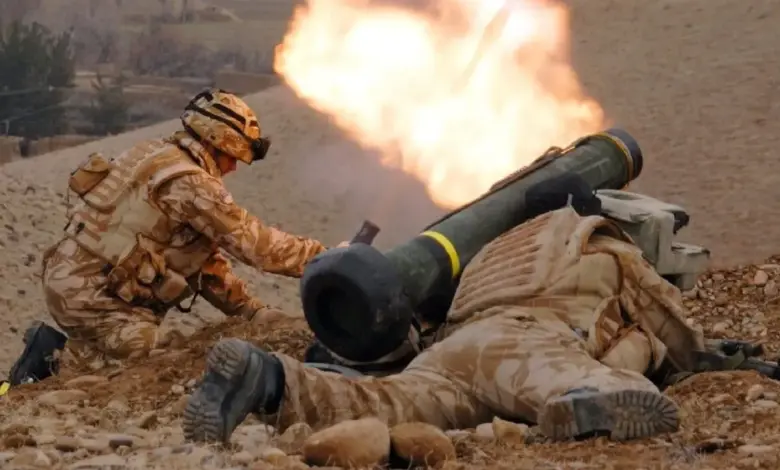
In the freezing dark outside Hohenfels, Germany, a small team moved with the kind of caution that turns every footstep into a decision. The United States Army Special Forces were there for Exercise Deep Strike, a week-plus drill that asked Green Berets to cross more than 90 miles of simulated enemy terrain without being seen by drones or conventional forces.
The exercise, carried out in February at the Joint Multinational Readiness Center, was built around a reality now shaping battlefields far beyond Germany: visibility is a weapon. If a unit can be tracked from above, or picked up by thermal sensors, movement itself becomes a risk. Deep Strike was designed to see whether operators could still operate in that environment.
What did Exercise Deep Strike test?
Deep Strike tested teams of eight or more personnel from 2nd Battalion, 10th Special Forces Group (Airborne), assigned to U. S. Special Operations Command Europe. The mission was clear: move undetected, pass beyond a simulated conventional enemy, and launch a strike drone at a mock high-value target.
The teams worked under strict limits. They carried only mission-specific gear, not weapons, and moved mostly at night to lower the chance of detection by radar or civilians. The route, stretched across more than 90 miles, forced the operators to manage fatigue, weather, and coordination while staying invisible. “This is no simple walk in the woods, ” a team sergeant said in a release tied to the exercise.
Why does drone detection matter so much now?
The exercise reflected a broader change in warfare: troops can no longer think only about enemy patrols or fixed positions. Drones, thermal sensors, and electronic surveillance are now part of the threat environment. In the context of the training, that meant survival depended on movement control, camouflage, terrain use, and discipline under pressure.
Ukraine was cited in the training context as an example of how difficult concealment has become when drones carry thermal sensors and can spot small units quickly. That reality shaped the logic of Deep Strike. The point was not simply to march far; it was to do so under conditions meant to mirror a modern, contested battlespace where being seen can end the mission before the strike begins.
How did the soldiers adapt during the week?
The Green Berets had to rely on patience and fundamentals. Harsh winter conditions added another layer of strain, limiting comfort and making each movement more deliberate. The exercise also required them to launch a drone after infiltrating the area, showing how modern special operations can combine stealth with precision technology.
“This exercise is designed to prepare our forces for the realities of modern warfare, ” a planner with 10th SFG (A) said. “It closely replicates real-world battlefield conditions, including the complex electronic warfare environment. It’s about pushing our teams to the limit and testing their ability to adapt to changing circumstances. ”
That adaptation mattered not only against simulated enemy forces, but also around civilians who could unintentionally compromise the mission. The training scenario included the need to avoid notice from farmers, hikers, hunters, and local law enforcement, underscoring how stealth now extends beyond the battlefield line.
What does this mean for future special operations training?
Deep Strike was described as a first iteration of special operations deep strike lanes and a testing ground for modernizing the force. The scenario also validated the use of advanced unmanned systems in denied environments with contested electronic warfare spaces.
Future versions are expected to expand and include special operations forces from NATO. For the United States Army Special Forces, that means the lesson from this winter drill may carry forward: stealth is still essential, but in the age of drones, it has to be earned against a sky that is always watching. On that cold route through Germany, the challenge was not just getting to the target. It was reaching it unseen.