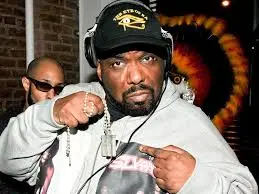
afrika bambaataa helped define the early public face of hip-hop, but his death at 67 also forces a harder reckoning with how cultural influence and moral accountability can collide. The Bronx-born rapper and DJ died in Philadelphia at around 3am local time from complications from cancer, ending a career that stretched from the late 1970s into the 2000s. His story is not only about a musical pioneer; it is also about a legacy that remained deeply contested until the end.
Why Afrika Bambaataa still matters now
The immediate significance of the news lies in the scale of his influence. Born Lance Taylor, he helped form the Universal Zulu Nation in the late 1970s, drawing on the example of DJ Kool Herc and the solidarity of the Zulu people of southern Africa. That collective helped shape hip-hop’s early identity around peace, unity, love, and having fun, themes later echoed in the Hip-Hop Alliance’s statement mourning his death.
His cultural reach expanded in 1982 with Planet Rock, a track that helped establish electro funk as a genre. The song’s sound was shaped in part by his interest in European electronic groups such as Kraftwerk, and it became a club hit that widened hip-hop’s audience. In that sense, afrika bambaataa was not just present at the beginning of the movement; he was one of the people who helped translate it for a larger mainstream public.
Afrika Bambaataa and the making of hip-hop’s early mainstream
What made his influence durable was not only a single hit but a wider pattern of collaboration. He worked with artists including John Lydon, George Clinton and James Brown, and his discography continued for decades. In 1985, he played a role in creating Sun City as part of Artists United Against Apartheid, a protest project involving musicians such as Bob Dylan, Bono, Bruce Springsteen, Joey Ramone, Run-DMC, Lou Reed and Bonnie Raitt. That placed him inside another major cultural moment, one that linked music to global political pressure.
He also continued recording in later years, with Afrika Bambaataa & the Soulsonic Force’s Planet Rock arriving in 1986 as a collection of previous singles, and his final album, Dark Matter Moving at the Speed of Light, released in 2004. The arc matters because it shows a figure whose influence was not confined to a brief breakthrough. The music industry remembers him as a founder; the public record, however, is more complicated.
The allegations that reshaped his legacy
Any assessment of afrika bambaataa now has to account for the abuse accusations that followed him in later life. In 2016, multiple Bronx men accused him of molestation. He denied the accusations, calling them “baseless and are a cowardly attempt to tarnish my reputation and legacy in hip-hop at this time. ”
The allegations did not end there. In May 2025, an anonymous plaintiff accused him of four years of sexual abuse beginning in 1992, when the plaintiff was 12 years old. The musician lost the civil case by default after failing to appear in court. That outcome matters because it shifts the conversation from rumor or unresolved claims to a formal legal record, even while leaving broader questions of memory, responsibility and institutional response open.
Expert and community reactions to a complex legacy
The Hip-Hop Alliance, led by musician Kurtis Blow, described him as “a foundational architect of hip-hop culture” and said he helped shape the genre’s identity as a global movement. But the same statement also acknowledged that his legacy “is complex” and has been the subject of serious conversations within the community. That tension captures the central story now: celebration and condemnation exist side by side, and neither can be ignored.
Outside the tribute, the facts point to a deeper editorial lesson. Cultural founders often become symbols larger than their biographies, yet the record shows that influence does not erase harm. For hip-hop institutions, the challenge is no longer simply preserving memory; it is deciding how to preserve memory without flattening accountability.
Regional and global impact of the loss
Because Afrika Bambaataa was tied to both the Bronx and the global spread of hip-hop, his death reverberates far beyond one neighborhood. The group he founded drew on African identity, while his work on Sun City linked him to anti-apartheid protest and international solidarity. That is part of why his name still travels across generations and borders.
At the same time, his death in Philadelphia closes a chapter on a figure whose life has long been read in two registers: as a builder of hip-hop culture and as a man accused of serious abuse. The contradiction is now inseparable from the obituary itself. The question is how hip-hop history remembers both truths at once. What does it mean for the culture when one of its early architects is remembered through both innovation and scandal, and can a legacy like afrika bambaataa’s ever be separated into clean parts?