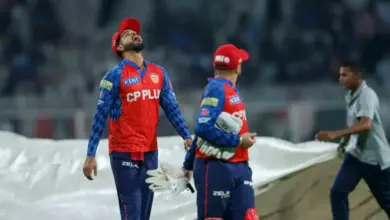
digvesh rathi became the center of debate on Thursday after a catch in the second over of Kolkata Knight Riders against Lucknow Super Giants raised fresh questions over how boundary-line dismissals are being judged.
What happens when a catch looks close to the rope?
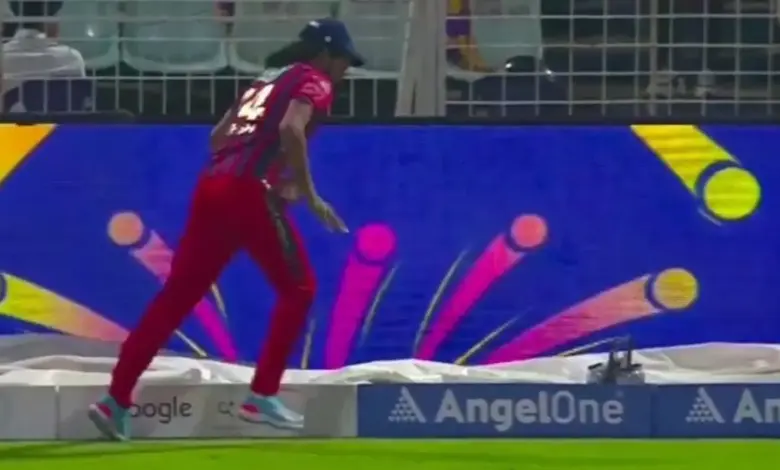
The dismissal of Finn Allen for 9 immediately drew attention because the on-field umpire gave him out without what many felt was a thorough review. The ball had gone to third man after Allen mistimed a shot off Prince Yadav, and Digvesh Rathi claimed the catch near the boundary. Replays later raised doubt by showing Rathi’s foot close to the rope, and in another angle his toe appeared to touch the boundary cushions. That is the kind of moment where a small visual detail can change the entire outcome.
The controversy is not only about one decision. It is about the standard of review used in tight boundary catches, especially when the available angles do not give a clean answer. Harsha Bhogle and Faf du Plessis both questioned whether multiple angles should have been checked before the dismissal was confirmed. Bhogle said the moment deserved a very close look, which captures the central issue: when the evidence is uncertain, certainty should not be assumed.
What if the review process had been slower and stricter?
In matches decided by fine margins, process matters as much as instinct. The current debate shows a gap between what fans expect and what they feel they saw on screen. Some viewers focused on the boundary rope, others on the movement of the advertising cushion, and others on the absence of a third-umpire check. The reaction was immediate because the decision came in a high-pressure moment and removed Allen after a brief stay at the crease.
There is also a broader pattern here. A similar boundary-line dispute had already surfaced earlier in the season, which means this is no longer an isolated flashpoint. When one close call follows another, confidence in officiating can weaken even if the officials are working within the limits of the available footage. That is why the discussion around digvesh rathi matters beyond one wicket: it exposes how fragile trust becomes when the camera angles are inconclusive.
What forces are shaping these calls now?
Three forces are colliding. First, television scrutiny is far more intense than before, so every replay becomes a public verdict in real time. Second, social media amplifies disagreement immediately, turning a cricketing decision into a wider judgment on officiating standards. Third, the match environment itself rewards speed, but review systems are supposed to reward caution. Those aims can clash.
| Force | Effect on the controversy |
|---|---|
| Replay scrutiny | Increases pressure to inspect every close angle |
| Public reaction | Turns one call into a wider credibility issue |
| Review limits | Can leave officials without a definitive answer |
This is why digvesh rathi became the focal point even though the larger issue is procedural. Fans were not only debating whether the catch was clean. They were debating whether the system was used fully enough to settle the doubt.
What happens next for players, officials, and teams?
Best case: tighter boundary calls become more consistent, with officials taking the extra moment needed whenever a catch is close to the rope. That would restore confidence without changing the spirit of the game.
Most likely: disputes like this continue to surface whenever a catch is taken near the boundary, especially when the replays are not definitive. The debate will then shift from the player to the quality of the review process.
Most challenging: repeated controversy creates lasting doubts about decisions in high-stakes matches, leaving teams, commentators, and fans less willing to trust marginal calls. In that environment, every close catch becomes a test of credibility, not just skill.
For players, the lesson is simple: in a tight game, awareness around the boundary can be decisive. For officials, the message is equally clear: if the evidence is uncertain, more angles matter. For fans, the key point is to recognize that not every replay yields certainty, but the process should always be thorough enough to earn trust.
The broader takeaway is that one disputed dismissal can reveal a larger weakness in how the game handles close decisions. The name digvesh rathi will stay attached to this moment, but the real story is the standard of review cricket chooses to enforce next.