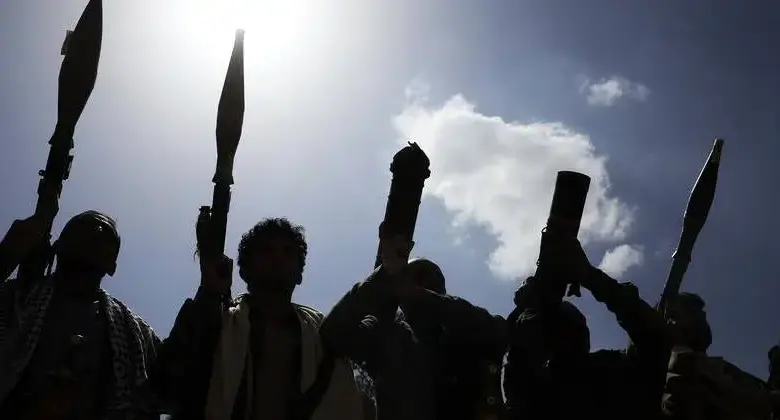
The new tariff threat has turned a military pause into a wider economic warning. Hours after a two-week ceasefire with Tehran was announced, President Donald Trump said imports from countries supplying Iran with military weapons would face immediate 50 per cent duties. The move arrives as the agreement remains fragile, the Strait of Hormuz stays central to energy flows, and Washington and Tehran prepare for talks in Islamabad. The result is a ceasefire being tested not only by missiles and drones, but by trade pressure too.
Why the tariff threat matters now
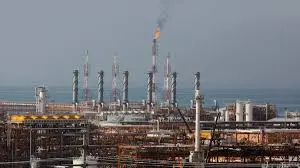
The immediate significance of the tariff announcement is not just its size, but its timing. It came after more than 38 days of war and at a moment when the ceasefire is still being described in cautious terms by US officials. The White House says the talks are intended to continue only so long as the Strait of Hormuz remains open with no limitations or delays, underscoring how tightly the diplomatic track is tied to shipping security and oil market stability.
Trump’s announcement did not name specific countries. It also did not spell out what legal authority would be used to impose the tariff. That matters because the Supreme Court in February struck down his use of the International Emergency Economic Powers Act for broad tariffs, creating uncertainty around how quickly any new penalty could be implemented. The tariff, then, is not just a headline-grabbing threat; it is also a test of executive leverage.
How the ceasefire is being tested
In parallel with the tariff warning, the ceasefire itself is under strain. The White House says Trump’s “red line” against Iranian uranium enrichment remains unchanged, rejecting any enrichment inside Iran. Karoline Leavitt, the president’s spokesperson, said the proposal that Tehran put forward was not the same as the government’s own published version, and she said Trump would not accept an Iranian “wish list. ”
That dispute is more than semantic. Iran says enrichment is a national right, while Washington is pushing for dismantling the nuclear programme altogether. The disagreement reaches into the foundation of the ceasefire talks, because one side sees enrichment as non-negotiable sovereignty and the other sees it as an unacceptable security risk. The tariff threat adds another layer of pressure by signaling that economic punishment could expand if the political track stalls.
There is also a regional security dimension. The Israeli military has continued to order people in Beirut to flee while saying its forces are carrying out combat and ground operations against Hezbollah. That means the ceasefire cannot be separated from the wider battlefield. Even if Washington and Tehran keep talking, the conflict’s geographic footprint still reaches Lebanon, the Gulf, and the shipping lanes that run through the Strait of Hormuz.
What experts and officials are signaling
JD Vance, the US vice-president, called the agreement a “fragile truce” and said the administration is seeking a good-faith negotiation. His language is important because it frames the ceasefire not as a settled peace but as a temporary opening. Karoline Leavitt reinforced that position by saying the administration’s focus will remain on talks over the next two weeks if shipping in the Strait of Hormuz stays uninterrupted.
On the Iranian side, parliament speaker Mohammad Bagher Ghalibaf cast doubt on the negotiations, saying the US and Israel have already violated the ceasefire. He argued that continuing the war in Lebanon, drone activity in Iranian airspace, and the refusal to recognize uranium enrichment make talks unreasonable. That makes the tariff threat doubly significant: it arrives in an atmosphere where both sides are already arguing that the other has crossed the line.
Trump himself said the Iranian proposal was a “workable basis on which to negotiate, ” even as his team publicly dismissed Tehran’s original 10-point plan. That split suggests the administration is still balancing coercion and engagement. The tariff is part of the coercive side of that balance, meant to deter any country that might help Iran rebuild military capacity.
Regional and global impact
The wider impact reaches beyond the immediate US-Iran channel. Energy markets remain sensitive to what happens in the Strait of Hormuz, and the ceasefire’s survival is tied to whether shipping resumes normally. Any disruption could revive the same price pressures that emerged when the conflict began. The tariff threat also signals that trade policy may now be used as an enforcement tool in a regional conflict, not just as a separate economic instrument.
There is another global consequence: if the United States follows through on a tariff tied to military supply, countries with trade exposure to Washington could face new pressure to reassess how they engage with Iran. That would widen the conflict’s economic reach even if direct fighting slows. The result is a ceasefire surrounded by leverage points—nuclear, military, maritime, and now commercial.
The central question is whether this tariff becomes a real policy or remains a warning shot. Either way, it shows the ceasefire is not just being judged on the battlefield; it is being measured in trade, energy, and diplomacy at the same time. If the Strait of Hormuz stays open and the talks in Islamabad proceed, the truce may hold for now. If not, the tariff could become one more sign that the fragile agreement is already fraying.