Doctor Who: 5 Things Betrayal at the House of Sontar Reveals About Jo Martin’s High-Stakes Return

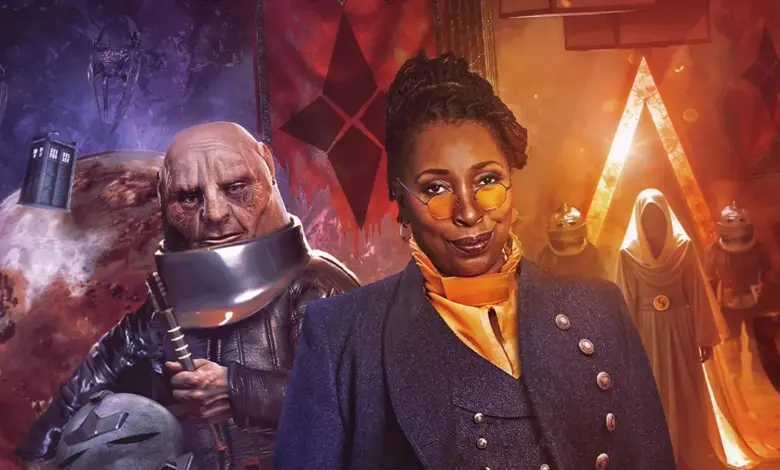
In Doctor Who, the most revealing stories are often the ones that arrive before the history is fixed. That is what makes doctor who audio’s latest Fugitive Doctor outing feel so striking: it places Jo Martin’s incarnation in a period where the rules are still being written, and where Division, the Kaveetch, and the Sontarans are all circling the same dangerous truth. The result is a story built less on spectacle than on pressure, secrecy, and the uneasy logic of survival.
A pre-history where nothing is settled
Betrayal at the House of Sontar is the opening chapter of Rutans vs Sontarans, a four-part series in which each release features a different Doctor. This first episode does something especially useful: it acts as a prequel to The First Sontarans, while moving into an earlier moment when the Kaveetch Empress Annaz Zachar still rules and the Rutans are not yet part of the immediate picture.
That matters because the story is not simply revisiting old conflict. It is showing the machinery of conflict before it hardens. The Sontarans are still described in a transitional form, the Sontar Astro Navy, and cloning has not yet become the method associated with their later identity. For a drama built around ambition and mistrust, that unsettled stage gives the episode its edge.
Jo Martin’s Doctor is used as a pressure point
The central engine of the story is Jo Martin’s Fugitive Doctor, who arrives on Sontar while on the run from Division and offers the Kaveetch scientific secrets in exchange for protection. That setup does more than move the plot forward. It places the Doctor inside a moral trap where every choice has a cost and every alliance has a second meaning.
This is also where doctor who gains much of its force here: the character is framed as someone acting in a way that feels out of character, only for the story to remind the audience that this is not the familiar Doctor at all. The writing leans into that tension, using the Fugitive Doctor’s distance from the more established version of the character to sharpen the uncertainty around her motives.
The Kaveetch themselves are split internally. Empress Annaz Zachar is willing to seize the advantage, while General Stahl is more cautious. Meredit Roath, a Kaveetch scientist, adds another layer of pressure, and the episode uses those competing interests to build a story that is as much about political calculation as it is about war.
Why the story feels bigger than one planet
John Dorney’s script is described as talky, but that is part of the design rather than a weakness. The episode is doing the work of setup, laying out intrigue that reaches beyond Sontar and into wider implications for the war. It is also careful to keep the stakes tied to the specific moment in time: this is before the familiar Doctor Who order has fully emerged, before the Sontarans become the warmongers most viewers would recognise later.
That makes the story feel less like a single self-contained adventure and more like a foundation stone. The danger is not only what happens in the room or on the planet, but what the decisions here could mean once the broader conflict takes shape. In that sense, the episode uses historical uncertainty as a narrative tool, making the audience feel how fragile these origins are.
Expert perspectives from the production team
Jo Martin has described this incarnation as especially flexible, saying: “The great thing about this incarnation of this Doctor is that she can pop up anywhere!” She also said she thought “the writing was so strong” in this story, pointing to the appeal of playing a Doctor who can appear in unexpected corners of the timeline.
Writer John Dorney highlighted the creative freedom of the era, calling it “an exciting era to explore because there isn’t a massive amount of lore about it, it’s completely open-ended. ” He added that it offers “the opportunity to tell stories you wouldn’t be able to tell anywhere else in the Doctor Who universe. ” Those comments help explain why the episode feels so expansive even when much of its runtime is spent in discussion rather than action.
On screen-or rather, in audio terms-the cast reinforces that sense of living history. Anthony Howell returns as Meredit Roath, while Abi Harris plays Empress Annaz Zachar, Nigel Fairs appears as General Stahl, and Jonathon Carley brings further force to the Sontaran side.
What this means for the series and beyond
The wider doctor who implication is that this series is not simply revisiting old enemies; it is reorganising how their origins are framed. With four monthly instalments and other Doctors to come, the structure suggests a deliberate widening of perspective across the conflict. The next chapter, Rendition, is already positioned to move the action again, this time with the Second Doctor.
For listeners, the appeal is straightforward but effective: a familiar war is being told from a less familiar angle. That creates room for surprise without breaking the logic of the material. It also gives Jo Martin’s return added weight, because her Doctor is not being used as a cameo but as the key to a story about trust, leverage, and what happens when history has not yet decided who the monsters are.
As Rutans vs Sontarans continues, the central question is whether this open-ended corner of the timeline will deepen the mythology without closing it down. If this first story is any indication, doctor who is using the past not to explain everything, but to make the unknown feel even more consequential.