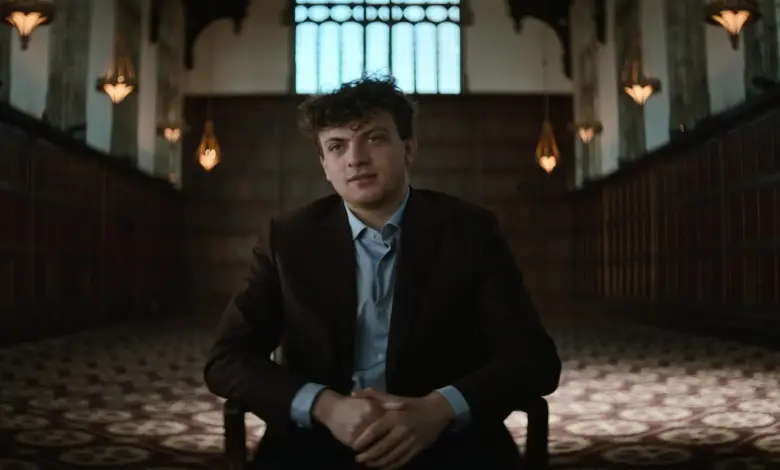
The Hans Niemann story has returned to the center of chess with a 74-minute documentary that brings old tensions back into public view. What makes the film striking is not just the recall of the 2022 Sinquefield Cup, but the way it places competing memories side by side: Niemann’s account of how cheating allegations changed his life, and Magnus Carlsen’s new explanation of what he felt in St. Louis.
That matters because the controversy did not remain a private dispute between elite players. It expanded into public allegations, a $100 million defamation lawsuit, a dismissal, a settlement, and then a lasting shift in how major chess events think about fair play. The documentary does not settle the matter. It reopens the central question: what exactly was happening when the world’s reigning champion withdrew after losing to a 19-year-old American?
What does the documentary show about the original break in trust?
Verified fact: The film revisits the 2022 Sinquefield Cup, where Carlsen withdrew after losing to Niemann in round three. In the documentary, Carlsen says, “I felt that I was not playing a human. ” He also says Niemann’s remarks at the opening ceremony unsettled him, including the teenager’s comment that he was ready to “replace” the world champion.
Verified fact: The documentary says concerns about Niemann’s online play had already circulated before the event, and that rumors were fueled by suspicions after strong performances in lower-profile tournaments in Europe and Asia. It also notes that Carlsen’s suspicions intensified after a loss to Niemann in the FTX Crypto Cup in Miami, following a casual beach game that Carlsen won comfortably.
Analysis: Taken together, the film presents a chain of suspicion that began before St. Louis and hardened after it. For Hans Niemann, that chain became the backdrop to a global controversy that went far beyond a single match.
Who is given a voice, and what does that reveal?
The documentary centers on Niemann, using footage from his small New York apartment, clips from his Twitch streams, and extended material from before and after the St. Louis tournament. Carlsen appears alongside Chess. com CEO Erik Allebest, Chief Chess Officer Danny Rensch, Hikaru Nakamura, Henrik Carlsen, and coach Bruce Pandolfini.
Verified fact: Carlsen had publicly addressed the controversy only once before, during an appearance on The Joe Rogan Experience last year. His participation in the documentary is presented as highly anticipated because it offers his first substantial update on the matter in this setting.
Analysis: That balance matters. The film does not only preserve one player’s defense or another’s accusation. It places institutional voices next to player testimony, showing how a sporting controversy became a governance problem. For Hans Niemann, that means the dispute is no longer framed only as a personal accusation; it is treated as part of a wider system of trust, suspicion, and tournament oversight.
Why did the fallout move beyond chess boards?
Verified fact: Carlsen’s withdrawal triggered public allegations that Niemann had cheated in their over-the-board game. The controversy escalated into Niemann’s $100 million defamation lawsuit against Carlsen, Chess. com, Play Magnus Group, Rensch, and Nakamura. The case was later dismissed and ultimately resolved with a settlement, allowing Niemann to return to Chess. com.
Verified fact: The fallout continues to influence discussions around fair play and has led to increased anti-cheating measures in major chess tournaments.
Analysis: This is where the documentary’s significance becomes larger than one scandal. The dispute helped push tournament organizers toward tougher safeguards, but it also left a public record shaped by uncertainty. The film suggests that the damage was not limited to reputations. It altered the conditions under which elite chess is now watched, judged, and policed.
That is the unresolved tension at the heart of Hans Niemann’s return to the screen. Even with a settlement and a restored platform, the public memory of the controversy remains tied to competing interpretations of the same events.
What should the public take from this renewed spotlight?
The documentary’s strongest contribution is that it does not pretend the controversy has a clean ending. It shows Carlsen describing his mindset, Niemann presenting his version of events, and chess officials reflecting on the internal atmosphere around the tournament. It also shows that the sport’s response did not stay confined to one match or one lawsuit.
Verified fact: The film was released to Netflix’s more than 300 million subscribers on Tuesday and runs 74 minutes. It arrived after teaser clips featuring Carlsen, Niemann, and Hikaru Nakamura, then expanded into the wider context around the controversy.
Analysis: The public should see the documentary as a record of how elite chess handles suspicion when certainty is unavailable. It is also a reminder that once trust breaks at the top level, every later move is interpreted through that fracture. Hans Niemann remains the central figure not because the film answers every question, but because the questions still shape the sport.
That is why the controversy still matters: it exposed a fault line between accusation, evidence, and reputation, and the consequences continue to shape chess’s future. Hans Niemann is now part of a story that is bigger than any one game, and the documentary makes clear that the final word has not yet been written.