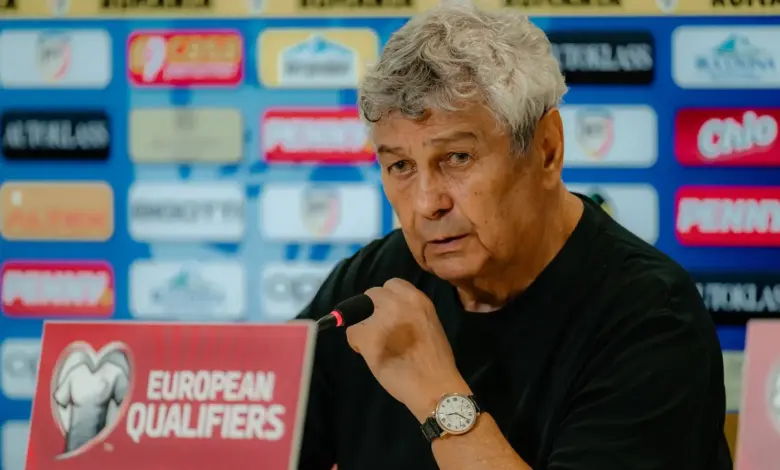
mircea lucescu became the center of a difficult medical and emotional account on Tuesday, April 7, 2026 ET, after two separate lines of information converged: a serious hospital course at Spitalul Universitar de Urgență București and a personal testimony from Cornel Dinu about what he believes weighed most heavily on his longtime friend.
What is verified is stark: doctors examined whether ECMO could help, then decided it was not an option at this moment. What remains equally important is the broader question raised by Cornel Dinu’s intervention: what should the public understand about the pressure surrounding a man who, in his words, saw coaching as the activity that kept him alive?
What is the latest verified medical decision?
The clearest fact is the decision around ECMO, or extracorporeal membrane oxygenation. At Spitalul Universitar de Urgență București, specialists reviewed whether the procedure could be used for Mircea Lucescu. The result of the latest investigation, completed on Tuesday, was that ECMO does not represent a solution at this time. In practical terms, that means the intervention is no longer being pursued for the moment, even if it could theoretically be reconsidered if his condition shows positive signs.
The same medical context places his case in a severe category. He is hospitalized in induced coma and has been moved to intensive care. The institution itself has indicated that it will return with public information. That restrained approach matters: it signals that the case is being handled as an evolving critical condition, not as a routine treatment pathway.
One additional point deserves emphasis. ECMO is described in the available medical context as an invasive support system used only when the heart and lungs cannot function at a level compatible with survival. That detail explains why the discussion matters so much. The decision not to proceed is not a procedural footnote; it is a sign that doctors judged the available option unsuitable under the present circumstances.
Why does Cornel Dinu’s account change the public reading of mircea lucescu?
Cornel Dinu’s intervention adds an intensely personal layer to the story. He said he had been speaking frequently about the situation and referred to a deeper suffering that, in his view, preceded the cardiac crisis. He described Mircea Lucescu as someone fully dedicated to the national team and to Romanian football, and said that this very stress was what “brought him down. ”
That is not a medical verdict. It is a friend’s interpretation, and it should be read that way. But it is still significant because it frames the crisis as more than a single event. In Dinu’s telling, mircea lucescu was carrying a burden tied to duty, responsibility, and a long professional identity built around coaching.
Dinu also recalled that, in recent conversations, Mircea Lucescu had given him reason to believe that coaching was the thing that kept him standing. That statement is important because it shows the paradox at the heart of the case: the same activity he viewed as sustaining him was also, in Dinu’s view, linked to the pressure that exhausted him.
Who is implicated, and what do the known positions actually say?
From the verified material, the main stakeholders are clear. First are the doctors at Spitalul Universitar de Urgență București, who made the ECMO decision after fresh analysis. Second is Marius Andronache, the doctor who came from France to Romania for the assessment. Third is Cornel Dinu, whose remarks provide a human account of the strain surrounding the final stage of this crisis.
Mircea Lucescu himself cannot be treated as a speaking participant in the available context; the public record here is limited to his medical condition and the reflections of others. That limitation is crucial. It prevents overreading the case and keeps the focus on documented facts rather than assumptions.
There is also a narrow institutional position embedded in the hospital’s latest communication: it will provide further public information. That matters because transparency in severe medical cases is often partial and carefully timed. In this instance, the hospital has acknowledged the public need for updates without opening the door to unsupported speculation.
What does this case reveal when the pieces are placed together?
The combined picture is sobering. The medical team examined a high-intensity intervention, then ruled it out for the moment. The patient remains in induced coma and intensive care. At the same time, a longtime friend says the underlying strain was not just physical, but cumulative and emotional, tied to national responsibility and the pressure of service.
That combination produces a deeper reading of the crisis. It is not only about whether a procedure can be done. It is about how much can be asked of a person whose professional life became inseparable from obligation. In this sense, the story of mircea lucescu is also a story about the limits of endurance, especially when public duty and private health collide.
At present, the verified facts do not justify speculation about the next step beyond the hospital’s promise of further information. What they do justify is scrutiny of how severe medical situations are communicated and how public figures absorb pressures that may not be visible until it is too late. The question left standing is not only what treatment comes next, but what kind of reckoning a football life can demand before the body refuses any more.
The public deserves clarity, restraint, and medically grounded updates, not noise. In a case this serious, the strongest demand is simple: transparency about the course ahead, and honest recognition of the toll that mircea lucescu appears to have carried.